Why Iran’s Regime Didn’t Collapse
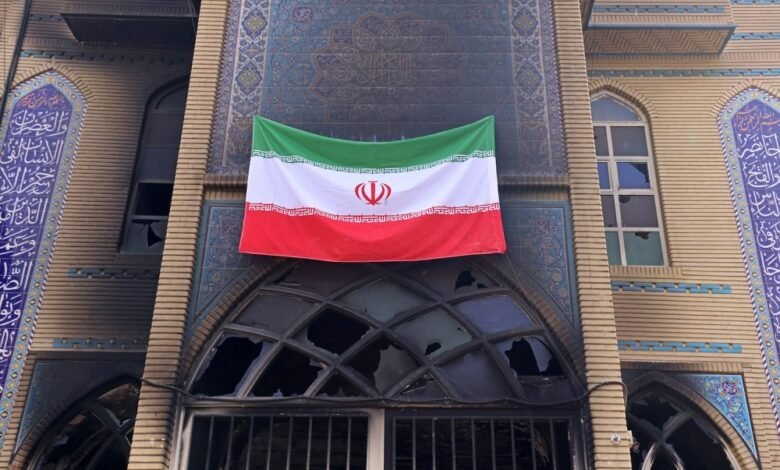
As protests spread once again across Iranian cities in recent weeks, observers have asked a familiar question: Is the Islamic Republic finally approaching collapse? Rising prices, free fall of the currency, labor strikes, and open defiance of religious authority have produced a level of unrest that would destabilize most regimes.
But despite repeated cycles of mass protests in Iran, including the latest wave, they have so far failed to translate into a political rupture. The problem is not a lack of widespread opposition; A violent crackdown this month led to the deaths of thousands of demonstrators. To say that the regime is deeply unpopular is a misreading of how power in Tehran operates. The central issue is not whether Iranians want change, but rather why ongoing unrest has not yet broken the regime — and the answer is that the Islamic Republic was built that way.
As protests spread once again across Iranian cities in recent weeks, observers have asked a familiar question: Is the Islamic Republic finally approaching collapse? Rising prices, free fall of the currency, labor strikes, and open defiance of religious authority have produced a level of unrest that would destabilize most regimes.
But despite repeated cycles of mass protests in Iran, including the latest wave, they have so far failed to translate into a political rupture. The problem is not a lack of widespread opposition; A violent crackdown this month led to the deaths of thousands of demonstrators. To say that the regime is deeply unpopular is a misreading of how power in Tehran operates. The central issue is not whether Iranians want change, but rather why ongoing unrest has not yet broken the regime — and the answer is that the Islamic Republic was built that way.
Islamic Republic Today it operates as a theocratic security system organized around Ayatollah Ali Khamenei and his family. Power is organized in concentric circles, with Khamenei and his immediate family at the centre. Power is largely personal, and political survival depends not so much on formal institutions as on proximity to the Supreme Leader himself and his sons.
Khamenei’s leadership is characterized by solidity, discipline, and a deep sense of personal mission. He views himself not only as a political authority, but as a guardian entrusted with a divine responsibility to preserve the Islamic Republic, a belief that leaves little room for hesitation or compromise during crises. Since assuming the position of supreme leader in 1989, he has steadily transformed the regime into a theocratic security state that favors coercion over popular consent, and relies on a highly institutionalized and ideologically committed repressive apparatus. It is this structural reality, more than public sentiment, that defines the limits of political change in Iran today and reflects a leader who prioritizes regime survival as a sacred duty rather than a negotiable political option.
This center is immediately surrounded by the Rahbari House, or the Office of the Supreme Leader, which is the most powerful and least visible institution in the Islamic Republic. The House of Khamenei practically acts as the de facto executive authority of the regime. Over the past three decades, it has evolved into a vast and opaque parallel state that sits above the constitution, parliament, and presidency.
The House employs thousands of loyal clerics, security officials, and ideological technocrats, and shapes decision-making in the military, intelligence, economic, judicial, and cultural fields. Rather than ruling through impersonal rules or institutional controls, Khamenei rules through trusted individuals throughout the country. The house also serves as the primary channel through which the Khamenei family, especially his sons, exerts its influence, transforming it into an institutional and familial center of power. The House is not just an extension of Khamenei’s authority. It is the mechanism that allows its base to stand up, absorb shocks, and operate without constant visibility.
The house is surrounded by a wide religious network that gives religious legitimacy to the regime. Through religious institutes, Friday prayer imams, provincial representatives, and senior clerics allied with the regime, Khamenei’s authority is presented as divinely sacred. He was portrayed not only as a political leader, but as a representative of the Hidden Imam. This theological framework turns obedience into a religious duty and reframes oppression as a moral necessity rather than a political choice. Religious institutions, such as the Assembly of Experts and the Guardian Council, work to reinforce this sacred legitimacy while actively disciplining dissent within the religious establishment itself.
This logic is expressed publicly by senior clerics involved in the security services. For example, Hojjat al-Islam Ali Saidi, who leads the Armed Forces’ Ideological-Political Bureau, said that defending the Islamic government justifies the killing of thousands and that protecting the Islamic State is the most important goal of all obligations. In this context, the religious establishment also played a central role in classifying demonstrators as demonstrators warrior (Enemies of God), a label that religiously sanctifies oppression and legitimizes extreme violence and atrocities against opponents. This classification, more than just public sentiment, is what defines the limits of revolutionary change in Iran today.
Behind the religious layer lie the Islamic Revolutionary Guard Corps and the broader security services, which constitute the regime’s coercive shield. The IRGC was created to defend the Islamic Republic, and its primary mission since 1979 has been to protect the regime: preventing coups, suppressing dissent, and protecting the Supreme Leader. Over time, it evolved into an Imperial Guard, extending beyond military functions into a multi-branched security organization that included intelligence, SWAT units, and the Basij militia – each deeply rooted in society.
The structure of the Iranian Revolutionary Guard aims to contain the unrest through decentralized regional commands that combine the IRGC, the Basij, and local security forces. The Basij forces, with offices in neighborhoods, schools, and workplaces, operate as a network of surveillance, mobilization, and coercion, absorbing popular anger through repression while protecting the regime from social pressures. Domestically, the IRGC is entrenched economically and politically through extensive networks and state-backed companies, controlling key sectors and gaining financial independence. However, all of this happened at the behest of Khamenei as a means of co-opting the IRGC. For this reason, the Guard remains closely linked to the Supreme Leader and Bethlehem, with its survival linked to the Khamenei regime.
These three layers They surround Khamenei and together form the system and the tools that support it. Using the metaphor of the human body, Khamenei stands as the head, while the house acts as the torso, coordinating and controlling the regime. The hands of the regime are the Iranian Revolutionary Guard and the religious network, which impose authority and grant religious legitimacy. Beneath them sit the government and public administration, which supports the system but does not direct it. Ministries, municipalities and service-providing institutions continue to manage day-to-day governance and maintain institutional continuity. This outer shell absorbs general frustration and maintains the appearance of normal state function. However, it has little real power. Bureaucracy runs society, but it does not govern the system.
This structural configuration sharply reduces the likelihood of popular discontent being translated into elite division, which is necessary for the collapse of authoritarianism. Protests are contained by security forces, justified by religious rhetoric, blocked by a propaganda apparatus controlled by the Office of the Supreme Leader, and co-opted by bureaucratic procedures. Authority remains centralized and isolated, and is defended by institutions whose survival depends on preserving its essence.
Understanding this structure is essential. The Islamic Republic is not resilient because it has legitimacy or popular acceptance. It is flexible because it was deliberately designed to deflect pressures, concentrate power, and protect its position from society and its institutions. Any serious assessment of Iran’s political future must begin with this structure and not with assumptions derived from revolutionary analogy or expectations of inevitable collapse.
Don’t miss more hot News like this! Click here to discover the latest in Politics news!
2026-01-21 23:38:00