Elon Musk: U.S. could soon be producing more chips than we can turn on, a problem China doesn’t have
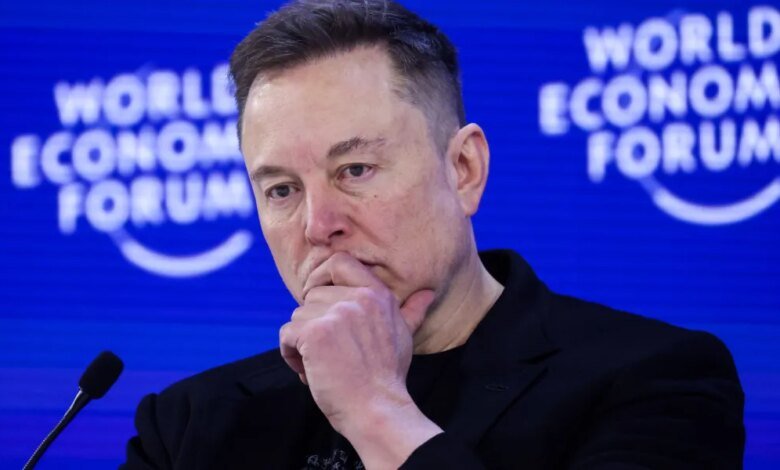
Elon Musk warned that the biggest problem holding back artificial intelligence progress in the United States is one that Chinese competitors do not face.
In a conversation in Davos, Switzerland, with BlackRock CEO and interim president of the World Economic Forum Larry Fink, Musk said that the production of AI chips is increasing significantly, but electrical power is insufficient, which hinders the efficiency of AI data centers in training and deploying AI models.
“I think the limiting factor for AI deployment is primarily electrical power,” Musk said. “It is clear that very soon — perhaps later this year — we will be producing more chips than we can put to work.”
The United States was grappling with an outdated grid system, the result of decades of underinvestment and outdated infrastructure. As technology companies increasingly rely on grid operators for electrical power, reliability issues and production constraints threaten the speed of AI implementation, raising investor concerns about an AI bubble and fueling the belief that the United States has already lost the battle with Chinese technology.
Two massive data centers in Nvidia’s hometown of Santa Clara, California, may sit empty for years waiting for electricity to power them, according to energy experts. On the other hand, the massive increase in demand, coupled with the need to modernize infrastructure, has led to higher electricity bills for the average American.
Earlier this month, the Trump administration and 13 governors from both parties put pressure on operators of the nation’s largest grid, PJM Interconnection, to boost power supply, as well as holding an auction for technology companies to bid on 15-year contracts to build power plants, which would shift the cost of electricity away from consumers and to data center operators.
“We know that with the demands of artificial intelligence and the power and productivity that come with that, it will transform every job, every company, and every industry,” Interior Secretary Doug Burgum told reporters last week. “But we need to be able to leverage that in the race we have against China.”
During his remarks at the Davos meeting on Wednesday, President Donald Trump encouraged tech companies to build their own nuclear plants amid the AI push, which he claimed the administration would approve in just three weeks — even though approval historically takes years.
China’s solar edge over the United States
As many AI investors fear, China is already ahead of the United States when it comes to production capacity, and the country is not burdened by the same constraints as the United States, Musk said in Davos. China relies mainly on solar energy, which is seen as a lower-cost alternative to nuclear power, with faster deployment and lower safety risks.
“China’s growth in electricity is tremendous,” he said.
According to the World Energy Observatory’s Global Solar Tracker, China has nearly four times the amount of operational electricity from solar than the United States. Including potential capacity, China is expected to receive 1,118,442 megawatts, or electrical energy production, from solar energy compared to the United States’ 237,947 megawatts.
“Solar energy is the largest energy source ever,” Musk said.
Musk claimed that powering the United States with solar power would require a very small area, just 100 miles by 100 square miles of solar fields needed to power the entire country.
But American policies have thwarted efforts to harness and spread solar energy. Despite urging grid operators to take action to increase production capacity, the Trump administration opposed the shift to solar energy, and eliminated subsidies for renewable energy sources that it claimed were “harming our electric grid.”
The White House did not immediately respond luckRequest for comment.
Tariffs on solar equipment from Asia went into effect in May, with import taxes reaching 3,500%, following a US International Trade Commission ruling that imports of solar modules and cells from Southeast Asian producers in Malaysia, Thailand, Vietnam and Cambodia were harmful to US manufacturers.
“Unfortunately, in the United States, the tariff barriers on solar energy are very high,” Musk said. “This makes the economics of deploying solar energy artificially high.”
2026-01-22 17:41:00