Meta Signs EU AI Code to Boost Transparency & Trust
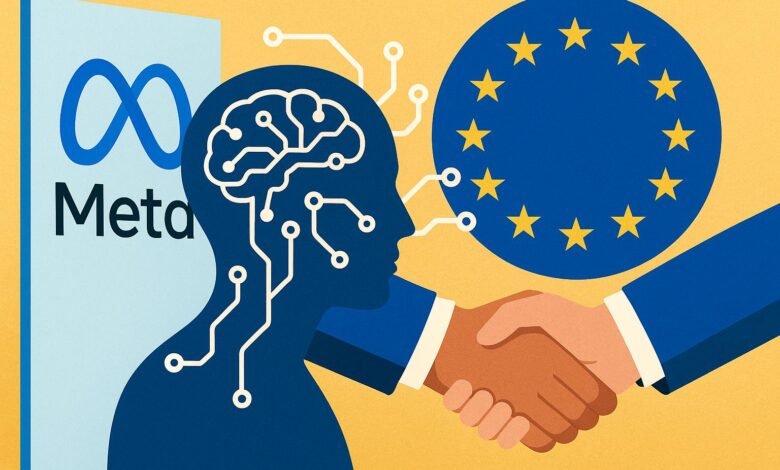
Meta signs EU AI code to enhance transparency and trustThis represents a major step in the company’s strategy to comply with evolving global artificial intelligence regulations. As one of the world’s leading technology platforms, Meta has now become the first major company to join the European Commission’s new voluntary transparency charter. This move reinforces Meta’s commitment to developing ethical AI and algorithmic accountability. As regulatory bodies around the world accelerate AI governance frameworks, this decision helps Meta anticipate landmark EU AI law and demonstrate its intent to lead in responsible innovation. For governments, users and industry competitors, this highlights the increasing urgency of regulatory oversight in AI systems.
Key takeaways
- Meta is the first major technology company to join the European Commission’s Voluntary AI Transparency Agreement.
- The agreement emphasizes the ethical use of AI, mitigating the risks of misinformation, and algorithmic transparency.
- Meta’s participation positions it to comply with the EU’s upcoming legally binding AI law and address global AI governance standards.
- Other regions, such as the United States and the United Kingdom, are moving toward comprehensive policy frameworks for AI.
Understanding the EU AI Transparency Law
The European Commission introduced the AI Transparency Charter in 2024 as a voluntary code that encourages leading AI developers to be more open about how their algorithmic systems are managed and governed. The goal is to promote ethical practices, mitigate risks and protect the user. Although the agreement is not legally binding, it reflects many of the principles set out in the EU’s upcoming AI law, which is expected to be the most comprehensive AI law in the world.
The Code includes a set of voluntary measures, such as:
- Communicate the risks associated with generative AI tools
- Clearly label content created or modified by AI
- Conduct internal audits to identify and reduce algorithmic bias
- Publish transparency reports on how AI systems work
This symbol acts as a transitional and strategic tool. It provides immediate public accountability and paves the way for future compliance obligations.
Meta’s decision reflects a public commitment and tactical action ahead of upcoming regulations. The EU AI law will classify AI systems based on risk levels and impose comprehensive transparency, safety and accountability standards. By joining the voluntary code now, Meta is facilitating the compliance path and strengthening its role in shaping the regulatory conversation.
In a statement, a Meta representative stressed that joining the agreement provides “an opportunity to shape early standards and demonstrate leadership in developing transparent AI.” Meta is also investing heavily in generative tools, including the LLaMA model and AI influencers across Facebook and Instagram. Participation in this agreement allows the company to address concerns regarding misinformation and create ethical content.
This timing reflects a broader strategy. Companies that engage early in regulatory dialogues are often better equipped to adapt, lead, and set standards as legal changes emerge. Meta’s engagement also links to broader discussions, such as Meta’s AI applications in military contexts, underscoring the importance of ethical use obligations.
Comparison of the Voluntary Charter versus EU law on artificial intelligence
To understand the importance of Meta’s commitment to the Transparency Act, it is helpful to compare it to the upcoming Artificial Intelligence Act. While both are based on similar principles, their enforcement mechanisms and scopes differ significantly.
| feature | Voluntary EU Charter for Transparency in Artificial Intelligence | Next EU law on artificial intelligence (legally binding) |
|---|---|---|
| range | Voluntary guidelines on transparency and ethical principles | Full legal compliance is required based on the system’s risk rating |
| Risk management | Encourages member companies to assess and communicate risks | Enforces formal risk assessments, mitigation steps and audits |
| Implementation | There are no penalties for violations or non-compliance | Large administrative fines for violations |
| Transparency requirements | Calls for public disclosures and labeling | Requires detailed data documentation and record keeping |
| Timetable | Released in 2024, currently active | Full implementation is expected by 2025 |
Global Impacts: Alignment with International AI Governance
Meta’s move fits into a growing trend among tech giants to align with global frameworks. While the EU leads through binding legislation, other regions offer principles and frameworks that emphasize accountability and safety. In the United States, the White House issued an AI Bill of Rights that focuses on design standards and fairness. The UK held an AI Safety Summit, bringing together stakeholders to define best practices and standards. This trend is closely tracked in cutting-edge reports on AI governance trends and regulations.
Global alliances such as the OECD and G7 are also working to push common standards for artificial intelligence. These developments show that companies are preparing for global harmonization of AI ethics and safety guidelines.
Industry Watch: Will other tech companies follow?
With Meta’s public endorsement, attention turned to other key players. Google, Microsoft, and OpenAI are already part of the conversation. Some are participating in the G7 Hiroshima Process, which supports the development of responsible artificial intelligence and encourages governance around basic models. As regulations tighten, proactive efforts such as the Transparency Code may become essential signaling tools for regulators and users alike.
Experts say early involvement not only shapes future rules, but also creates opportunities for input during the legislative process. Dr. Elias Rohr, an AI policy advisor in Brussels, noted that voluntary commitments give companies insight into upcoming implementation practices. They also build political goodwill that can be valuable during legal transitions.
The topic of transparency is particularly important given the increased scrutiny of AI privacy and data processing, which has been explored in conversations about privacy challenges in AI.
Frequently asked questions
What is the EU AI Transparency Code?
The EU AI Transparency Law is a voluntary initiative launched by the European Commission in 2024. It encourages AI developers and platforms to adopt transparent and ethical principles in the delivery of AI systems. The Code includes measures such as categorizing content, monitoring misinformation and publishing regular transparency reports.
What does Meta signing AI code mean for future regulation?
Meta’s decision to join the code allows the company to plan for future legal standards. It also shows that Meta supports the ethical development of AI and is willing to collaborate with regulators when drafting new laws. This helps protect against regulatory and public trust risks.
How does EU AI law relate to EU AI law?
The Transparency Code is an early initiative aimed at preparing companies for legally binding AI law in the European Union. The Code focuses on best practices and voluntary measures, while the AI Code will require formal compliance depending on the type and level of risk in the AI system in question.
Which companies are participating in the EU AI initiative?
Meta is the first major company to officially sign up. Others, including Google, Microsoft, and OpenAI, are involved in various multilateral efforts such as those sponsored by the OECD and the G7. The European Union continues to invite other major players to join the Treaty.
Looking to the Future: Toward an Accountable AI Future
The shift towards explainable, safe and ethical AI represents a turning point for the industry. Meta’s leadership in this voluntary initiative shows how large companies can set the tone for transparency and regulatory alignment. With the advent of laws such as the EU law on AI, the practice of early engagement through voluntary agreements provides companies with key benefits, including better preparedness and improved public confidence.
In the coming months, we expect further harmonization between companies and regional laws. Recent innovations, such as Meta’s introduction of AI video watermarking tools, demonstrate how companies are adapting to transparency pressures. These tools not only meet voluntary standards, but also reflect the types of compliance measures that are likely to be required soon.
For governments, these efforts provide a model for scalable regulation. For consumers, the development of transparent AI provides reassurance that such tools are designed with safeguards and accountability in mind.
Don’t miss more hot News like this! Click here to discover the latest in AI news!
2026-01-21 15:04:00