Where Does Trump’s Golden Dome Stand, One Year On?

U.S. President Donald Trump claims to have accomplished more than any of his predecessors in less than a year. But one of the biggest proposals of Trump 2.0—the Golden Dome missile defense system—remains little more than a concept nearly 12 months after it was first unveiled. Although Trump has said that Golden Dome will be completed before the end of his second term, that’s looking increasingly unlikely. He has even tied in his pursuit of Greenland to the initiative, saying in his speech in Davos, Switzerland, this week that the Danish territory is the “land on which we’re going to build the greatest Golden Dome ever built.”
There are many open questions as to whether such a system is truly worth the cost, both in terms of the funds it will take to build and maintain—with some estimates placing the cost as high as trillions of dollars—and its potential to fuel a new arms race. While some experts agree that current U.S. missile defense capabilities are subject to vulnerabilities that could be exploited, they also have doubts about whether Golden Dome is truly the solution.
Currently, the United States has several missile defense systems, including the Ground-Based Midcourse Defense (GMD) system, designed to protect the U.S. homeland from intermediate- and long-range intercontinental ballistic missiles in the midcourse phase of flight; the Aegis Ballistic Missile Defense (BMD) system, which is ground- and sea-based for defense against short- to intermediate-range ballistic missiles in the midcourse phase of flight; and the rapidly deployable and mobile Terminal High Altitude Area Defense (THAAD) system, designed to guard against short- to medium-range ballistic missiles in the terminal phase of flight.
But some experts warn that newer technologies, such as hypersonic missiles, drones, and advanced cruise missiles, have introduced dangerous gaps in U.S. defenses at a time when top adversaries—think Russia, China, and North Korea—are expanding and modernizing their arsenals.
The U.S. Defense Department is working to address these vulnerabilities with small, more targeted initiatives. But Trump wants a far bolder, more comprehensive solution. The president has said that Golden Dome will end the missile threat to the U.S. homeland “forever.”
Here’s what you need to know about Golden Dome, including its purpose, expected capabilities, potential cost, development timeline, and possible risks.
What is Golden Dome, and what is it meant to do?
Golden Dome would be a multilayered missile defense system capable of thwarting a wide range of aerial threats, but it would focus on destroying long-range missiles. In many ways, it is about weaponizing space for the sake of defense but would also involve ground-, sea-, and air-based layers.
One might characterize Golden Dome as a modernized, more expansive version of the Strategic Defense Initiative—nicknamed “Star Wars”—proposed by U.S. President Ronald Reagan in 1984. That said, it’s worth noting that that project never became operational.
The Trump administration has described Golden Dome as a “next-generation missile defense shield.” And U.S. Space Force Gen. Michael Guetlein, who is leading the initiative, compared it to being “on the magnitude of the Manhattan Project.” But the project’s scale may be even bigger.
Golden Dome is meant to shield against basically everything—“aerial attacks from any foe,” as a May 2025 press release from the Defense Department put it. Its initial conception focused primarily on intercepting intercontinental ballistic missiles (ICBMs) launched by U.S. adversaries such as Russia and China. ICBMs—advanced long-range missiles designed to carry nuclear weapons that travel into space before reentering Earth’s atmosphere to strike targets—generally have a range of more than 3,400 miles.
But since the White House first announced the initiative in late January 2025, the defense system’s proposed capabilities have expanded to include a host of other potential threats, including “cruise missiles, ballistic missiles, hypersonic missiles, drones, whether they’re conventional or nuclear,” U.S. Defense Secretary Pete Hegseth said last May.
U.S. Defense Secretary Pete Hegseth explains the “Golden Dome” missile defense system alongside President Donald Trump in the Oval Office at the White House on May 20, 2025.Chip Somodevilla/Getty Images
This is part of an effort to address a transformation in modern warfare from Cold War-era nuclear fears to the practical concerns of drone technology. The war between Russia and Ukraine has particularly shown the effectiveness of low-cost, disposable drones for everything from reconnaissance to direct targeting. It’s estimated that roughly 70 percent of the casualties for both sides in that war can be attributed to drones.
“We cannot move fast enough in this space,” Gen. James Mingus, vice chief of staff of the U.S. Army, said last July, as many military leaders and experts have emphasized that the United States is behind the curve when it comes to addressing the threat posed by short-range drones.
Although there are questions about how, precisely, Golden Dome will address the threats posed by drones, the Pentagon is working to tackle the issue in other ways—with a particularly strong focus on how to get the U.S. military up to speed in countering the types of small, unmanned aerial vehicles that have become the weapon of choice on modern battlefields. To do this, the Army is increasingly focusing on drone training. Last August, the Pentagon established a new joint interagency task force to accelerate the military’s capabilities to counter small drones, in yet another sign of how this issue has become a priority for the military.
But the push for Golden Dome has also been catalyzed by concerns over the global race to produce hypersonic missiles, which travel at five times the speed of sound (Mach 5) or faster, making them exceptionally difficult to intercept.
How will Golden Dome function in theory?
Golden Dome would employ a constellation of hundreds or perhaps even thousands of satellites with sensors and interceptors to track and destroy threats like hypersonic missiles, among other weapons systems.
The Trump administration has envisioned that the space-based system will be capable of intercepting missiles in the boost phase, or the initial period after launch that lasts up to roughly five minutes. Missiles are easy to detect during the boost phase but difficult to destroy because doing so requires having interceptors in the vicinity of the launch site. By deploying interceptor satellites in low Earth orbit, Golden Dome could theoretically provide the United States with the capacity to destroy enemy missiles in the boost phase, or early on in flight.
The United States’ current missile defense systems are focused on taking out missiles in the midcourse phase (when the missile coasts through space for up to 20 minutes after its boosters have burned out, which is the longest phase of a missile’s flight and a prime opportunity for interception before atmospheric reentry) and the terminal phase (when the missile reenters Earth’s atmosphere up until it hits its target).
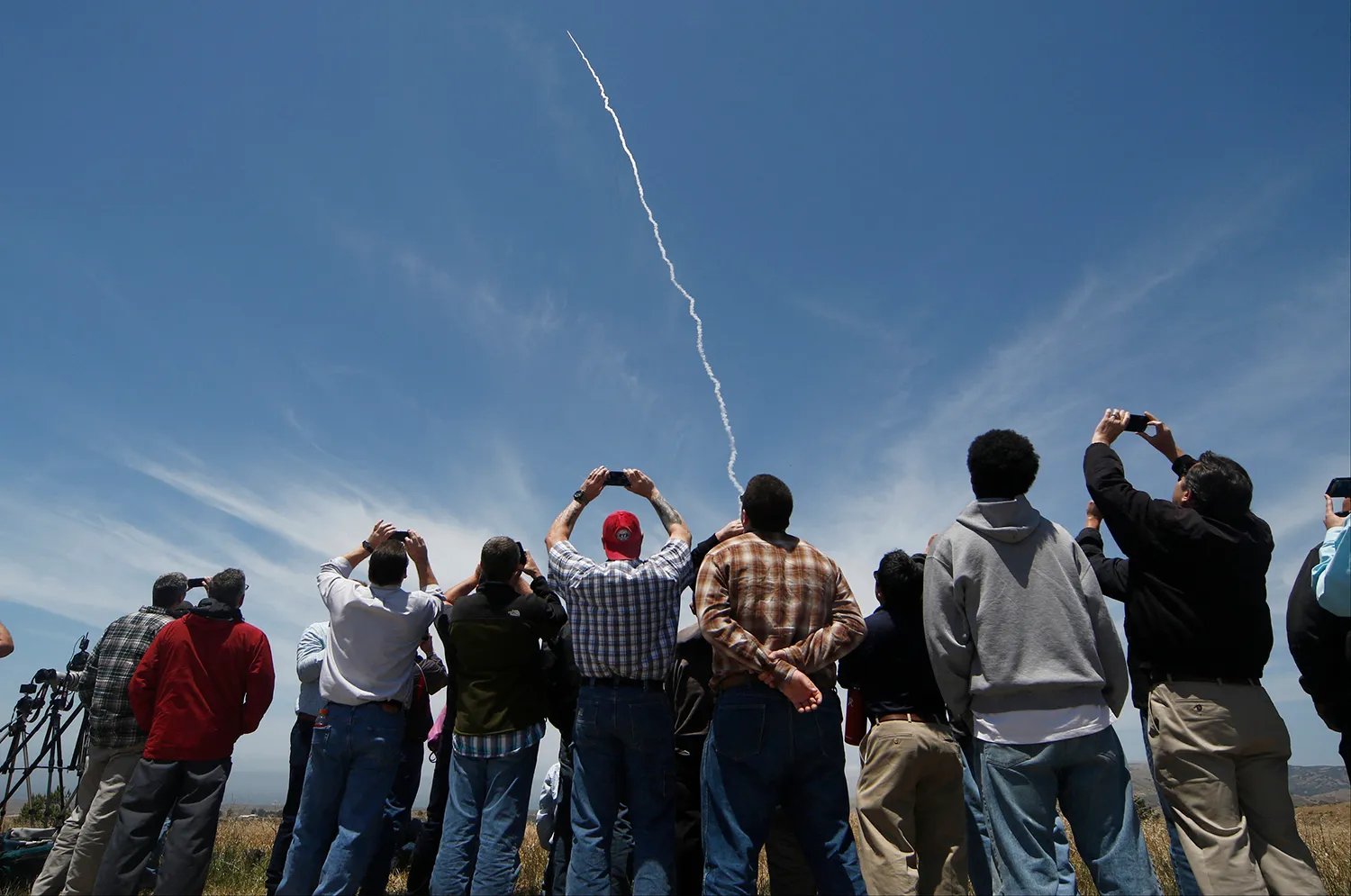
A ground-based interceptor missile takes off at Vandenberg Air Force Base, in Santa Barbara County, California, on May 30, 2017. Gene Blevins/AFP via Getty Images
If an ICBM were fired at the U.S. homeland today, Washington’s primary line of defense would be ground-based midcourse defense systems, which would intercept missiles while they are still in their midcourse phase. However, only 44 ground-based interceptors are operational as part of the GMD system, which is based in the western U.S. states of California and Alaska. Although the GMD system is designed to protect all 50 states, it’s only meant to guard against limited attacks from adversaries such as North Korea—not against the larger, more advanced arsenals of Russia and China.
The Aegis BMD, though considered highly reliable, is also not designed to take out ICBMs. It’s a more regionally focused defense system and is not meant to counter large-scale attacks or protect the entire U.S. homeland.
While the United States also has the THAAD and Patriot systems that are capable of taking out missiles in the terminal phase, that is the least ideal time to destroy such threats due to an array of challenges, including a limited amount of time (it can be less than a minute) and the proximity of a missile to its intended target. These systems are also generally not designed to destroy ICBMs or longer-range missiles.
This is where Golden Dome comes in. The proposed system would be able to intercept missiles of varying ranges from adversaries with more technologically advanced arsenals and during all flight stages—boost, midcourse, and terminal.
But, again, this remains theoretical.
And there are significant hurdles to developing Golden Dome, starting with the sheer number of space-based interceptors needed for it to function.
“If you’re dealing with nuclear weapons, you’ve got to have such a high percentage intercept to really feel like you’re safe,” said Michael O’Hanlon, a defense expert at the Brookings Institution. “You need multiple tiers. And the problem is that multiple tiers, multiple layers of defense, many of them can be spoofed or fooled or, you know, saturated by a major power.”
That means all a U.S. adversary would have to do to overwhelm Golden Dome’s capabilities is to flood the system or use decoys. The United States has not yet developed the technology to determine whether a warhead in space is a true threat or a deception.
How much will Golden Dome cost?
Perhaps the biggest hurdle to developing Golden Dome is the cost. Trump has said that the project will cost roughly $175 billion, but the actual price tag is estimated to be far higher.
Relying on space-based interceptors is an expensive strategy, as dozens of interceptors are needed to take out just a single incoming projectile. “The absentee ratio is the real killer: the fact that most of these interceptors or lasers—because they’re constantly orbiting given their altitude—will therefore not be in good position, and we’ll have to have, like, 10 up there for every one that’s in the right place,” O’Hanlon said.
The average procurement unit cost of just one interceptor in a constellation is estimated to be between $4.4 million and $8.9 million, according to Todd Harrison, a senior fellow at the American Enterprise Institute. That means if 1,900 interceptors are needed for Golden Dome to provide continuous global coverage to counter a maximum of just two missiles, then total procurement would cost between $8.6 billion to $17.2 billion. But if more projectiles are launched (as part of a flood-the-system strategy, for example), then more interceptors will be needed—forcing the cost of procurement to skyrocket. According to an estimate from the Congressional Budget Office, even a limited space-based interceptor system would cost more than $500 billion.
That’s not taking into account Golden Dome’s total cost, which is estimated to be between $252 billion and a whopping $3.6 trillion over 20 years, depending on which threats are prioritized and where coverage is provided.
So far, congress has provided roughly $25 billion toward the Golden Dome initiative, which was also vaguely referenced in the 2026 National Defense Authorization Act but without specific spending directives.
How long will it take to develop Golden Dome?
In October 2025, Lockheed Martin CEO Jim Taiclet said the aerospace company plans to test at least one space-based anti-missile interceptor that is part of Golden Dome by 2028.
Golden Dome should not be characterized as a “system”—particularly given that it doesn’t exist yet—but rather as an “initiative” that will be rolled out in phases over a “number of years,” said Tom Karako, director of the Missile Defense Project and a senior fellow at the Center for Strategic and International Studies. Karako, who said such an approach to missile defense is long overdue, described Golden Dome as an “accounting function” and underscored that many details about the initiative remain up in the air.
The Trump administration has a “concept of a plan,” said Eric Edelman, a former U.S. undersecretary of defense for policy. “If they want to actually show results in Trump’s term, they’ll go after the low-hanging fruit,” such as tackling current cruise missile vulnerabilities. “Otherwise, they’re not gonna have much to show for this in three years because it’s gonna take much longer,” he said.
Yet the Defense Department remains optimistic. Golden Dome remains a “strategic imperative” for the Pentagon, a defense official told Foreign Policy in October 2025, adding that more information could not be offered as the agency kept “operational security top of mind.”
“We continue doing our part to meet the President’s vision,” the official, who declined to provide comment on the record, added.
FP reached out to the Pentagon several times over the course of 2025 to ask for updates on Golden Dome’s development but received no additional details.
Is Golden Dome similar to Israel’s Iron Dome?
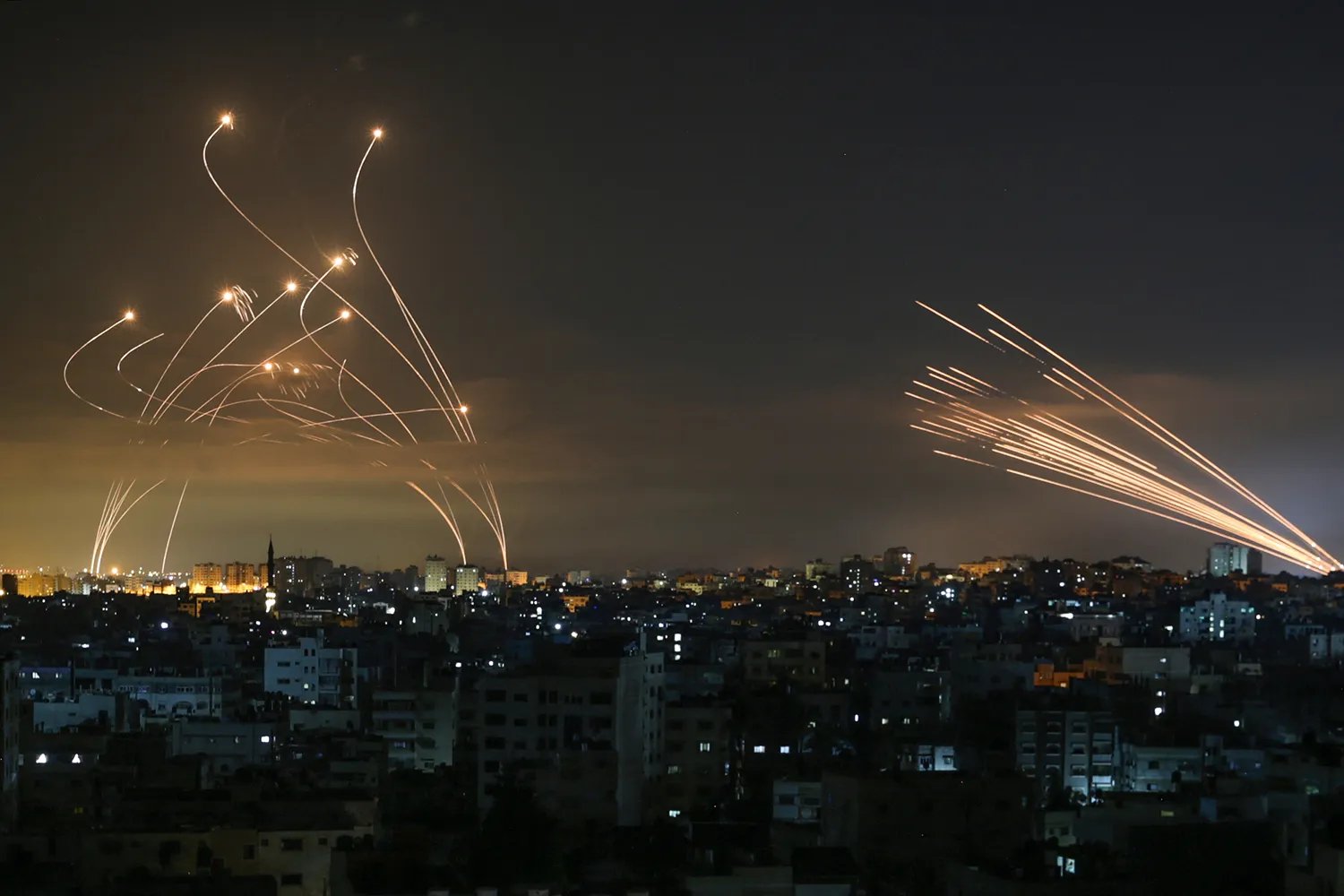
The Israeli Iron Dome missile defense system (left) intercepts rockets fired by Hamas, as seen in the sky above the Gaza Strip, on May 14, 2021. Anas Baba/AFP via Getty Images
Some defense experts have pointed to Israel’s Iron Dome system as evidence that Trump’s Golden Dome initiative is feasible. But key differences make this an imperfect comparison.
For one, Israel is geographically much smaller than the United States, meaning that it has less territory it needs to protect; Israel is roughly the size of the U.S. state of New Jersey. In addition, many of Israel’s adversaries, such as the Iranian proxy groups Hamas and Hezbollah, primarily launch cheap rockets with simple trajectories and small, conventional payloads. To keep costs down, the Iron Dome system allows rockets headed toward unpopulated areas, such as the Negev desert, to hit, as they don’t pose a real threat to civilians. The United States, in contrast, would be countering some of the world’s largest nuclear arsenals that would likely be targeting massive urban centers. It would therefore not have the luxury of letting strikes go.
“You’ve got to hit everything,” Edelman said. “This is the problem with leak-proof defense.”
Russia has more than 5,400 nuclear warheads, and China has around 600 nuclear warheads, though it is expected to have 1,500 nuclear warheads by 2035. The total number of nuclear warheads in North Korea is unconfirmed, though the Federation of American Scientists believes that Pyongyang has upward of 50 stockpiled. (The United States has roughly 5,225 nuclear warheads.)
Golden Dome is “not going to be a protective force field that can intercept the volume of missiles that either Russia or China has; the intercontinental ballistic missile arsenal sizes of both those states are too large,” said Stacie Pettyjohn, the director of the Center for a New American Security’s defense program. “It’s more intended to be a shield that can intercept limited strikes.”
What are the risks of Golden Dome?
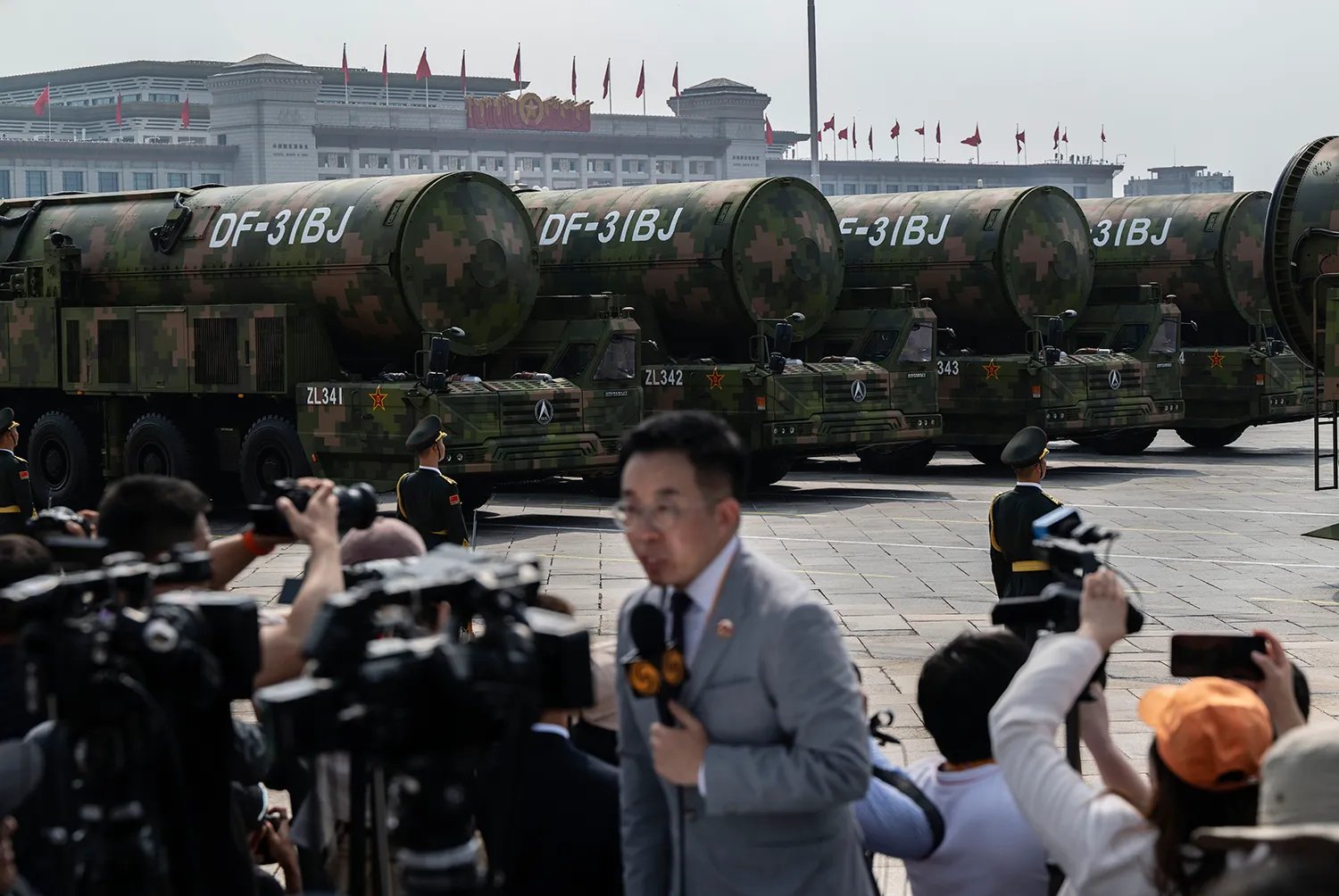
Nuclear capable DF-31BJ ballistic missiles on transporters are seen as they are unveiled during a military parade in Beijing on Sept. 3, 2025. Kevin Frayer/Getty Images
Besides concerns about effectiveness, many critics worry that Golden Dome will spark a global arms race. “So, the fear here is that [adversaries] look at [Golden Dome] and assume that the U.S. is planning to launch a first strike on them, which causes them to build up more missiles and more advanced missiles to get around the shield,” Pettyjohn said. “So whatever Golden Dome can deal with, they’re going to build X plus that and some new types that try to take advantage of some of the weaknesses of the new system.”
That goes back to O’Hanlon’s concern of flooding the field or using decoys—a strategy that the United States simply does not have the technology to counter yet.
But some experts contend that it’s a good sign that foreign adversaries are not happy about the Golden Dome initiative. “Missile defenses exist to contribute to deterrence. It is a speed bump in the sky,” Karako said. “When we hear the Chinese complain about it, that’s probably a good signal that we’re doing something productive.”
Don’t miss more hot News like this! Click here to discover the latest in Politics news!
2026-01-22 16:09:00