Duolingo Shifts from Contract Workers to AI
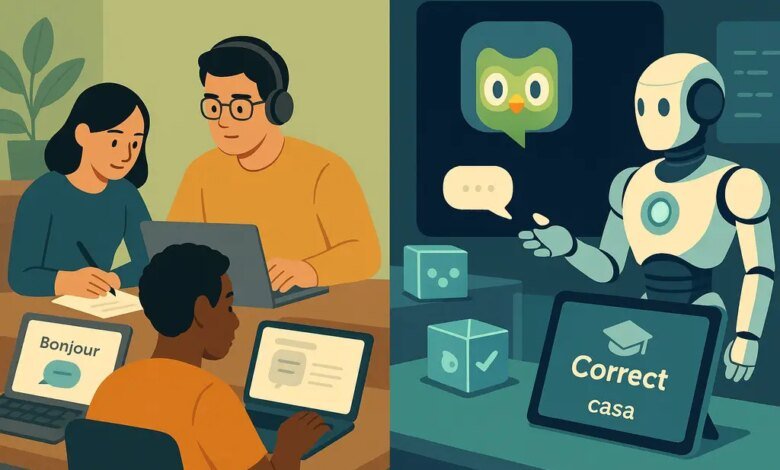
Duolingo is shifting from contract workers to artificial intelligence
Duolingo is shifting from contract workers to artificial intelligenceThis is a bold move that is attracting the attention of the technology world. Are you interested in how one of the most popular language learning platforms is driving widespread adoption of AI? This evolving shift not only promises faster content creation, but also raises important questions about the future of work in the technology and education sectors. If you’re a language learner, a technology enthusiast, or a professional affected by AI developments, what comes next will keep you reading. Keep scrolling to learn how Duolingo is redesigning its processes through the power of machine learning.
Read also: AI Chatbot founder accused of fraud
The changing landscape of language learning platforms
Language teaching has developed rapidly in the past decade. Traditional classrooms have moved online, and mobile applications have replaced static textbooks. Duolingo has led this transformation by making language learning interactive and accessible to users around the world. With over 500 million users to date, it’s not just an app, it’s a movement.
Duolingo’s game-based approach has gained widespread adoption. Lessons are designed to be fun, fast, and effective and appeal to users of all ages. Behind this streamlined user experience was a global workforce of contract workers responsible for reviewing content, translating phrases, and checking lesson quality. This human touch has helped maintain language accuracy across dozens of languages. But times are changing.
Read also: Evaluating AI vendor partnerships
Introducing AI: A strategic shift at Duolingo
In 2023, Duolingo began introducing generative AI models into its workflow. Tools like OpenAI’s GPT-4 are starting to play a bigger role in lesson creation, grammar corrections, and user interaction. The company has begun testing AI capabilities to increase productivity and provide real-time feedback to learners.
Now in 2024, the language learning giant is making a big leap by reducing reliance on contract workers and relying heavily on artificial intelligence systems. What used to take hours by human contributors can now be processed in minutes using AI. These tools are not only faster, they are scalable, adaptable and cost-effective.
Duolingo said this shift is part of a broader “AI first” strategy. The company is retooling internal workflows and investing more in AI R&D, with the goal of creating personalized learning journeys for millions of users designed at scale.
What does this mean for human workers
The shift from contract workers to AI is not without impact. The hundreds of language and content specialists who contributed remotely will no longer work with the company in the same capacity. Duolingo reports that many roles previously held by contractors are now handled by AI. Although some editorial staff still performs quality checking, the bulk of translation and review of lessons is automated.
This shift has raised concerns about job displacement in the gig economy. For years, companies like Duolingo have offered flexible work opportunities for language experts, teachers, and translators. Now, with machine learning tools capable of mirroring natural language understanding and nuance, the demand for these human roles is diminishing.
Duolingo assures users that the quality of lessons will not be compromised, noting that human experts are still involved in reviewing AI decisions. But the nature of work within the company changes from operational to supervisory. Instead of building content from scratch, humans now monitor the quality of machine-generated material.
Benefits of artificial intelligence-based content creation
Duolingo’s move to AI has clear upsides. Speed and scale are among the most pressing. AI systems can create, test and optimize thousands of lesson modules across multiple languages in record time. This efficiency helps the company roll out new features faster and respond to learner needs more flexibly.
Cost reduction is another crucial factor. Paying licensing fees for AI software is cheaper in the long run than maintaining large teams of contract workers. These savings can be reinvested into improving the core product, enhancing the user experience, or supporting initiatives like Duolingo Max powered by OpenAI’s ChatGPT.
User personalization is also stronger in the first AI model. By analyzing how each user interacts with the app, Duolingo can instantly customize lessons, pacing, and vocabulary lists. This would be nearly impossible with a human backend alone due to time constraints and labor costs.
Read also: The 3 best altcoins to boost your portfolio in 2025
Potential risks and ethical considerations
Replacing human workers with artificial intelligence comes with significant risks. Accuracy is one of the main concerns. The language is complex and full of cultural nuances and sophisticated idioms. While AI is improving, it is not perfect. Misinterpretations or culturally insensitive examples can slip through the cracks.
Another challenge is transparency. How publicly will Duolingo disclose its AI-generated content versus human-reviewed content? Users place their trust in the platform for accurate and respectful language instruction making transparency critical to continued credibility.
The issue of data use also looms large. AI requires huge data sets to work efficiently. Ethical use of user interaction data should be a priority, ensuring that privacy standards are maintained and algorithmic bias is reduced.
User feedback and community response
Duolingo users shared mixed reactions to the change. Many were impressed by how smooth and responsive the app was with AI-powered tutoring. Others express concern that the human warmth and nuance of lessons may fade away without human intervention.
Educators and linguists argue that although AI can replicate the structure of language, it may fail to pick up local dialects, cultural references, or non-standard usage. They advocate a hybrid model where AI handles the bulk of operations but is guided by human oversight.
Communities that previously relied on contract work with Duolingo are starting to speak out, too. Many freelancers appreciated the opportunity to contribute to global education from their homes. The loss of this source of income has affected not only individuals, but also families and regional economies.
Read also: Will artificial intelligence replace teachers?
What’s next for Duolingo and the future of education technology?
Duolingo’s move to an AI-first model may set a precedent for other edtech platforms. As machine learning tools become more powerful and accessible, other companies may explore similar strategies to reduce costs and increase user engagement.
At the same time, there is increasing recognition of the need to achieve balance. The most effective educational platforms may combine the speed and adaptability of AI with the empathy and cultural intelligence of human teachers.
Duolingo is also beta testing new features that mimic human conversation using voice-based AI bots. This innovation can enhance speaking and listening comprehension far beyond what is possible using text alone. These developments point to a future in which AI not only helps with language learning, but completely changes it.
As Duolingo moves forward, the company must strike a careful balance between innovation and responsibility. Users, workers and industry leaders will watch closely as the platform defines what it means to learn and work in the age of artificial intelligence.
Read also: What is a digital worker? How do they improve automation?
Conclusion: A defining moment in educational technology
Duolingo’s AI-first approach represents a new era in digital education. What started as a game-based app has now become a pioneer in AI-powered learning systems. While many celebrate the efficiency and scalability it provides, others express legitimate concerns about the loss of functionality and lesson quality. As technology shapes how we learn languages, the next few years will highlight how companies like Duolingo balance human intelligence with artificial brains. One thing is certain, the future of language learning is written in programming as well as conversation.
References
Brynjolfsson, Erik, and Andrew McAfee. The Second Machine Age: Work, Progress, and Prosperity in a Time of Great Technologies. W. W. Norton & Company, 2016.
Marcus, Gary, and Ernest Davis. Rebooting AI: Building AI we can trust. Vintage, 2019.
Russell, Stuart. Human consensus: Artificial intelligence and the problem of control. Viking, 2019.
Webb, Amy. The Big Nine: How Tech Giants and Their Thinking Machines Could Distort Humanity. Public Affairs, 2019.
Crevier, Daniel. Artificial Intelligence: The Troubled History of the Search for Artificial Intelligence. Basic Books, 1993.
Don’t miss more hot News like this! Click here to discover the latest in AI news!
2025-04-29 15:14:00