Study Documents Real World Downside of EV Fast Charging. But There’s Good News Too
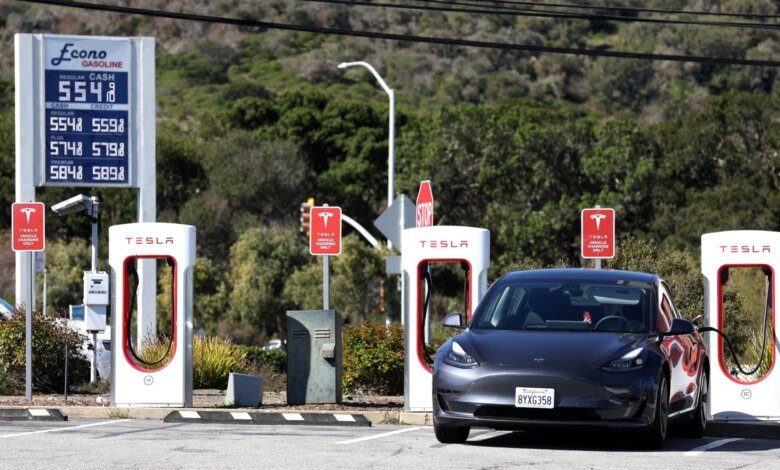
A decades-long question that has lingered around hybrids and all-electric vehicles is how long batteries last and how much they cost to replace. Many drivers of internal combustion engine vehicles like to brag about how their car has covered more than 200,000 miles with just “regular oil changes.” Electric car drivers have nothing to worry about now according to a new study, but they could do better if they changed their charging habits.
Electric vehicles that make heavy use of public “fast-charging” charging stations in North America experience nearly twice the level of battery degradation than similar vehicles that charge at less than 100 kilowatts, according to a Geotab study released this month. Geotab, which monitors battery life in electric vehicles, said its annual survey showed a 2.3% annual loss in primary capacity among 21 models. Those using fast charging stations more than 12% per cycle showed an average annual loss of 2.5%, twice the proportion of EVs using DC charging less than 12% of the time.
This may seem obvious to those who know that the faster you charge, the more difficult it is to use an electric vehicle battery (the same is usually true of electronic devices), but a 2025 Geotab study showed that the rate of battery deterioration has increased from two years ago when it was just 1.8% per year. While the company admits it is testing a larger, older range, it blames the increased use of DC fast charging among the growing number of electric vehicles.
However, it’s not all bad news. Geotab concludes that electric vehicle batteries are lasting much longer than initial expectations and will likely exceed the typical lifespan of a vehicle on U.S. roads, which was roughly 13 years as of last year, according to S&P Global.
“Our latest data shows that batteries are still lasting much longer than the replacement cycles most fleets plan for,” said Charlotte Argo, Director of Sustainable Mobility at Geotab. “What has changed is that charging behavior now plays a much larger role in how quickly batteries life, giving operators the opportunity to manage long-term risks through smart charging strategies.”
What this study reinforces is that public fast-charging stations are ideal for long highway trips, where they can charge from 10% to 80% relatively quickly to get back on the road. That’s why many of them are being built or planned to be gas stations or attached to convenience stores, like the partnership between Mercedes-Benz and Buc-ee set up in 2023.
DC fast charging stations are much more expensive than Level 2 stations, let alone charging at home for some people. According to Stable.Auto, the national average price at a Level 2 public charging station between July 2024 and July 2025 was 25 cents per kilowatt-hour versus 47 cents for DC fast charging. Home charging averaged just 18 cents per kilowatt hour.
Studies like Geotab’s demonstration of Level 2 charging still play a useful role in new public charging stations — malls, office parks, and street parking come to mind — where drivers far from home who typically need some power can charge at a lower cost and extend battery life.
Don’t miss more hot News like this! Click here to discover the latest in Technology news!
2026-01-27 10:00:00