US businesses and consumers bear majority of tariff costs, study finds

Torsten Slok, chief economist at Apollo Global Management, comments on president Donald Trump’s threat to increase Chinese tariffs, his outlook for the economy and more at the Barron’s Roundtable.
New analysis breaks down the transit Tariff costs He finds that US companies and consumers bear the majority of the cost at this point, rather than foreign exporters.
Goldman Sachs Economists estimate that as of August, US businesses were absorbing a net 51% of the costs of the tariffs, while US consumers bore 37% of the burden. They also estimated that 9% of the cost was paid by foreign exporters, and about 3% was attributable to potential tariff evasion.
“Our analysis suggests that U.S. companies currently bear the lion’s share of tariff costs because some tariffs only recently took effect, and it takes time to raise prices for consumers and negotiate lower import prices with foreign suppliers,” Goldman Sachs economists wrote.
The report noted that if newly implemented and future tariffs end up having the same impact on prices as those that have gone into effect so far, American consumers will ultimately absorb the majority of the costs.
Federal Reserve Chairman warns that inflation is “going in the wrong direction” as concerns grow about tariffs
The Goldman Sachs analysis found that American businesses and consumers bear most of the cost of tariffs. (David Paul Morris/Bloomberg via Getty Images/Getty Images)
Economists at Goldman estimated that by the end of 2025, the U.S Consumers will absorb 55% of the tariff costs, while 22% will fall on US companies, 18% on foreign exporters and 5% on potential tariff evasion.
“Our estimate of 22% for U.S. firms is modest because it represents a net effect—firms that use or sell imported goods will bear a larger share of the costs of the tariffs, while domestic producers who are protected by tariffs from foreign competition will be able to raise their prices and increase their profit margins,” the economists wrote.
The Fed’s preferred measure of inflation shows that consumer prices remained high in August
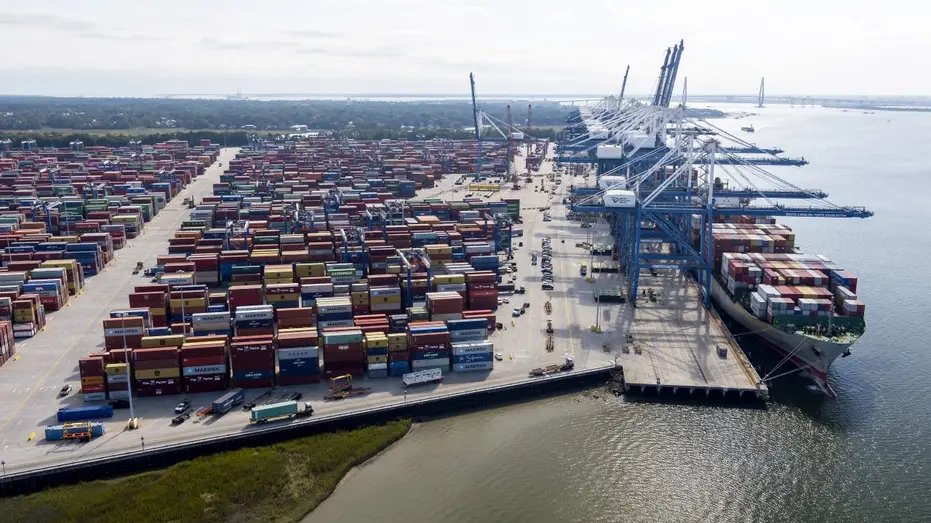
Tariffs are taxes on imported goods paid by the importer, who typically passes on higher costs to consumers through higher prices and may be able to negotiate lower prices from exporters. (Sam Wolf/Bloomberg via Getty Images/Getty Images)
The Goldman Sachs report also estimated that tariffs have pushed inflation up about half a percentage point so far this year, and that trend is expected to continue in the coming months.
The analysis found that core PCE prices increased by 0.44 percentage points this year, and that with tariff costs expected to rise from 55% to 70%, Core PCE inflation It is expected to rise by an additional 0.6 percentage points.
As a result, the analysis expects core PCE inflation to reach 3% y/y in December 2025, or 2.2% net of the effects of tariffs. In December 2026, economists estimate that core PCE inflation will be 2.4%, or 2% net of the effects of tariffs.
Fed’s Miran Downplays Impact of Trump’s Tariffs on Growth and Inflation
Federal Reserve Policymakers have noted a slight uptick in inflation this year as tariff costs begin to impact the economy and consumer prices, with PCE inflation at 2.7% and core PCE at 2.9% as of August.
These numbers are well above the Fed’s 2% target. Concern about the inflationary impact of tariffs on the data has led policymakers to refrain from cutting interest rates for most of the year, as they proceeded to cut rates by 25 basis points in September amid signs of a weakening economy. Labor market.
Get FOX Business on the go by clicking here
The central bank is expected to cut interest rates by another 25 basis points at its meeting next week, as uncertainty over economic conditions persists.
Don’t miss more hot News like this! Click here to discover the latest in Business news!
2025-10-21 12:00:00