Opposition Leader Fights Back Against Deepfake Video
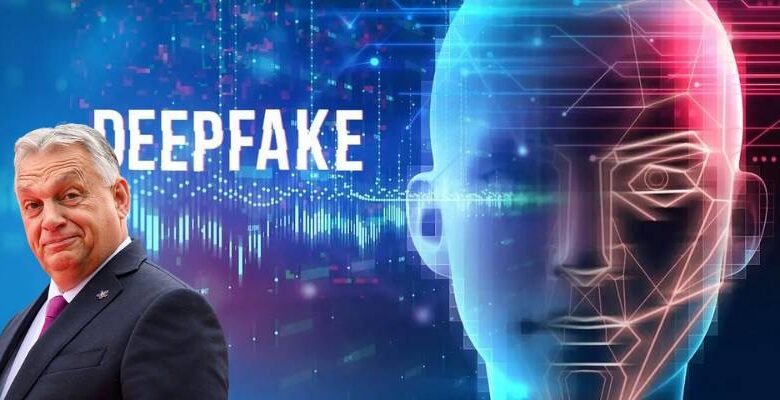
A political storm is brewing in Budapest after Peter Magyar, the leader of Hungary’s opposition TISA party, announced he would file a criminal complaint over a video he says was entirely fabricated by artificial intelligence.
The short clip, which has spread like wildfire on Facebook, appears to show him calling for cuts in pensions, a claim he strongly denies.
Magyar insists the video was digitally doctored and used as a weapon against him as the country heads toward a heated election in 2026.
The alleged deepfake, less than forty seconds long, looked convincing enough to fool thousands. In it, Magyar’s face moves naturally, his voice sounds authentic, and his gestures are precise.
But linguistic experts quickly noticed discrepancies, pointing to artifacts indicating artificial editing.
Within hours, opposition leader Palaz Orban – a close aide to Prime Minister Viktor Orban – was accused of intentionally distributing the video.
He described the incident as a “direct attack on democracy,” saying it marked “the beginning of a digital war for truth.”
Deepfakes are not new to politics, but this feels different. They have moved from parody and mischief to targeted misinformation.
The technology behind them, generative AI models capable of replicating faces and voices, has become so advanced that trained analysts struggle to distinguish the real from the fake.
As one researcher told The Guardian, “You no longer need Hollywood-level tools – a smartphone and a few minutes are enough to get a fake politician to say anything.”
The scary thing is how quickly these things spread. In less than a day, the clip was shared across multiple social platforms, garnering hundreds of thousands of views before fact-checkers could respond.
A group of technology watchdogs tried to intervene, but they admitted their detection algorithms were “lagging by several months”.
This situation echoes recent warnings from European Commission officials who say that in the absence of clear labeling and rapid response detection systems, “synthetic media could become one of the greatest threats to fair elections in the EU.”
And the legal system? He was still trying to catch his breath. Hungary does not have a comprehensive framework for prosecuting digital counterfeiting, leaving cases like this oscillating between defamation and cybercrime.
The upcoming EU-wide AI law — which requires clear disclosure when AI is used to create or alter media — will not come into full force until 2026.
That means this fight is now unfolding in a gray area, with Magyar’s team urging lawmakers to speed up voter protections ahead of next year’s election.
From my point of view, this is not just a galactic story; It is a preview of what is to come for every democracy.
We used to say “seeing is believing,” but that phrase doesn’t carry much weight anymore. The truth now requires verification.
When deepfakes can destroy a career overnight, we are forced to rethink trust itself — who earns it, who manipulates it, and who can define it.
Ultimately, the Magyar case may become a turning point — not just for Hungary, but also for how Europe deals with AI-fueled disinformation.
As one analyst from Politico Europe put it: “This is not a political scandal; it is a test of digital democracy.”
If this is true, then the verdict will come not from the courts alone, but from how the public chooses to see, question, and believe in an era in which reality itself can be rewritten.
Don’t miss more hot News like this! Click here to discover the latest in AI news!
2025-10-30 00:53:00