Trump’s U.S. Nuclear Testing Would Be Expensive and Dangerous
While on his way to meet with Chinese President Xi Jinping for trade negotiations, US President Donald Trump published a short statement on October 29 that seemed to indicate that the United States would soon resume explosive nuclear testing. “Because other countries are testing their programs, I have instructed the War Department to begin testing our nuclear weapons on an equal footing. This process will begin immediately,” he said on Truth Social.
What Trump means by this is unclear at best, and now the US Secretary of Energy is contradicting him, which makes matters even murkier. While some have assumed that this constitutes a direct order to resume explosive testing of nuclear devices, the indication that the United States would conduct testing on an “equal footing” suggests that it is more about testing delivery systems, or performing very low supercritical testing of materials and subcomponents, rather than the warheads themselves.
While on his way to meet with Chinese President Xi Jinping for trade negotiations, US President Donald Trump published a short statement on October 29 that seemed to indicate that the United States would soon resume explosive nuclear testing. “Because other countries are testing their programs, I have instructed the War Department to begin testing our nuclear weapons on an equal footing. This process will begin immediately,” he said on Truth Social.
What Trump means by this is unclear at best, and now the US Secretary of Energy is contradicting him, which makes matters even murkier. While some have assumed that this constitutes a direct order to resume explosive testing of nuclear devices, the indication that the United States would conduct testing on an “equal footing” suggests that it is more about testing delivery systems, or performing very low supercritical testing of materials and subcomponents, rather than the warheads themselves.
Trump said he began testing on an “equal basis,” but neither China nor Russia have conducted large-scale nuclear weapons testing since they signed the Comprehensive Nuclear Test Ban Treaty (CTBT). However, there are claims that they may be conducting small-scale “supercritical” nuclear tests, meaning that the test achieves a self-perpetuating chain reaction. Trump appears to have referred to these allegations during a 60 minutes The interview aired on Sunday. These tests could theoretically be carried out on scales small enough to evade detection and would be very difficult to track by intelligence.
Small-scale supercritical tests also generate less information than large-scale warhead tests, as one cannot directly test the interaction of different materials inside a nuclear warhead during a large-scale nuclear explosion. Such tests also require specialized facilities in which the United States has not invested, and could also take years of investment to perform. The current subcritical testing facility in the United States, PULSE (formally known as U1a), is currently being upgraded at a cost of about $2.5 billion and may not be ready until 2030.
Trump’s announcement also came as Russia tested two next-generation nuclear launch systems, the Burevestnik, a nuclear-powered cruise missile with some questionable technical characteristics, and the Poseidon, a nuclear torpedo designed to destroy coastal cities. Trump may want the United States to begin testing nuclear systems at a rate that matches tests in China and Russia.
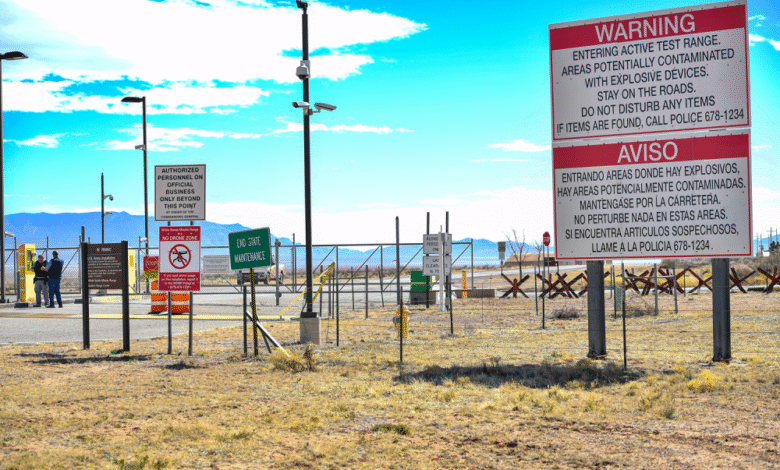
However, resuming nuclear testing and increasing flight testing could have significant drawbacks. For one thing, it is unclear how quickly the United States can actually resume nuclear testing. On paper, the United States retains the ability to resume nuclear testing within 24 to 36 months of the presidential decision. But it is unclear how realistic this timeline is. The Nevada test site is in poor condition and would likely require a significant investment of resources.
Large-scale nuclear testing is unlikely to yield much benefit. On the one hand, this would constitute an abandonment of its commitment to the Comprehensive Nuclear-Test-Ban Treaty, and other signatory states such as Russia and China may follow suit. China is expected to gain the most technical data from the resumption of testing, because its current data is limited – it conducted only 45 nuclear tests before the Comprehensive Nuclear-Test-Ban Treaty, while the United States conducted more than 1,000 tests.
Resuming the tests could also lead to serious diplomatic consequences with public discontent in allied countries. For nearly a decade, the United States has been trying to manage its reputation on nuclear issues, as countries question slow progress toward nuclear disarmament. Despite commitments to continue good faith disarmament negotiations under Article VI of the NPT, progress on nuclear disarmament has been reversed over the past decade with Russia, China, and the United States investing in new weapons systems.
Some countries have grown impatient with the lack of progress and have backed the more urgent Treaty on the Prohibition of Nuclear Weapons, which prohibits signatories from producing, transferring or allowing the storage of nuclear weapons on their territory. The Treaty on the Prohibition of Nuclear Weapons has been signed by 95 countries and is widely popular in countries allied with the United States, including Australia, Japan and the Netherlands.
Resuming nuclear testing could inflame public opinion in these countries and make resistance to signing the Treaty on the Prohibition of Nuclear Weapons politically unacceptable. This will have serious consequences for the network of alliances that the United States has built to deter Russia and China. For example, the United States is currently developing nuclear weapons designed for deployment on attack submarines. If countries such as Australia and Japan signed the TPNW, they would be prohibited from placing nuclear weapons on their territory and would require the United States to declare that visiting attack submarines do not carry nuclear weapons on board.
But the United States has a strict policy of not declaring the presence of nuclear weapons anywhere, and previous attempts by New Zealand to get visiting American warships to declare the presence of nuclear weapons led to the United States suspending its defense commitments to New Zealand. A similar situation could occur in other allied countries if those countries join the Treaty on the Prohibition of Nuclear Weapons, which could cause serious problems for the United States’ network of alliances and its ability to deter adversaries.
But it is possible that Trump was not originally proposing actual nuclear testing. He may want to conduct further flight tests of nuclear-capable systems, perhaps flight tests in direct response to Russian or Chinese flight tests, given the timing of his statements and recent Russian tests.
However, this also can generate significant disadvantages. The United States has taken pains to point out that flight testing of nuclear-capable systems, such as regular flight testing of Vandenberg’s Minuteman 3 missiles, is part of routine testing and is not intended to signal anything to adversaries. As part of reducing tensions that missile tests could generate, the United States notifies other countries before tests are conducted. China recently did the same after testing an intercontinental ballistic missile in September 2024 over the Pacific Ocean, progress it has made in reducing risks that should be applauded. Conducting more flight tests and using them explicitly to match Russian and Chinese actions would undo this progress.
But another, more pressing problem is that few of the United States’ next-generation nuclear delivery systems are ready for prime-time use. The Sentinel, the United States’ new intercontinental ballistic missile, was supposed to fly in 2023, but has been delayed until 2028. The nuclear-armed sea-launched cruise missile (SLCMN) does not have an initial flight test scheduled but is expected to enter service in 2034. It is impossible to flight test the system within the next two years because the system is still in the design phase.
The United States could use existing nuclear systems instead, but many of them are old and have limited stockpiles. For example, the Minuteman III missile is regularly tested, 400 of which are currently deployed in silos. While rocket engines can always be produced again, airframes and guidance systems are more expensive to manufacture, and many components have been out of production for decades. Increased testing could exhaust current US supplies.
None of the options available to the United States – from resuming nuclear testing to increasing aviation testing – can produce short-term results. All require years of sustained investment, which requires approval from congress and offices across the government. Whatever Trump means by his statement, the next path could be big and dangerous.
Don’t miss more hot News like this! Click here to discover the latest in Politics news!
2025-11-04 17:36:00