Von der Leyen dodged Starmer request for meeting on EU money demands
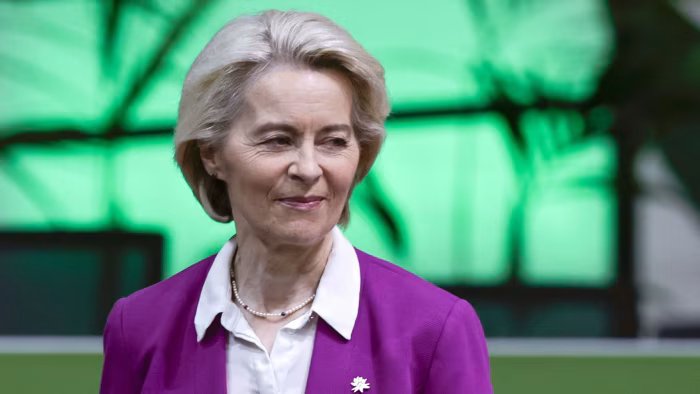
European Commission President Ursula von der Leyen evaded a meeting with British Prime Minister Sir Keir Starmer at COP30 in Brazil over Brussels’ demand that London pay billions of euros to secure improved relations.
The British leader sought the meeting to complain about EU demands that the UK pay up to 6.5 billion euros to participate in the Loans for Arms program and make separate contributions to the EU budget, according to two people familiar with the situation.
A Commission spokesman confirmed that Starmer had requested time with von der Leyen at the climate conference in Belem, Brazil, but said the meeting did not take place for scheduling reasons.
A British official said: “We were not trying to restrict her to talk about this particular issue. In the end, they did not end up meeting. He did not speak to her for some time.”
A UK government spokesman said: “We will only agree deals that provide value for the UK and British industry. Nothing has been agreed and we will not be giving ongoing comment on ongoing talks.”
Von der Leyen’s decision not to make time to meet Starmer is a sign of sensitivities in Brussels over how to deal with its former member.
While EU-UK relations have improved under Starmer’s Labor government, many EU members do not want to see the UK regain any benefits from free membership to avoid setting a precedent.
However, the EU has been keen to enlist Britain in its rearmament campaign to deter Russia, under the SAFE program that would help European countries buy new weapons jointly.
“When we talk about European defence, the UK is part of that,” a senior EU diplomat said. But France and others insist the UK is paying a high price for the benefits to British industry.
The deadline for bidding for SAFE projects is November 30, with one of the two people familiar with the situation suggesting a discussion could take place between von der Leyen and Starmer before then to find a solution.
The row over the money comes six months after a historic summit in May that officially declared a “reset” between the EU and the UK, showing how difficult it is to turn warm words into binding agreements.
Some of the most sensitive issues have been eluded as the two sides raced to complete the summit’s “mutual understanding” document, which remains the basis for future negotiations.
In particular, several Member States, led by France, have lobbied the Commission to make tougher demands on the UK in areas including youth mobility and the Erasmus+ student exchange scheme.
The UK introduces a scheme for people aged 18 to 30 to live and travel based on a “memorandum of understanding”, a tool it uses with other countries, with caps on numbers.
Member states have introduced an unlimited scheme where EU students would pay the low “home fees” that UK universities charge domestic students, which they want to be legally binding.
London said it would only rejoin the Erasmus+ study abroad program at a 50 per cent discount because more EU nationals than EU citizens were coming to the UK, with EU diplomats saying this was unacceptable.
The European side wants the UK discount to apply for only one year in 2027 and not to exceed 30 percent, according to officials in Brussels.
As for a groundbreaking veterinary deal that would reduce inspections of food, plants and animals if the UK agrees to follow EU standards, the EU has yet to agree to formally start talks.
On Friday, member states postponed signing their authorization for this deal and the conditions for the United Kingdom’s re-entry into the single energy market, which would reduce energy prices.
The delay was caused by divisions over whether the UK should pay into EU regional funds as the price for reconnecting the two sides’ emissions trading schemes – allowing companies in each jurisdiction to avoid carbon taxes at the border – and other agreements.
A majority of member states say the UK should make such payments just as countries with closer economic ties to the EU such as Norway and Switzerland do, according to four diplomats familiar with the talks.
But diplomats said a group led by Germany and the Netherlands opposed this approach on policy areas outlined in a “common understanding” document agreed in May.
They added that those countries said that the European Union should not demand payment into regional funds now in those regions since it did not do so in the May document.
The countries, led by Germany and the Netherlands, fear harming relations before the summit scheduled for next year. Ambassadors of member states will meet on Tuesday to try to reach a solution.
2025-11-10 05:00:00