‘Money is useless’: CA earning Rs 30 lakh a year says life changed after a brain haemorrhage
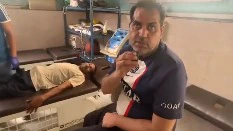
Once upon a time, 42-year-old chartered accountant TC Verma lived what he calls a “stable, secure and comfortable” life – a stable job, an annual package of Rs 30 lakh, and five houses to his name. In a detailed video shared on X by guru Dinesh Wadhera, Verma narrates how the sudden medical crisis of 2021 shattered that stability and reshaped every part of his life. His account – quiet but deeply personal – has attracted widespread attention online.
The clip begins with Verma describing life before the illness: working as an auditor for Lancer Footwear, financially secure, and confident about the future. He says nothing indicated that everything was about to collapse without warning.
That collapse came on July 4, 2021, when he suffered a brain hemorrhage. The health emergency quickly unfolded, leaving him unaware of what was happening. Doctors later discovered 18 blood clots in his brain. He explains that he had to undergo six surgeries, and each procedure involved serious risks. The recovery process was slow and difficult, and the surgeries left long-term effects on his memory, movement and ability to communicate.
Verma says in the video that after the surgeries, he was unable to speak, recognize people or act normally. He recalls that when he was first brought to the institution, he was “in very bad shape,” unable to communicate even basic needs. He says that for months he did not understand where he was or who was around him. The trauma affected his physical ability and mental clarity.
With continued treatment, he began to regain his little abilities. He says it took some time before he could sit independently, form words, and respond properly to the people around him. To date, he still suffers from paralysis on one side of his body. However, he states that he feels “completely mentally fit”, and that his mind is now clear enough to understand everything that has happened over the past three years.
Much of the video focuses on what happened with his family. Verma describes events which, according to him, he did not understand until much later. He says he believes he was taken to a hospital in Gurgaon for further treatment, but was instead left at a charity centre. He says in the video: “My wife left me here… I didn’t know about it.” He adds that his family informed the organization that they could not care for him because their children were young and did not have the ability to deal with his condition. He states that in the past three years, he has only seen his family a few times.
Verma has been living in the charity house ever since. He says the staff and therapists at the center have become his main support system.
According to him, he arrived unable to speak, but today he can communicate clearly, walk short distances with assistance, and participate in basic daily activities. He notes that he has seen many other patients at the center make a full recovery and go home, and describes the organization’s structure and treatment model as “very good.” He credits the team with treating him with patience and helping him regain a sense of independence.
Over time, his experience profoundly changed his perspective on life, work, and relationships. Verma says his previous income, possessions and lifestyle did not provide him with comfort during his most difficult days. He thinks about how important his external success is when he suddenly becomes dependent on others for survival. “Money is useless. Social service is useful,” he says in the video, describing this as one of the biggest lessons he has learned in the past three years. He adds that the disease forced him to understand who stands by his side and who does not stand by his side.
It also uses video to share a broader message. Verma urges families to think carefully before leaving a sick relative in someone else’s care. He says organizations like his can provide medical and emotional support, but families must remain involved in the recovery process, because that connection gives patients strength and reassurance. At the same time, he acknowledges that such institutions are essential for people who need long-term rehabilitation and cannot get this level of care at home.
Don’t miss more hot News like this! Click here to discover the latest in Business news!
2025-11-16 07:07:00