Why an ASEAN power grid is key to tapping Southeast Asia’s green potential
The International Energy Agency reports that energy demand across Southeast Asia rose at twice the global average in 2024, and expects consumption to double by 2050. In order to maintain high standards of living, economies across the region are moving towards higher-value, more energy-intensive industries, and data centers are one clear example of this.
This creates a problem.
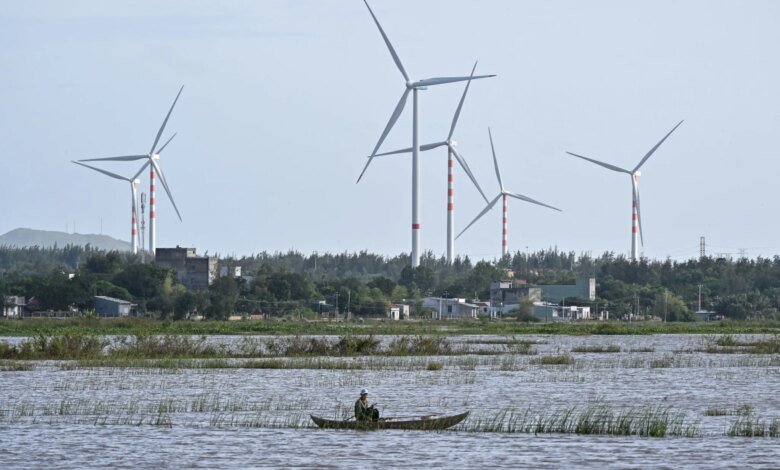
ASEAN countries have enormous, but so far largely untapped, potential in renewable energy, especially solar photovoltaic energy, and onshore and offshore wind energy. The International Energy Agency estimates potential supplies at about 20 terawatts, nearly 55 times the region’s current generating capacity. This energy will be cheap. But the increase in overall demand now far exceeds new supply from renewables. Until this changes, ASEAN countries remain dependent on rising fossil fuel imports, exposing them to price risks, potential supply disruptions, and increased greenhouse gas emissions.
Executives at Asian companies have recently focused on dealing with tariffs and trade restrictions, potential supply chain disruptions and geopolitical insecurity — rather than focusing on energy and electricity. In the latest EY-Parthenon Global CEO Expectations SurveyCEOs in the Asia-Pacific region expressed greater concern than their peers in Europe and the Americas about geopolitics, macroeconomics and trade. They should not lose sight of how investing in modernizing energy supply and transmission today can provide significant benefits, including, but not limited to, low-cost energy. They should mobilize all sources of funding, private and public, to implement projects to this end.
That is why the recent announcement by the Asian Development Bank, the World Bank, and the Association of Southeast Asian Nations (ASEAN) of a new financing initiative to support the ASEAN Connected Power Grid (APG) is so important. This comes ahead of an enhanced memorandum of understanding that ASEAN countries are due to sign later this year to realize the vision of a connected network that has eluded since the 1990s.
Its construction will be expensive, estimated at more than $750 billion. But the returns – cheaper and more reliable electricity, enhanced energy security and regional cooperation, and lower emissions – will justify the cost, as long as financing can be mobilized.
At the ASEAN Energy Ministers’ Meeting in October, the Asian Development Bank pledged up to $10 billion over the next 10 years. The World Bank is providing an initial amount of $2.5 billion. Multilaterals will also provide grants, guarantees, political risk insurance and other concessions to attract private capital, as well as technical assistance.
Why wasn’t this connected network built already? Partly for technical reasons. ASEAN countries use different efforts in their transportation systems. Its national networks stand at varying levels of development. They use distinct operating standards and regulatory frameworks. Politics also played a role. Countries have previously prioritized domestic industrial development and national energy policies.
Growing urgency around the energy transition has shifted those priorities and focused on how renewable energy from widely distributed sources delivers it to consumers who need it, even in other countries. The key now is to move beyond simply connecting country networks to modernizing national networks on a broader scale.
In May, leading energy companies from Malaysia, Singapore and Vietnam agreed on a strategic partnership to explore the use of submarine cables to transmit electricity generated mainly from offshore wind farms in Vietnam through the Peninsular Malaysia National Grid to homes and businesses in Malaysia and Singapore.
Vietnam is prioritizing investment in offshore wind energy as part of a strategy to become a regional renewable energy hub. Singapore, despite lacking the natural resources for large-scale renewables, intends to be a key enabler of cross-border trade in clean energy. It has given conditional approval for 10 projects to be imported, including solar energy from Australia; solar, hydroelectric and wind potential from Cambodia; solar energy from Indonesia; As well as offshore wind from Vietnam. Thailand could be another big importer.
High return on investment
The vision of an ASEAN power grid, linking a population likely to reach 780 million by 2040 across a $10 trillion regional economy, three times the size in 2022, was laid out one year ago at the UN Climate Change Conference (COP29). Doubling the number of interconnections across the ten ASEAN countries could boost connected capacity from 7.2 GW in 2022, to 33.5 GW fifteen years from now.
This will require more than just undersea cables and high-voltage direct current lines capable of transmitting power over long distances with minimal leakage. To succeed at scale, a resilient ASEAN grid must address a key challenge that all renewables face – intermittency. This requires investments in industrial-scale batteries and other storage and conversion technologies to balance increasingly variable supply with growing demand. Managing this balance is essential to maintaining grid stability and preventing power outages, including amid severe weather events that coincide with the peak of power outages.
Modernizing LANs must include incorporating new digital technology, familiar from the Internet of Things, to continuously monitor and measure systems, detect potential vulnerabilities before supplies are disrupted, and enable constant maintenance rather than expensive repairs.
The ASEAN Electric Power Grid paves the way to lower manufacturing costs and enhance competitive advantages, as the region continues to move up the manufacturing value chain.
In the long term, this could also improve food security resilient to climate change and put the region in a positive feedback loop. Related investments in agricultural technology may also boost biofuel production, which could make air travel greener and help decarbonize other sectors that are difficult to electrify.
A large proportion of total employment across the Asia-Pacific region is in sectors directly affected by climate, such as agriculture and fishing, putting populations at great risk from global warming and rising sea levels. With the ASEAN Network, governments, major utilities, energy companies and financiers are coming together to address these risks, building a project that promises huge benefits for generations to come.
Don’t miss more hot News like this! Click here to discover the latest in Business news!
2025-11-26 22:00:00