Americans can’t agree on what ‘middle class’ means anymore, and they’re debating it in the comments of TikTok home tours
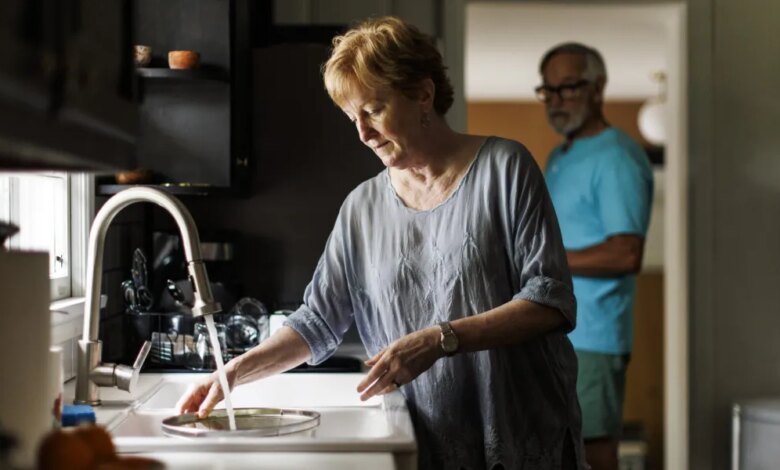
The comment sections of “middle-class home tours” on TikTok feature thousands of Americans debating what counts as middle class in 2025. Viral videos of middle-class homes spark comment threads filled with emotional arguments, as users weigh everything from definitions of income and home size to family struggles and lifestyle choices. Users boldly classify themselves as, alternately, “lower middle class,” “middle middle class,” or “upper middle class” — but the comments sections reveal heated debates about who actually is on the economic ladder.
Some viewers feel that the homes shown appear wealthier than they are, sparking debate over whether the poster truly represents the middle class or, as one commentator put it, “the upper class hiding behind modest decor.” Posts offering relatable glimpses of chipped wood paneling, mismatched furniture, and paper window shades are being fueled by those who feel social media is awash in out-of-reach luxury. Others point out that the middle class cannot be defined by appearances alone, given regional cost differences and inflation.
It’s a clear new window into how confused people are about class in 2025. It seems like many Americans aren’t really sure what distinguishes different class gradations, or where their families fall. This confusion is exacerbated by differences in costs of living across the country and changing economic standards caused by persistent inflation and stagnant wages.
There is no consensus on income
Many Americans now claim that the income thresholds associated with middle-class status no longer match reality. While the Pew Research Center defines the middle class as falling between two-thirds or twice the median household income — which in urban U.S. areas can vary from about $53,000 to $161,000 annually — a TikTok creator recently appeared asserting that “$50 an hour is the new middle class,” reflecting how rising costs of living have changed public perceptions. With median household income at nearly $83,000 as of September 2025, and steadily rising as inflation has pushed up household costs, any California or Massachusetts resident will tell you that the threshold for middle-class status is even higher, and a home that looks upper-class in one state may only be considered middle-class in another.
As more Americans turn to TikTok to share and comment on their version of middle-class life, opinions remain divided. Some users argue that the “middle class” is increasingly aspirational and out of reach, a sentiment reinforced by home tours that seem out of reach for many families. Others believe the nomenclature should adapt to reflect comfort and stability, even as incomes stagnate and homeownership seems out of reach.
“Average Home Tour” trend.
A wave of content creators are responding to pressures to showcase clean homes by filming unpolished, “average” or “natural” home tours. These videos highlight the mundane details and minor imperfections of the space we live in — pantry doors left unfinished, creative solutions for broken curtains, and evidence of everyday clutter in the form of unwanted drawers and cluttered countertops. The creators’ message is clear: being middle-class is less about perfection and more about getting things done, sharing moments of love and memory, and managing the pressure of costs that leave little room for luxury.
Despite some relief in headline inflation rates, daily living costs are still rising, and cumulative price increases have become a permanent burden on many families. Wages have not kept pace, with the JPMorgan Chase Institute recently finding that real income growth has stagnated to its slowest rate since the Great Recession. On the other hand, the wealthiest Americans saw their net worth rise due to rising asset values. While those in the top 10 percent can absorb higher housing costs and continue with discretionary spending, many in the so-called middle class are cutting back on their spending, feeling squeezed by rising grocery, utility and housing costs.
luckAuthor of the latest story profile and COO of Ritholtz Wealth Nick Maggiulli emphasizes the mix of assets (companies and stocks vs. cars and homes); a shattered housing market with record numbers of millionaire renters; Aging-driven wealth transfers are reshaping the meaning of wealth both practically and psychologically. Maggioli highlights the framework of the “wealth ladder” and “new economic classes” in the United States, dividing Americans into six levels of wealth and highlighting the rapid rise—and growing concern—of what he calls the “fourth tier”: the upper-middle-class person who is wealthy on paper but not in feelings. UBS calls this the “Everyday Millionaire.”
Maggioli said that “something strange happens” because people who are objectively very successful seem to struggle to enjoy the fruits of their labor. “They’ve done well in life…but on a relative basis in the United States, the competition for these high-end goods is very high, so now it seems like we’re all canceling each other out with all this extra wealth.” An economy that was not built to accommodate so many wealthy families is straining under intense competition for scarce luxury goods, housing, and lifestyle perks, leaving many statistically wealthy families feeling squeezed rather than secure. He added that in the contemporary United States, “the poor own cars, the middle class own homes, and the rich own their businesses.” Average TikTok home tours reveal that middle-class homes look different than many people expect.
Maggioli’s circular assumes that even the middle class can afford a home, and some top housing executives say that’s not a sure thing these days. Recently, Sean Dobson, CEO of Amherst Group, one of the largest US landlords, said at the ResiDay conference in New York that “we may have made housing unaffordable for an entire generation of Americans” because of our recent economic policies. Amherst’s calculations suggest that with the average age of homebuyers now 40 and the average home price about $400,000, affordability would require housing prices to fall by more than a third, interest rates by about 4.6%, or incomes to increase by about 55%.
“What are our goals?” Dobson asked luck Virtually, on the sidelines of the conference. “Is our goal to have long-term real estate for everyone? Or is our goal to have everyone live where their kids can go.” [to a good school] And be successful?” He said there’s a big, glaring problem for the traditional driver of middle-class wealth: “In fact, the problem is that homeownership is very difficult to come by, and there aren’t enough homes — in all types and price points — to meet consumer needs.”
2025-11-26 20:48:00