The Uncomfortable Truth About Climate AI – Foreign Policy
Over the past two decades, climate change has contributed to instability around the world, strengthening the ranks of terrorist groups, sparking regional disputes, and leading to mass migration. It is not surprising that militaries and international security organizations increasingly view climate change as a massive threat to national security, and in turn take on greater roles in combating it.
In recent years, new technology has transformed the tools available to mitigate the effects of climate change. Specifically, AI is quickly becoming a widespread tool in the climate fight – even as it consumes extraordinary amounts of energy and water itself. Today, militaries and non-state actors, including the United Nations, are leveraging artificial intelligence to predict climate-related disasters, optimize energy use, and monitor environmental degradation.
But as a dual-use technology, the AI tools used by militaries for climate purposes inherently overlap with those used for ethically questionable purposes, such as combat targeting and surveillance. Military applications of AI in general have enjoyed a steady stream of funding, and now that the technology has advanced, it is being adapted for purposes outside war zones.
Experts say there is no way to untie this knot. Instead, there must be political will to regulate harmful uses of AI and promote good uses. “I think that both aspects of applying AI technology to military problems and climate problems are not directly good or bad, and a lot depends on the specific problem and the way the technology is deployed,” said Peter Asaro, a professor at the New School.
“AI, like any new technology, is a tool, and it can be used for good or evil, to hurt people or to empower them,” said Benjamin Sovacool, a professor at Boston University and the University of Sussex. “Whether its uses are virtuous or evil, righteous or reckless, depends on the context and how it is used.”
us army, China, which itself has a significant environmental impact, has had to get smarter about climate issues in recent years as they begin to threaten some of its core interests. For example, as natural disasters increase in frequency and severity, artificial intelligence has been transforming the US military’s relief efforts. When Hurricane Helen struck the southeastern United States last year, the US military deployed the Maven Intelligent System initiative on the home front.
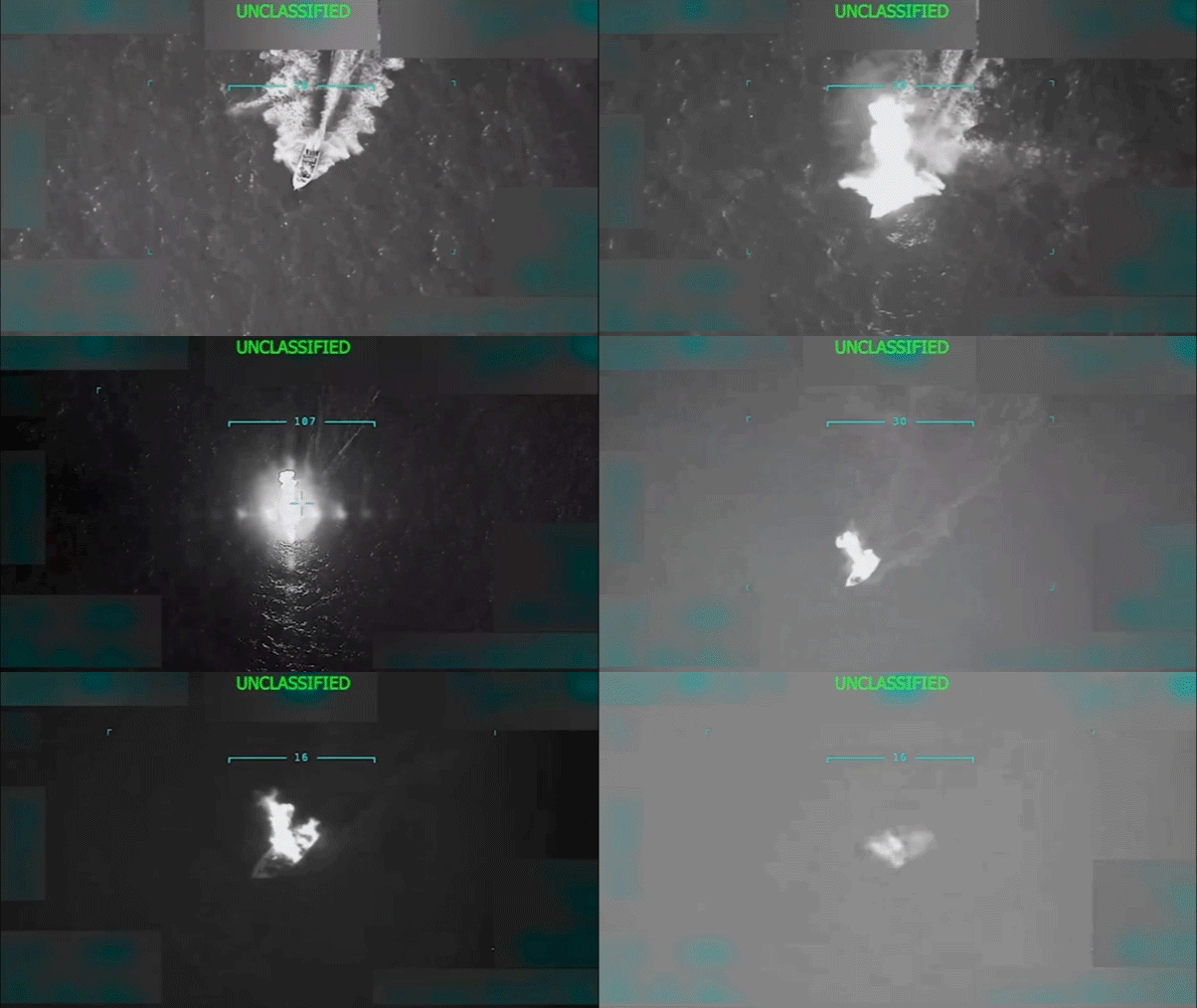
Designed by several major technology and defense companies – namely Palantir Technologies – primarily for the US Department of Defense, the Maven Smart System uses artificial intelligence algorithms to identify potential combat targets and analyze data from massive intelligence feeds, including satellite imagery. The U.S. Army used Maven to manage personnel, logistics, and threats during the 2021 Kabul Airlift; locating Russian equipment after the massive invasion of Ukraine; Most recently, identifying air strikes targeting militia weapons depots in Iraq and Syria and identifying missile launch sites in Yemen and surface ships in the Red Sea.
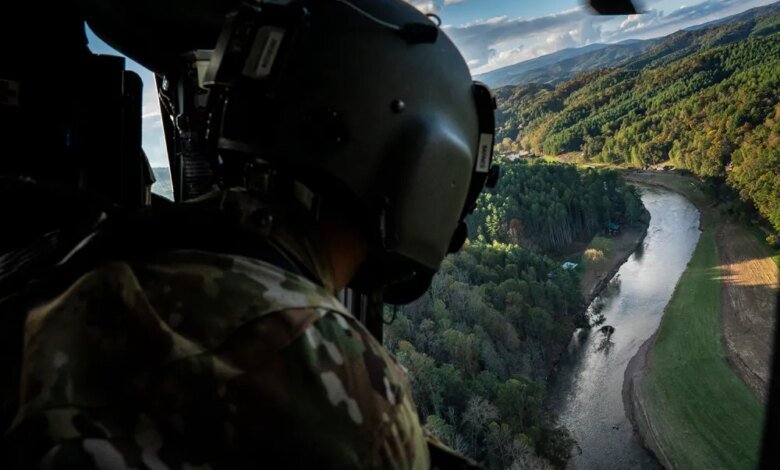
But after Hurricane Helen, Maven was used to help the US military map closed roads and dropped cellular connections and streamline relief efforts, such as identifying areas lacking medical supplies or calculating how many water trucks an area needed. Respondents no longer have to sift through spreadsheets to find important data, as Maven automatically extracts and highlights it for them. This was the first time the tool had been used to address a hurricane.
Beyond disaster relief, the US military is studying how climate change makes its bases and strategic locations vulnerable. Inland, wildfires destroyed facilities in California, and hurricanes destroyed military bases in the Southeast. In 2018, Hurricane Michael destroyed most of the buildings at Tyndall Air Force Base in Florida and damaged several aircraft. Today, the multi-billion-dollar project to rebuild the base has not yet been completed.
Defense analyst Albert Palazzo said many local military facilities are “at risk of collapse” as sea levels rise or as high temperatures melt Arctic permafrost. External bases are also threatened. Take Diego Garcia, an island in the Indian Ocean that serves as a major forward base for both the American and British armies. It has only 10 square miles of dry land, meaning a sea level rise of just a few feet could force soldiers to move into position. Similar problems exist for US bases in Bahrain, Djibouti and Guam.
“Eventually, the United States and other militaries will have to close some of these most vulnerable bases,” Palazzo said. “The loss of these facilities will make it more difficult for the United States to project military force globally, conduct operations, and sustain operations.”
The Pentagon has long used technology to assess what it calls climate risks — for example, the Climate Assessment Tool, a geospatial tool used to assess exposure to climate change at domestic and overseas bases. Now, the US military is using artificial intelligence in its ranks to enhance its ability to predict extreme and unexpected events. For example, it uses the READI toolkit from Charles River Analytics, which uses artificial intelligence to model risks from floods, fires, and hurricanes. The Air Force’s Earth Intelligence Engine also flags climate vulnerabilities across its facilities.
It is unclear whether US president Donald Trump will cut climate funding for military-related AI projects, as he has done with National Science Foundation research grants and funding for the National Climate Assessment. Sherry Goodman, a former senior Pentagon official, said it was possible that, without explicitly acknowledging climate change, the administration could avoid climate-related military projects. But even this remains to be seen. (The US Department of Defense did not respond to requests for comment.)
Climate change also impacts US counterterrorism goals, as its impacts can lead to societal unrest and even serve as drivers of extremism. In defense circles, climate change is referred to as a “petri dish for terrorism,” Goodman said. “In fragile parts of the world, especially in Latin America and the Middle East and North Africa, disruption of food and water systems makes local populations more vulnerable to armed groups.” In other words, joining armed groups may not be an ideological choice so much as a last resort.
In Syria, the historic drought in 2007 devastated the agricultural sector and forced large numbers of farmers to flee to cities. Unemployment, food insecurity and social tension ensued, conditions that ISIS and other groups later exploited for recruitment during Syria’s civil war. Similar dynamics are unfolding across the Sahel, where groups like Boko Haram profit from environmental degradation, recruiting disillusioned people with promises of income.
This is where AI could be useful to the US military, as well as non-state actors seeking to mitigate the global threat of failed states and the proliferation of armed groups.
Somalia – where climate change has distorted rainfall, destroyed the pastoralist economy, and fueled piracy and recruitment for the militant group Al-Shabaab – is a good case study. There, the United Nations partnered with Omdena to integrate artificial intelligence into the fight against climate challenges. One model analyzed satellite images to predict environmental degradation associated with forced displacement, giving aid groups the opportunity to intervene before people were forced to migrate to overcrowded urban centres.
Another initiative in this partnership focused on Somali agriculture, developing a pest management system that uses remote sensing and computer vision to help farmers detect and control infestations faster. In one project, a team of 34 data scientists built machine learning models to predict food displacement due to drought. The team’s AI system achieved up to 99% accuracy in identifying areas at risk of environmental crises, and possibly displacement and conflict.
Amnesty International has already done so It has proven to be a useful tool for monitoring things like deforestation and drought. But when applied in other military contexts, ethical lines may become blurred. Many experts fear that, in the absence of strict controls, the technology’s positives in the climate context will be overshadowed by its negatives elsewhere – especially in relation to mass surveillance, profiling, biometric identification, predictive policing, autonomous weapons, and targeted killing.
The same technology that can help the military predict and adapt to climate issues could also be an effective weapon, depending on who uses it and for what purpose. Some countries have begun using AI language models to analyze climate data, such as forecasting extreme weather events or modeling glacial retreat. But the IDF, for example, is said to have used technical architectures similar to some GPT models to build an artificial intelligence model that was trained on the private communications of Palestinians.
Lucy Suchman, a professor at Lancaster University, is concerned about the starkly different consequences of using the same or similar technology to track environmental phenomena versus using it against humans. “In contrast to glaciers, categories like ‘terrorist’ or ‘Hamas militant’ or even worse, ‘Hamas affiliate’ (for example) do not rely on deep enlightened understanding, but rather on very crude forms of stereotyping and guilt by association,” Suchman said.
Maven is another example. Initially, the project was intended to enhance combat imagery recognition in the Middle East and Central Asia. Now, it is used for environmental monitoring and disaster response. This overlap points to the uncomfortable porosity between the boundaries of war and climate AI applications, where there is no way to differentiate between the technology that powers them.
“Again, it is not AI or the specific form of AI models that is good or bad,” Asaro said. “What matters is how it is applied and used, who uses it, how we regulate its use, ensure transparency and accountability, and that the systems actually advance the values for which they were built.”
Don’t miss more hot News like this! Click here to discover the latest in Politics news!
2025-12-01 12:00:00