Trump Warns of Expanded Military Operations Against Venezuela
Welcome back to the Global Digest, where we look at… Trump administrationPressure campaign against VenezuelaUS-led negotiations to end The war between Russia and Ukrainedevastating storms across south and Southeast Asia.
By land and sea
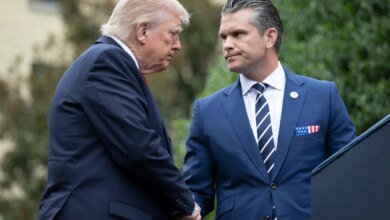
US President Donald Trump held a meeting at the White House on Monday to discuss next steps against Venezuela, just days after he warned that the US military planned to expand counter-narcotics operations on the ground “very soon.”
Welcome back to the Global Digest, where we look at… Trump administrationPressure campaign against VenezuelaUS-led negotiations to end The war between Russia and Ukrainedevastating storms across south and Southeast Asia.
By land and sea
US President Donald Trump held a meeting at the White House on Monday to discuss next steps against Venezuela, just days after he warned that the US military planned to expand counter-narcotics operations on the ground “very soon.”
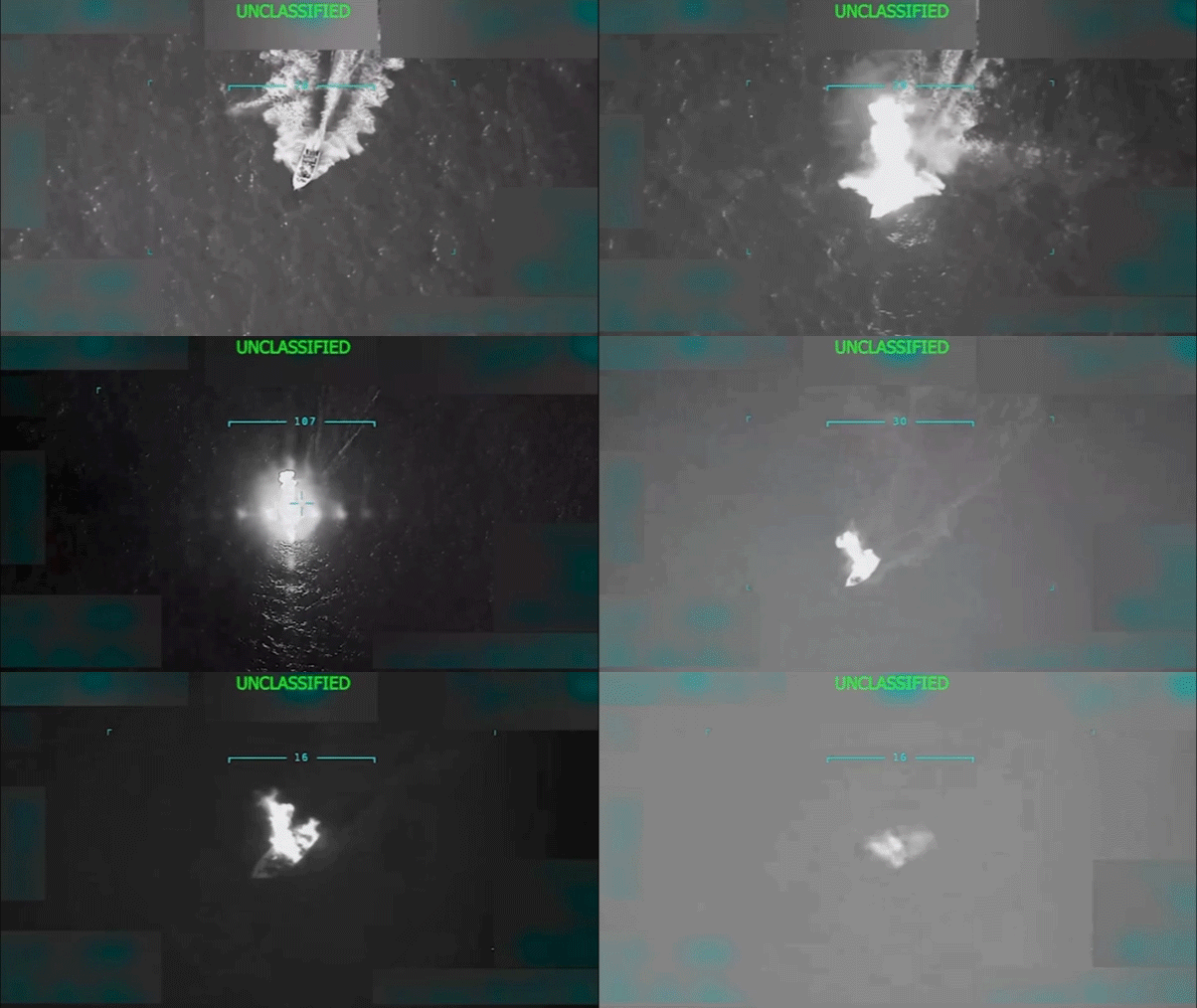
Until now, Washington’s military campaign has been limited to the sea. In early September, the United States launched its first attack against an alleged drug smuggling boat, turning the decades-long metaphorical “war on drugs” into an actual war. Since then, the US military has carried out 20 more strikes on ships suspected of being linked to Venezuela in the Caribbean and eastern Pacific, killing at least 83 people.
But over the past few weeks, Trump has been increasingly signaling that direct military action against Venezuela may be coming. The Trump administration has mobilized more than a dozen American warships and about 15,000 American soldiers in the region, the largest deployment of its kind in the region in decades. In October, the White House notified Congress that the United States was in a “non-international armed conflict” with “designated terrorist organizations,” and in November the United States officially designated the Cartel de los Soles, which Venezuelan President Nicolas Maduro is accused of overseeing, as a foreign terrorist organization.
On Saturday, Trump posted a warning on Truth Social that “all airlines, pilots, drug dealers, and human traffickers” should “consider the airspace over Venezuela and surrounding areas to be completely closed.”
Some efforts were reportedly made to avoid direct conflict. the Miami HeraldCiting unnamed US officials, they reported on Sunday that during a phone call between the US and Venezuelan presidents in late November, Trump issued an ultimatum, telling Maduro that he, his wife and son would be given safe passage out of the country if Maduro agreed to resign immediately. Trump confirmed on Sunday that he recently spoke with Maduro, but did not say what they discussed. When asked to describe the call, Trump said: “I wouldn’t say it went well or poorly.”
But mounting anger from within Washington could limit the White House’s clear ambitions for regime change. Over the weekend, lawmakers on the House and Senate Armed Services Committees signaled their support for a bipartisan congressional review of the boat strikes. Inquiries follow: A The Washington Post A report published on Friday accused US Defense Secretary Pete Hegseth of ordering US forces to leave no survivors after a September 2 strike on a boat in the Caribbean killed two people.
“This amounts to a war crime if true,” Democratic Senator Tim Kaine said.
Hegseth has denied the report, calling it “fake news” in a post on X and asserting that “current operations in the Caribbean are legal under US and international law” — a claim rejected by many legal experts. Trump also defended Hegseth, saying: “Pete said he did not order these two men to be killed. And I believe him.”
Most read today
The world this week
Tuesday 2 December: Russian President Vladimir Putin hosts US Special Envoy Steve Witkoff and Trump Advisor Jared Kushner.
Irish Prime Minister Michael Martin hosts Ukrainian President Volodymyr Zelensky.
Wednesday 3 December: NATO foreign ministers (except US Secretary of State Marco Rubio) meet in Brussels.
Bahrain hosts the annual meeting of the Gulf Cooperation Council.
Egypt begins a runoff round in the two-day parliamentary elections.
French President Emmanuel Macron begins a three-day visit to China.
Thursday 4 December: Putin begins a two-day trip to India.
Friday 5 December: Norwegian Prime Minister Jonas Gahr Sture hosts German Chancellor Friedrich Merz.
Sunday 6 December: Israeli Prime Minister Benjamin Netanyahu hosts Meers.
Monday 7 December: Hong Kong holds Legislative Council elections.
What we follow
A sign of progress. Ukrainian President Volodymyr Zelensky on Monday expressed optimism about the US-drafted peace agreement between Russia and Ukraine, saying progress had been made in reviewing the initial 28-point proposal to respect Kiev’s red lines. Specifically, Zelensky and his European allies opposed Ukraine’s demands to cede some of its territory to Russia.
“We remain realistic about how difficult this is, but we are optimistic, especially given the fact that as we make progress, I think there is a shared vision here that it is not just about ending the war,” US Secretary of State Marco Rubio said on Sunday after talks with Ukrainian negotiators in Florida. The White House described Sunday’s meeting as “very productive” despite the resignation of chief Ukrainian negotiator Andriy Yermak on Friday amid a wide-ranging corruption investigation.
Rubio did not specify what progress has been made and what areas remain in dispute. However, European Union Foreign Policy Coordinator Kaja Kallas, on Monday, expressed his fear that “all pressure will be exerted on the victim,” in reference to Ukraine, and that Kiev will be forced to hand over its territory. US special envoy Steve Witkoff and Trump advisor and son-in-law Jared Kushner are expected to meet with Russian President Vladimir Putin in Moscow on Tuesday to continue negotiations.
Killer weather. A rare tropical storm in the Strait of Malacca has caused widespread devastation across Southeast Asia in recent days. According to official figures on Monday, the death toll from mass floods and landslides last week reached nearly 800 people, with Indonesia, Malaysia and Thailand each recording deaths. Tropical Storm Senyar was the first tropical cyclone to form in the strait since Typhoon Vami in 2001.
The devastating storm came at the same time as Sri Lanka was battling its own deadly cyclone. Cyclone Ditoa, which made landfall on Friday, has killed more than 350 people and displaced hundreds of thousands more. Sri Lankan President Anura Kumara Dissanayake said Ditoa was “the biggest and most challenging natural disaster in our history”, while Vinya Ariyaratne, head of one of Sri Lanka’s largest community development organisations, warned that almost the entire country had become a “disaster zone”.
South and Southeast Asia have witnessed several devastating weather-related disasters this year. Just last month, widespread flooding killed more than 110 people in the Philippines and caused extensive damage to infrastructure in Vietnam.
American influence in Honduras. The two conservative candidates vying for the highest office in Honduras in the country’s presidential elections, which took place on Sunday, appear to be virtually tied, according to preliminary results on Monday. With 55 percent of the polls counted so far, former Tegucigalpa Mayor Nasri “Tito” Asfoura received 40 percent of the votes, while former Vice President Salvador Nasrallah received 39.78 percent.
It is unclear how much impact Trump’s last-minute endorsement will have on the polls. The US President said on Friday that Asfoura is the only Honduran candidate the White House will work with, saying he will help Washington fight “drug communists.” Trump’s support came on the same day the White House announced plans to pardon former Honduran President Juan Orlando Hernandez, who was serving just one year serving a 45-year sentence in a US prison for helping drug traffickers move cocaine into the United States.
Experts point out that Trump’s involvement in Honduran politics indicates the White House’s efforts to influence the region in favor of far-right rule. Asfoura and Nasrallah spent time in Washington ahead of Sunday’s election, and Trump has repeatedly targeted left-wing leaders in Latin America, as in Brazil, while praising (and rewarding) ideologically aligned administrations, as in Argentina.
Odds and Ends
The leader of France’s far-right National Rally party may be preparing a bid for the presidency, but first Jordan Bardella must deal with some unhappy voters. Local authorities arrested a 74-year-old suspect on Saturday for throwing an egg at Bardella’s head during a book promotion event in southwestern France. The attack occurred just days after another protester covered Bardella in flour at an agricultural fair. As Macron’s centrist coalition struggles to maintain power, analysts suggest that the National Rally’s presidential chances are better than ever.
Don’t miss more hot News like this! Click here to discover the latest in Politics news!
2025-12-01 22:00:00