Costco joins companies suing for refunds if Trump’s tariffs fall
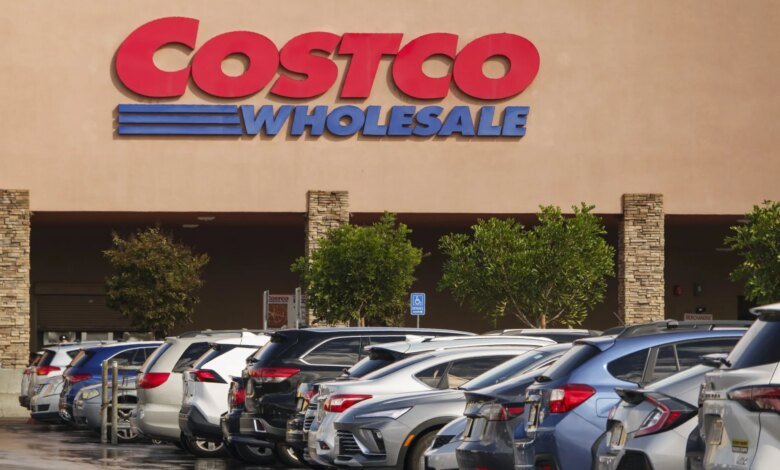
Costco Wholesale Corp. has joined a fast-growing list of companies suing the Trump administration to secure refund eligibility if the U.S. Supreme Court overturns the president’s landmark global tariff policy.
The nation’s largest warehouse club chain is among dozens of companies that have filed lawsuits in a U.S. trade court since late October challenging President Donald Trump’s use of the Emergency Economic Powers Act to impose the fees, according to court records. It’s one of the biggest companies jumping into a battle largely driven this year by small businesses and Democratic state officials.
The Supreme Court heard arguments on Trump’s tariffs on November 5. The judges put the fight on an accelerated timetable, but did not say when they intended to issue a ruling. Meanwhile, companies of all sizes have filed suits asserting similar legal claims aimed at avoiding uncertainty about their eligibility for refunds if the court rules against Trump.
Read more: Companies that pay tariffs line up in court to get their money if Trump loses
Costco’s lawyers wrote that the complaint, which was filed on November 28 with the US Court of International Trade, was due to uncertainty about ensuring refunds for all companies that were paying the duties if the Supreme Court declared the tariffs illegal.
The lawsuit does not specify how much Trump’s tariffs will cost the company yet.
Costco argues that it needs the court to intervene immediately because Customs and Border Protection denied its request to extend the timeline for finalizing the tariff setting under Trump’s use of the International Emergency Economic Powers Act. The company says this could jeopardize its ability to get a full refund in the future.
Costco did not immediately respond to requests for comment Monday.
White House spokesman Khush Desai said in a statement, “The economic consequences of failing to uphold President Trump’s legal definitions are enormous and this lawsuit highlights that fact. The White House looks forward to the Supreme Court’s prompt and proper resolution of this matter.”
Skeptical judges
During arguments before the Supreme Court last month, the lead justices appeared skeptical of Trump’s tariffs, which generate tens of billions of dollars a month. Lower federal courts ruled against the administration in a number of lawsuits filed early on, but the justices allowed the government to impose the tariffs until the Supreme Court ruled.
Other household names that have filed lawsuits over the tariffs in recent weeks include cosmetics giant Revlon Consumer Products Corp. and motorcycle maker Kawasaki Motors Manufacturing Corp.
Broad and rapidly changing tariff policies have disrupted the retail sector this year, threatening to raise commodity prices and hamper the purchasing power of American consumers who were already wary after years of inflation.
The impact was more subdued than expected due to exemptions and price changes after negotiations, although some items such as electronics and clothing became more expensive compared to last year. While retailers have warned that they are still seeing higher costs, many of the larger operators have not filed lawsuits like Costco — making them an anomaly.
Read more: What’s at stake as Trump’s tariffs face the Supreme Court
Costco said it is working to ease the tariffs, which primarily affect non-food items. It redirected some products to non-U.S. markets, ordered more inventory ahead of time to bypass duties, and bought from fewer suppliers through purchasing consolidation. When items become more expensive, it completely changes marketing.
“We’re doing everything we can,” CFO Gary Millership said in an interview with Bloomberg News earlier this year. “Whether that’s through working with suppliers to find efficiencies to offset the impact of tariffs, or whether that’s through sourcing with them often to different countries.”
For example, Costco said in May that it was keeping prices steady on pineapples and bananas imported from Central and South America because they are important items to customers. At the same time, it has raised the prices of flowers imported from the region because they have become less necessary for shoppers.
The club chain said its large size and limited assortment — its stores carry a few thousand items versus more than 100,000 for some big retailers — give it an advantage when navigating tariffs. However, it is difficult to predict what will happen to prices, company executives said.
The case is Costco Wholesale Corp. v. Customs and Border Protection, 1:25-cv-316, U.S. Court of International Trade.
Don’t miss more hot News like this! Click here to discover the latest in Business news!
2025-12-02 00:09:00