Former Amazon exec warns Netflix-WBD deal will make Hollywood ‘a system that circles a single sun’
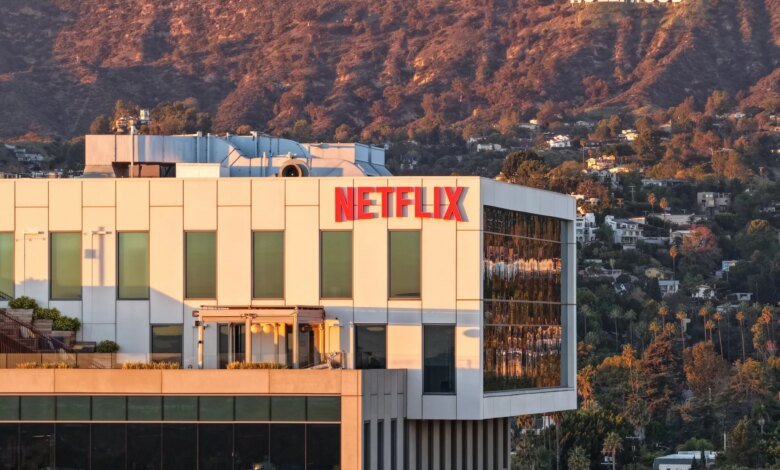
The former head of Amazon Studios warned that the merger of Netflix and Warner Bros. It would risk monopsony where one buyer has enormous control over the market.
Roy Price, who is now CEO of the International Art Machine studio, wrote in an article New York Times Predictions of doom are nothing new in the movie industry, a Saturday editorial said, pointing to the rise of television, home video, streaming and artificial intelligence.
“But if Netflix acquires Warner Bros, this long-predicted death may finally arrive, not in the sense that filmmaking will cease, but in the sense that Hollywood will become a system orbiting a single sun, materially changing its cultural output,” he added. “All orbits – every deal, every creative decision, every creative career – will increasingly revolve around the gravitational mass and consent of a single entity.”
Sure enough, Netflix said that Warner Bros.’ operations It will continue, and the studio’s films will still be shown in theaters. Meanwhile, Warner’s TV channels will be spun off via a separate company, despite HBO’s inclusion in Netflix.
But Price said the risk “is not annihilation but centralization,” with the combined company representing a larger slice of overall content spending.
He predicted that a reduced number of presenters would result in less content being produced, while a culture of separate development, range of tastes and risk tolerance would be sidelined.
“Netflix’s merger with Warner Bros. would create a monopoly problem: too few buyers with significant bargaining power,” Price explained. “Writers, directors, actors, showrunners, puppeteers, visual effects artists – they are all suppliers. The fewer buyers there are competing to hire them, the lower their compensation and the narrower their opportunities.”
Such reasoning, he noted, defeated Penguin Random House’s attempt to merge with Simon & Schuster, which would have created a book publisher with too much influence over authors.
Of course, the remaining players in Hollywood and the content industry are giants in their own right as well. A KPMG survey of 2024 spending put Comcast, the parent company of NBC Universal, in first place at $37 billion, followed by Alphabet’s YouTube ($32 billion), Disney ($28 billion), Amazon ($20 billion), Netflix ($17 billion) and Paramount ($15 billion). Comcast and Paramount also submitted bids for Warner Bros.
Theater owners, producers and other creative workers have also voiced their opposition to the deal, although acclaimed director Bong Joon-ho doubted that “the cinematic experience will disappear so easily.”
In addition to the commercial impact of the Warner Bros. acquisition, other opponents raised larger concerns.
Oscar winner Jane Fonda sounded the alarm about a “constitutional crisis” and demanded that the Justice Department not use its regulatory authority to “extract political concessions that influence content decisions or discourage freedom of expression.”
For its part, the Trump administration views the deal “with extreme skepticism,” sources told CNBC. The merger is expected to face extraordinary antitrust scrutiny, and Netflix’s $5.8 billion breakup fee is among the largest ever.
On Wall Street, analysts see a technical angle in the merger, which is the importance of content for training and running the next generation of artificial intelligence models that will shape the future of the entertainment industry.
The acquisition of Warner Bros., said Divyaunsh Divatia, research analyst at Janus Henderson Investors, in a note on Friday. It will help Netflix stand out in the future of artificial intelligence.
“They also benefit from premium entertainment at a time when competition for engagement from short videos is expected to intensify especially if AI models democratize video creation at an increasing rate,” he wrote.
Don’t miss more hot News like this! Click here to discover the latest in Business news!
2025-12-06 17:30:00