How U.S. Allies Should Approach Defense
As US allies and partners adapt to the revolution in US foreign policy under Trump, there is one word that best captures the grim strategic calculations they now face: porcupine. From Ukraine, the Baltic states, and Poland to Taiwan and Japan, potentially vulnerable countries are drawing the same uncomfortable conclusion from last year — that survival in Trump’s new world order no longer depends on old American guarantees, but on making yourself too painful to attack.
Ukrainian president Volodymyr Zelensky publicly admitted last December that NATO membership, a cornerstone of his country’s strategic aspirations since the first Russian invasion in 2014, was no longer a realistic goal. Instead, Ukrainian and European leaders are focusing on a more realistic goal: securing a ceasefire that provides enough breathing room to rebuild sufficient military capabilities to deter any future Russian aggression. “Ukraine must turn into a steel porcupine, indigestible for would-be invaders,” European Commission President Ursula von der Leyen said recently.
As US allies and partners adapt to the revolution in US foreign policy under Trump, there is one word that best captures the grim strategic calculations they now face: porcupine. From Ukraine, the Baltic states, and Poland to Taiwan and Japan, potentially vulnerable countries are drawing the same uncomfortable conclusion from last year — that survival in Trump’s new world order no longer depends on old American guarantees, but on making yourself too painful to attack.
Ukrainian President Volodymyr Zelensky publicly admitted last December that NATO membership, a cornerstone of his country’s strategic aspirations since the first Russian invasion in 2014, was no longer a realistic goal. Instead, Ukrainian and European leaders are focusing on a more realistic goal: securing a ceasefire that provides enough breathing room to rebuild sufficient military capabilities to deter any future Russian aggression. “Ukraine must turn into a steel porcupine, indigestible for would-be invaders,” European Commission President Ursula von der Leyen said recently.
The new US National Security Strategy shows that Washington’s commitment to the rest of Europe’s security is also conditional at best. What applies to Ukraine certainly applies to Russia’s other potential targets, especially now that European NATO members can no longer rely on the West’s former transatlantic leader. Across Europe, the Trump shock has prompted countries to accelerate the most significant rearmament in a generation, with major powers such as Germany and Poland dramatically expanding their military budgets.
Taiwan has adopted many of the same calculations. Washington’s security commitments to Taipei have long been formally ambiguous, but this strategic ambiguity has now been replaced by shifting presidential whims. This will be especially true in the coming months, as Trump focuses on securing what he might call a “deal” with China and the state visit that accompanies it.
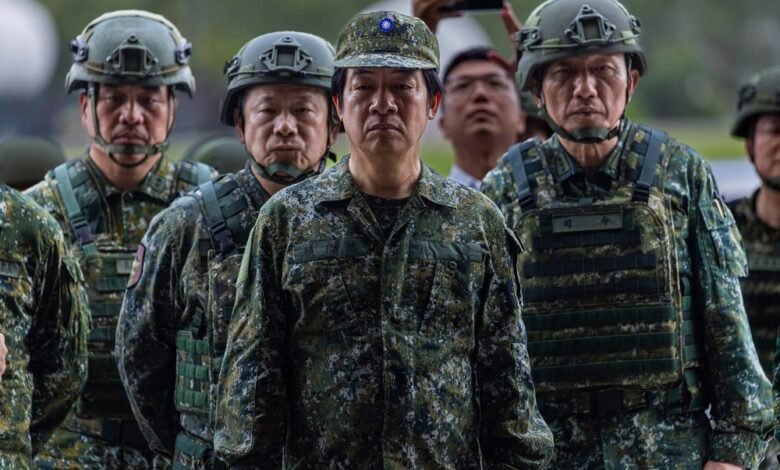
Taiwanese President Lai Ching-te recently announced an ambitious defense boost that would raise military spending to 3% of GDP in 2026, then to 5% by the end of this decade, reflecting alarm over the island’s strategic vulnerability. Taipei’s investments include portable anti-ship missiles, mines, and distributed air defense systems — an arsenal of porcupine weapons designed to make any Chinese invasion attempt more costly when American support becomes less certain.
As in Europe, longtime US allies in the Indo-Pacific region have weighed in on Trump’s misguided approach in 2025 and see the wisdom in developing sharper defense blades of their own. Japan plans to accelerate its defense transformation, with military spending on track to exceed 2% of GDP in 2026, one year earlier than originally planned.
During the Cold War and post-Cold War eras, Washington built a system where allies could thrive under extended American deterrence. Many appreciated their reliance on American security guarantees. Now that Trump has made it abundantly clear that the United States will honor its commitments only when its president is interested in doing so, those same countries are deciding that jagged steel spikes provide the best defense of all.
Don’t miss more hot News like this! Click here to discover the latest in Politics news!
2025-12-30 17:40:00