AI at Davos: Where Global Power Meets Artificial Intelligence
Written by AI World Journal – Special Editorial
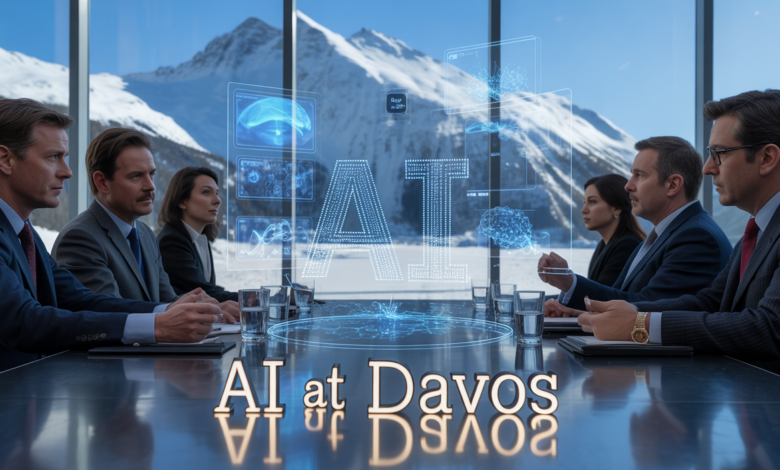
Every January, the snow-covered city of Davos in Switzerland becomes the center of global decision-making. In 2026, AI has emerged not as a side discussion, but as a defining force shaping almost every conversation at the World Economic Forum. From heads of state and central bankers to technology leaders and futurists, AI has been widely recognized as the most influential technology of the decade – economically, politically and socially.
From experimentation to global infrastructure
The tone has changed in Davos. AI is no longer framed as an experimental or emerging technology. Instead, leaders discussed artificial intelligence as… Basic infrastructurecomparable to electricity, finance, or the Internet. Governments and organizations are moving beyond experimental trials toward large-scale deployment, integrating AI into healthcare systems, supply chains, financial markets, and national security strategies.
At Davos, the message was clear: countries that fail to integrate AI into their economic and institutional frameworks risk falling behind in global competitiveness.
Artificial intelligence, power and economic advantage
One dominant theme was the role of artificial intelligence in reshaping economic power. Advanced economies are racing to secure access to computing, data, energy and talent – the four pillars of AI dominance. At the same time, leaders warned of growing inequality between countries and companies that can scale AI and those that cannot.
This has elevated AI from a corporate interest to a mere interest Geopolitical assets. policy discussions in Davos increasingly focus on AI sovereignty, cross-border regulation, and the strategic risks of fragmented global norms.
The humanitarian question
Although optimism was strong, Davos 2026 also reflects deep concern about the human consequences of artificial intelligence. Workforce displacement, skills shifting, and the psychological impact of intelligent machines were recurring themes. Executives and policymakers stressed that AI should enhance human capacity rather than replace it – a theme that was echoed in symposiums on education, work and social stability.
The consensus: Societies that invest early in reskilling and human-AI collaboration will navigate the transition more successfully than those that react too late.
Ethics, trust and governance
Trust has emerged as one of the most important challenges facing AI adoption. As AI systems gain autonomy and decision-making power, questions about transparency, accountability, and ethical alignment have dominated discussions. Davos leaders acknowledged that creativity in the absence of trust threatens backlash, organization, and social resistance.
The forum stressed that instead of slowing down artificial intelligence Charge acceleration – Develop governance frameworks that allow for innovation at scale while protecting democratic values and human rights.
The industry is at the center of transformation
Technology companies, consulting giants, and providers of artificial intelligence-based services played a central role in the Davos talks. Companies like Sutherland, known for digital transformation and applied AI services, reflect a broader trend highlighted at the forum: success in AI is no longer about building models alone, it’s about… Activate intelligence Across real world systems.
This shift from theoretical AI to enterprise-level implementation defines the current phase of the AI revolution.
Artificial Intelligence as a Global Coordination Challenge
Perhaps the most surprising result from Davos is that AI is now a coordination problem, not just a technical problem. Energy grids, data flows, labor markets, and geopolitical alliances are being reshaped by intelligent systems. The leaders warned that artificial intelligence could deepen division and instability in the absence of international cooperation.
However, Davos also demonstrated a shared understanding: AI, if directed responsibly, has the potential to become one of humanity’s most powerful tools for solving systemic challenges – from climate modeling and healthcare delivery to economic inclusion.
Amnesty International Magazine’s Global Perspective
At AI World Journal, we view Davos 2026 as a turning point. Artificial intelligence has crossed the threshold of innovation into inevitability. The question is no longer if Artificial intelligence will reshape the world, however Who will shape artificial intelligence? -And under what conditions.
Davos has made one thing clear: The future of AI will be decided not just in labs and startups, but in boardrooms, governments, and global forums where technology meets power.
The era of artificial intelligence has arrived, and Davos is where its rules are being written.
You might enjoy listening to the AI World Podcast:
Don’t miss more hot News like this! Click here to discover the latest in AI news!
2026-01-20 15:34:00