AI Copyright Crises Disrupt Livestreams
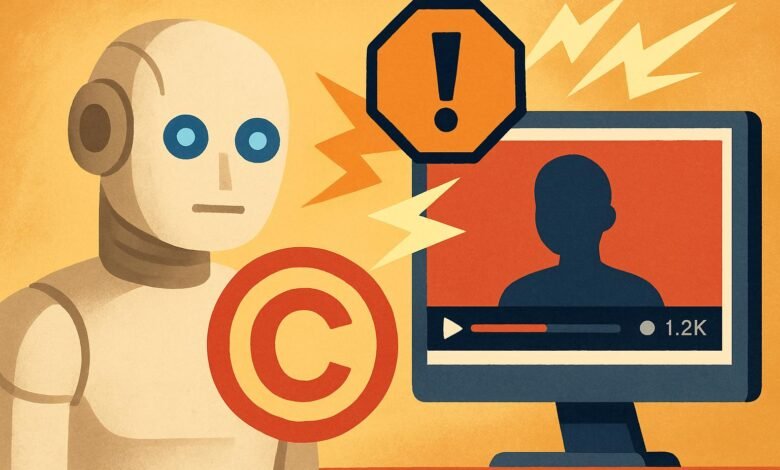
AI copyright crisis disrupts live streaming
AI copyright crisis disrupts live streaming This is not just a popular headline, it reflects a real and growing challenge affecting global innovators, technology platforms and policy makers. The explosive growth of generative AI has flooded live streaming platforms like YouTube and Twitch with artificial content that is difficult to monitor, moderate, or even legally classify. Deepfakes and AI-generated audio and visual replicas are now appearing in real-time broadcasts, creating unprecedented copyright enforcement issues. As current laws struggle to catch up and detection systems lag behind the rapid advances in AI, creators and platforms alike are calling for better governance, more reliable tools, and a future-proof framework to ensure fair use and protection of digital rights.
Key takeaways
- Generative AI has amplified the challenges of copyright enforcement on live streaming platforms like Twitch and YouTube.
- Real-time moderation systems often fail to detect complex AI-generated content, including deepfakes and synthetic voices.
- The legal ambiguity surrounding copyright ownership and liability in AI continues to create uncertainty for creators and technology companies.
- Digital rights organizations and policymakers are calling for stronger regulation, updated detection tools, and global consistency.
law">AI and live streaming copyright law collide
Live streaming platforms face increasing challenges as AI-generated content becomes more complex and difficult to discover. From changing celebrity voices to in-stream impersonations, generative AI is changing the look and sound of content in real time. The legal implications are still unclear. Legislation in both the US and EU treats AI-generated content inconsistently, frustrating both content creators and platform operators.
For example, in the United States, the Copyright Office clarified in 2023 that only works created by artificial intelligence are not eligible for copyright protection. Hybrid works that include human direction may still be legally protected. In contrast, the European parliament is developing AI transparency regulations that would require creators to disclose whether content involves AI creation. These differences create a complex regulatory environment across jurisdictions.
Understanding who owns AI-generated artwork becomes essential for any platform seeking to enforce copyright during live streaming, as ownership determines liability and potential rights to enforce claims.
Platforms struggle to discover real-time AI
YouTube and Twitch’s AutoMod Content ID was created to recognize traditional content. These tools compare uploaded or streamed media against databases of known businesses. AI-generated content often goes beyond this by creating entirely new textures that mimic styles rather than copying exact files.
YouTube’s 2023 Creator Transparency Report showed a 27 percent increase in copyright claims associated with AI-generated content. Twitch received more than 68,000 DMCA-related takedown notices, with a spike due to AI voice clones and simulated music during live streams.
One high-profile case involved a celebrity deepfake a live stream on Twitch using artificial intelligence tools. The stream remained live for several hours and reached hundreds of thousands of viewers before it was removed. After the backlash, Twitch invested more in AI moderation research. However, current tools still lag behind the rapid pace of AI content creation.
Traditional systems rely on content fingerprinting. Because generative AI creates new media that mimic existing patterns, fingerprinting tools often fail. The platforms have started working with AI detection companies like Hive Moderation and Reality Defender. These tools evaluate audio discrepancies or video patterns through probabilistic models. Although promising, they produce false positives and suffer from latency during live streaming.
Other companies implement watermarking systems. Google’s open source Meta and SynthID watermark aims to improve traceability. However, these tools are not powerful enough to support real-time execution across massive content streams.
Detection failures are particularly serious for AI music content where simulations can sound almost identical to original compositions but are difficult to report using traditional copyright checks.
Legal and ethical gray areas
Many questions remain unresolved. Who owns the content generated by AI tools during live streaming? Is a content creator liable if they unintentionally broadcast synthetic content based on copyrighted works? Should platforms be held liable if they fail to act quickly enough when a breach occurs?
Dr. Pamela Samuelson of Berkeley Law points out that current copyright laws do not reflect the realities of AI authorship. Most enforcement actions today only occur when a violation is egregious, leaving many gray areas unaddressed under existing frameworks.
Groups like Creative Commons propose hybrid taxonomies, separating human input from machine output. At the same time, organizations like the Electronic Frontier Foundation argue that overly forceful enforcement could discourage innovation and creativity among streamers who incorporate AI tools into their work.
Platform policies and regulatory pressures
YouTube now requires creators to report the use of AI-generated media. Twitch has a strike-based policy for repeat copyright infringements, which now includes actions arising from deepfake overlays. These policies aim to set clearer standards for content creators while managing risks.
Policy developments are progressing. The European Union’s Digital Services Act requires large platforms to manage systemic risks resulting from the misuse of artificial intelligence. In the United States, a proposed anti-counterfeiting law would criminalize the unauthorized use of a person’s voice or image in live streaming or other digital media.
Platform responsibility varies by region. A growing number of cases, including those involving allegations of AI training data hacking against companies like Meta, highlight the legal risks of using synthetic content without consent or credit.
However, real-time implementation is still difficult. Many violations disappear before detection tools can respond. Until detection speeds match production speeds, removal processes may remain ineffective in preventing damage.
International perspectives and future prospects
Different countries handle copyright in AI differently. Japan allows AI data to be used more widely under fair use. The European Union leads global regulation through the related Artificial Intelligence and Digital Protection Act. US laws remain fragmented and often dealt with at the state level. For example, there are diverse responses regarding AI copyright issues in the United States, with no uniform federal law yet.
Experts urge the development of global standards. Without regulatory harmonization or high-speed detection capabilities, live streaming faces increased legal risks. Proposed solutions include watermarking, third-party registries of AI content, and real-time detection partnerships, but these solutions are still far from being implemented globally.
Dr. Andrew Tutt of Covington & Burling LLP says future implementation depends on partnerships between governments, platforms and advocates to develop standardized policies along with effective tools.
Frequently asked questions
How does artificial intelligence affect copyright law?
AI presents works without clear human authorship, challenging traditional copyright systems. Unlike human creators, AI does not have rights. When content is generated entirely by algorithms, ownership and responsibility become unclear, creating implementation difficulties.
Are live streaming platforms liable for copyright infringement?
Streaming platforms like YouTube and Twitch are required to act quickly when they receive takedown requests. Under laws such as the US Digital Millennium Copyright Act, platforms can avoid full liability if they immediately remove infringing content. Delay or negligence may expose them to legal consequences.
What tools are used to detect AI-generated content?
The platforms use tools like Content ID, AutoMod, Hive Moderation, and Reality Defender to identify synthetic media. Watermarking tools such as SynthID are also being tested. Despite their capabilities, these systems face problems such as false positives and slow response times during live streaming.
Can AI-generated media be copyrighted?
In most cases, AI-generated media cannot be copyrighted in the United States because human authorship is a legal requirement. If a human plays a significant role in the creation process, limited copyright protection may apply. Regulations vary between countries and continue to evolve.
References
Don’t miss more hot News like this! Click here to discover the latest in AI news!
2026-01-21 15:06:00