AI Deepfakes Stir Global Trust Concerns
Deep AI raises global trust concerns
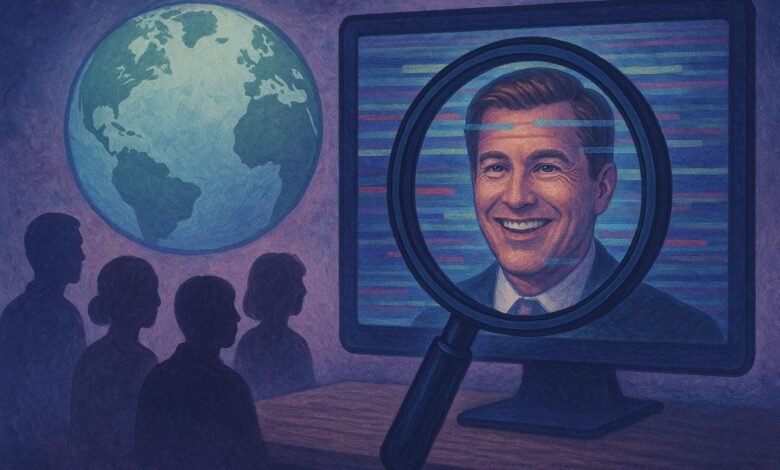
AI deepfakes raise concerns about global trust as they become increasingly real, creating a growing dilemma for communities around the world. Fake photos of high-profile figures like Pope Francis and Donald Trump have spread across social media, leading to real public confusion, misinformation, and concern. These synthetic images are easier than ever to create, thanks to tools like Midjourney and Stable Diffusion, and they raise pressing questions about media credibility, political stability, and regulatory gaps. As deepfake technology advances, its misuse threatens not only digital trust but also the foundations of democratic societies.
Highlights of concern
- Deepfake photos of public figures are widely shared, and are often confused with real media outlets.
- These fake images fuel misinformation and political manipulation campaigns.
- Experts warn that deepfakes could influence upcoming elections and world events.
- Current laws and safeguards are insufficient to address the scale of the threat.
Read also: How Deepfake Works and the Best Deepfake Software
What are AI deepfakes and how do they work?
AI deepfakes are fabricated images, videos, or audio recordings created using machine learning models trained on real human data. Many current systems rely on diffusion models, which generate highly realistic images by gradually removing noise from random inputs. These models learn patterns from large data sets to mimic specific people or scenarios with amazing accuracy.
Unlike traditional photo editing, deepfake tools use neural networks to learn facial details, expressions, gestures, and voice characteristics. Tools like Midjourney, DALL·E, and Stable Diffusion allow users to create synthetic media using simple text prompts. Without strong security filters, the result may appear indistinguishable from the original footage.
Read also: What is Deepfake and what is it used for?
Viral incidents: How fake photos spark public panic
In two notorious examples, AI-generated images depicted the arrest of Donald Trump and Pope Francis wearing a white tunic. Both were created using Midjourney. At first glance, many netizens thought these photos were real. It spread across social media before being debunked by the media and fact-checkers.
Incidents like this highlight the power of deepfakes to mislead the masses. Realistic images elicit emotional reactions and are often shared instinctively. The lack of disclaimers or visual cues makes it difficult to identify synthetic content. In many cases, no labels are added, and the images continue to spread long after they are detected as fake.
democracy-and-stability">Why are deepfakes a threat to democracy and stability?
As global elections approach, experts warn that deepfake technology could be used to manipulate votes, spread false data, or stir up unrest. In a politically polarized environment, even just one convincing deepfake can cause damage to a candidate or party’s reputation. A growing number of disinformation researchers see deepfakes as influence tools designed to undermine voter trust and institutional credibility.
“We have reached a point where seeing is no longer believing,” says Dr. Hani Farid of the University of California, Berkeley. Fake videos or manipulated speeches could lead to diplomatic repercussions, racial violence, or even economic panic. In conflict zones, a fabricated photo could spark international conflict or influence public opinion about military actions.
Where laws and guidelines fall short
Regulatory bodies are playing catch-up. In the United States, the Federal Trade Commission (FTC) has issued warnings but no national regulation of AI has been enacted. Meanwhile, the European Union is developing an AI law to ensure greater transparency for AI-generated media.
Proposals in the works include:
- Require all AI-generated content to be clearly labeled.
- Hold developers accountable for how their models are used.
- Establish penalties for the malicious dissemination of deepfakes in the areas of elections, health, or security.
As technologist Tristan Harris says: “Laws should treat digital lies as seriously as they treat other forms of fraud.” Without strong legal deterrents, the misuse of AI-generated visuals is likely to increase.
Read also: OpenAI launches Sora: Deepfakes for everyone
Can we detect and prevent deepfakes?
Experts agree that completely eliminating deepfakes is unrealistic. However, technical progress is being made. Tools such as digital watermarks, metadata signatures, and reverse image search engines are being deployed to flag manipulated content. Companies like Microsoft and Truepic implement secure digital signatures to verify authenticity before release.
Social platforms are also increasing their defenses. Meta and Twitter (formerly X) are launching filters that analyze and restrict synthetic content. Meanwhile, campaigns to promote digital literacy focus on teaching users how to critically evaluate visuals and check sources before sharing.
Read also: How to spot deepfakes: Tips to combat misinformation
Comparison of leading AI image generators
| tool | Output type | Known for | Safety filters |
|---|---|---|---|
| Mid-flight | the pictures | Artistic realism | Moderate (review flagged content) |
| Stable spread | the pictures | Open source flexibility | Low (user dependent) |
| DALL·E | the pictures | Easy to use interface | High (OpenAI Content Policies) |
FAQ: Deepfakes and digital accountability
What is a deepfake?
Deepfakes are media created using machine learning to mimic real people. These files often include photos, videos, or audio recordings that appear authentic but are completely fake.
How are deepfakes being abused?
They are used to create false narratives by putting real individuals in fake situations. This tactic can be applied to political attacks, celebrity impersonations, or satirical content that spreads misinformation.
Can deepfakes influence elections?
Yes. Deepfakes can distort facts, spread rumors, or impersonate candidates. In a tight race, a single fake video can change public sentiment or reduce turnout.
What regulations exist to control deepfakes?
Some countries, such as those within the European Union, are developing comprehensive rules requiring labeling of synthetic media. In the United States, most progress remains at the state level or within advisory frameworks.
Conclusion: The necessity of vigilance and action
AI deepfakes offer insight into what AI can achieve, but they also reveal significant risks. Misinformation fueled by factual misrepresentations affects not only individuals but entire democratic processes. Combating this growing challenge depends on education, regulation, responsible development, and smarter detection tools. As artificial intelligence advances, the entire digital community must adapt quickly to protect the truth and public trust.
Read also: Artificial intelligence and electoral disinformation
References
Brynjolfsson, Erik, and Andrew McAfee. The Second Machine Age: Work, Progress, and Prosperity in a Time of Great Technologies. W. W. Norton & Company, 2016.
Marcus, Gary, and Ernest Davis. Rebooting AI: Building AI we can trust. Vintage, 2019.
Russell, Stuart. Human consensus: Artificial intelligence and the problem of control. Viking, 2019.
Webb, Amy. The Big Nine: How Tech Giants and Their Thinking Machines Could Distort Humanity. Public Affairs, 2019.
Crevier, Daniel. Artificial Intelligence: The Troubled History of the Search for Artificial Intelligence. Basic Books, 1993.
Don’t miss more hot News like this! Click here to discover the latest in AI news!
2025-05-06 13:28:00