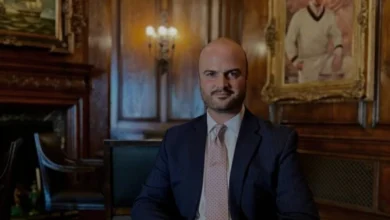
Bill Gates decries ‘significant reversal in child deaths’: 4.8 million under 5 will die this year
“It doesn’t have to be like this.” That’s how Bill Gates, president of the Gates Foundation, opened his 2025 Goalie Report, titled “We Can’t Almost Stop There.” The Microsoft co-founder sees a turning point after decades of progress in reducing child deaths. He continues, “The death of a child is always a tragedy, but there is something especially devastating when a child dies from a disease we know how to prevent.”
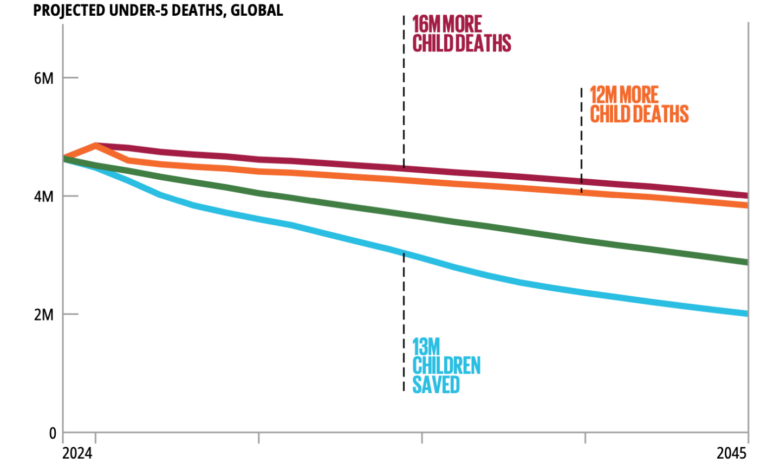
The report finds that for the first time this century, the number of children dying before their fifth birthday is expected to rise. Modeling conducted by the Institute for Health Metrics and Evaluation (IHME) reveals alarming statistics: in 2024, 4.6 million children will die before their fifth birthday. In 2025, this number is expected to rise by just over 200,000 children, reaching an estimated 4.8 million children globally. This increase means that more than 5,000 children’s classrooms were “gone before they learned to write their names or tie their shoes.” These alarming forecasts come amid sharp declines in global development aid for health, which this year is down 26.9% from 2024 levels. In the United States, the Trump administration dismantled the US aid agency USAID and dramatically reduced foreign aid.
Gates describes this “dramatic decline in child mortality” as something that should be “alarming” to anyone committed to scientific and human progress. The report warns that if funding cuts continue, the consequences will be catastrophic. If global health funding falls by 20% – the size of the cuts some major donor countries are considering – an additional 12 million children could die by 2045. If the cuts are even steeper, up to 30%, the report grimly predicts that an additional 16 million children will die.deaths by 2045
“We could be the generation with access to the most advanced science and innovations in human history — but we can’t pull together the funding to ensure lives are saved,” Gates writes.
In May, Gates announced that he would devote “nearly all” of his remaining fortune — about $100 billion — to the foundation in an all-out effort to eliminate or significantly reduce some of the world’s deadliest diseases so future generations don’t have to worry about them, and to continue to reduce childhood mortality rates.
But he stressed that the institution cannot achieve these goals without the support of governments, especially the governments of rich countries. And with deadly infectious diseases that can come roaring back from the brink of extinction, zero is truly the magic number.
The new report warns of catastrophic results if funding for these efforts continues to be reduced. “If we go down this path, we are the generation to do it barely Ended preventable child deaths. barely Polio has been eradicated. barely Wipe malaria off the map. barely Making HIV history. But we can’t stop there nearly enough.”
A roadmap for resilience
Gates emphasizes that although the world is going through a period of tight budgets, proven solutions and next-generation innovations exist that can protect the progress made and save the lives of millions of young people. The immediate goal, according to Gates, should be “to do more with less, now.”
The report highlighted opportunities to address preventable health conditions that kill children around the world: malaria, HIV/AIDS, and systemic threats to newborns. The tools are at our fingertips, the report says, laying out a three-part roadmap and calling on countries to redouble their efforts on the most effective interventions. According to the report:
1. Giving priority to primary health care: The report says that investing in strong primary health care systems is “the smartest investment now”. For less than $100 per person per year, these systems can prevent up to 90% of infant deaths, early onset of deadly diseases such as pneumonia, and ensure safe birth.
2. Doubling routine immunization: Routine immunizations remain “the best buy in global health,” the report says, adding that every dollar spent on immunization yields $54 in economic and social benefits. Innovations such as reducing dosing schedules for pneumococcal conjugate vaccines (PCV) could save about $2 billion by 2050.
3. Investing in next generation innovations: Modeling suggests that by 2045, new malaria tools could save 5.7 million children, and expanding new maternal vaccines against threats such as respiratory syncytial virus (RSV) and group B streptococcus (GBS) could save 3.4 million children.
Local leadership in the face of scarcity
On the theme of achieving more with less, the report highlights insights from leaders and health workers who are sustaining health progress despite limited resources. In Nigeria, Gombe State Governor Muhammad Inuwa Yahaya prioritized primary health despite a historic budget deficit. “You don’t need perfect conditions to make progress,” he noted. “You need clarity, and the courage to stick with it.”

Courtesy of the Office of the Governor of Gombe State, Nigeria
The report also showed people stepping in to address funding shortfalls at the grassroots level. In Kenya, community health worker Josephine Barasa continued her unpaid work as a “mentor mother” after her employment was interrupted. “They could have taken the money, but they couldn’t take me from my women,” she told the foundation. “The support systems may have disappeared, but the need has not disappeared, and neither have I.”
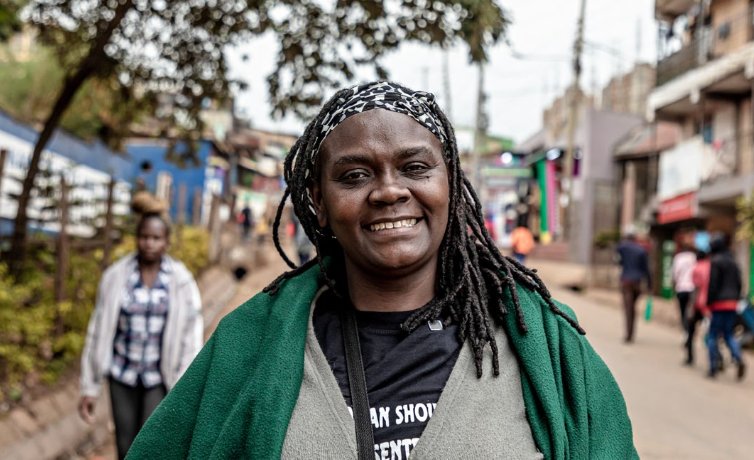
Courtesy of the Gates Foundation/Natalia Guidovano, Kenya
Don’t miss more hot News like this! Click here to discover the latest in Business news!
2025-12-04 05:01:00