Blair’s ‘Board of Peace’ role prompts Trump praise and Westminster anger
Open the White House Watch newsletter for free
Your guide to what Trump’s second term means for Washington, business, and the world
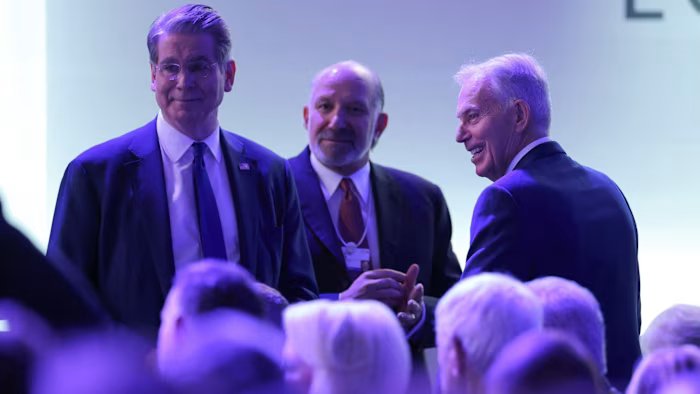
Sir Tony Blair’s attendance at the launch of Donald Trump’s “Peace Council” sparked criticism in London after the British government refused to participate in the unveiling of the new initiative.
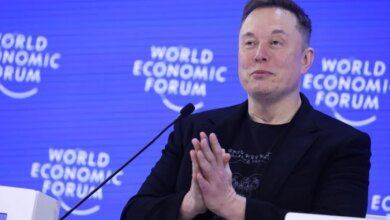
The US president paid tribute to the former Labor prime minister at the World Economic Forum in Davos on Thursday, despite many countries turning their backs on the project. “Thank you, Tony, for being here,” Trump said. “We appreciate it.”
Blair said he was “honored” to serve on the council’s executive committee, but Trump’s decision to invite Vladimir Putin to join the peace council has raised concerns in Sir Keir Starmer’s Labor government.
One senior minister said: “Putin’s potential involvement puts Tony in a really difficult position.” “Supposedly he did not know about Putin when he agreed to sign up.”
In response to a question about Starmer’s opinion on Blair’s involvement, a British government official said: “We do not comment on the decisions of an individual outside the government.”
“The government’s position is that we strongly support President Trump’s peace plan but of course we have concerns about Putin’s potential role in the peace council.”
Callum Miller, the Lib Dems’ foreign affairs spokesman, said: “Blair’s participation endorses the Trump model where warmongering killers are welcomed as long as they pay to play.” Trump is demanding a billion dollars to be paid to be a permanent member of the Peace Council.
Blair, who served as UK Prime Minister from 1997 to 2007, joined the board as an individual after participating in discussions with the White House about the future of Gaza. He played an important role in brokering the Northern Ireland peace agreement in 1998.
Sir Jeremy Hunt, the former Conservative foreign secretary, is among those who have argued that Blair’s political skills and extensive experience mean he can make a “good contribution” to securing peace in Gaza.
However, Trump’s invitation for the Russian leader to join his peace council — a body initially intended to end the war in Gaza but with a mandate that now extends to other global conflicts — raised serious concerns in London.
“There is a huge amount of work to be done. We will not be a signatory today,” British Foreign Secretary Yvette Cooper said on Thursday, adding that it was “a legal treaty that raises much broader issues.”
“We also have concerns about President Putin being part of something that talks about peace, while we have not yet seen any signs from Putin that there will be a commitment to peace in Ukraine,” she added.
Blair’s allies said the former prime minister “was not involved in determining the membership of the peace council” and that he “will not provide ongoing comment while membership is still being determined.”
One of Blair’s allies added: “He is on the executive council and is committed to helping achieve peace agreements, as is the case with Gaza. This is the biggest breakthrough in this long-term conflict. It has brought an end to the war, and we need to move forward and not walk away.”
Asked whether Starmer believed the Trump Peace Council represented a direct rift with the UN, a British government official said: “Our support for the UN is as strong as ever. We fully support the Trump peace plan, and we are clear that we want to play our part in the second phase of the Gaza peace process.”
In Davos on Thursday, top officials from 20 countries were introduced on stage as founding members of the peace council, with Trump as its “chairman.” Putin is still studying the details of the plan before deciding to join it.
Countries represented include Bahrain, Morocco, Argentina, Armenia, Azerbaijan, Bulgaria, Hungary, Indonesia, Jordan, Kazakhstan, Kosovo, Pakistan, Paraguay, Qatar, Saudi Arabia, Turkey, the United Arab Emirates, Uzbekistan and Mongolia.
Among the members of the Council’s Executive Committee, in addition to Blair, are US Secretary of State Marco Rubio, Trump’s Middle East envoy Steve Witkoff, and the president’s son-in-law Jared Kushner.
Barry Gardiner, a Labor MP, said: “It would be very difficult for a former British prime minister to serve in the same board as Putin. But Blair is a smart global player; he will want to find out what lies behind Trump’s call.”
A spokesman for Nigel Farage’s UK Reform Party said: “While we support President Trump’s quest for peace, the appointment of a man who led Britain into the Iraq war and a man who invaded Ukraine.” [Putin] “It raises serious questions.”
2026-01-22 13:12:00