After viral backlash, Deepinder Goyal reintroduces gravity aging theory with scientific clarity
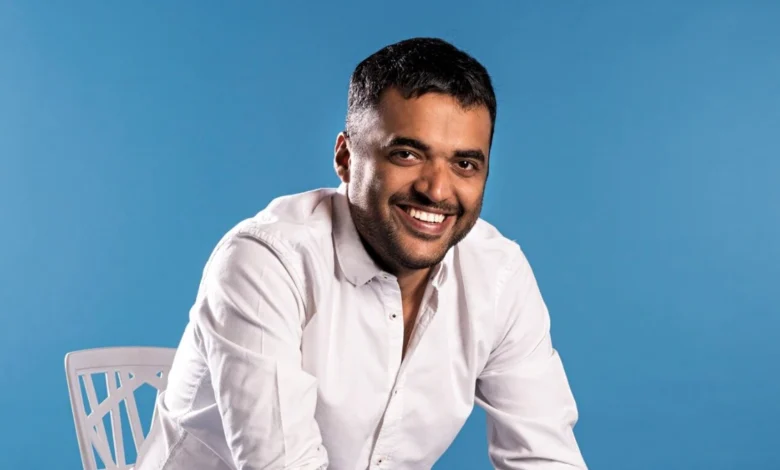
When Deepinder Goyal — founder of Eternal, Continue Research, and LAT Aerospace — presented the gravitational aging hypothesis (GAH) last week, the internet wasn’t quite ready. The idea, which was introduced via the X (formerly Twitter) thread, seemed provocative at best.
Basic suggestion? This gravity may speed up the aging process by placing chronic, subtle pressure on our ability to deliver blood to the brain.
The backlash was swift, and Goyal took responsibility.
“I brought my online consumer mind into a deeply scientific field and miscommunicated. I tried to compress years of research into a sensational revelation. This made the hypothesis seem absolute and commercial — when in fact it’s not,” he wrote in a November 20 post.
Now, Goyal is taking another chance. This time, it’s slower, cleaner, and more articulate.
What the gravitational aging hypothesis actually suggests
GAH argues that gravity is not just a background force, but a physiological stressor. Since humans evolved with our brains located at the top of our bodies, keeping the blood flowing upward is work. Over decades, this strain—particularly in areas like the hypothalamus and brainstem—may accelerate the process of neurodegeneration and, in turn, aging.
“Lifelong exposure to 1 gram causes a chronic, low-level lack of adequate blood supply to the brain… which accelerates the pace at which we age.”
The hypothesis does not claim that gravity is the only cause of aging or that spaceflight is anti-aging. Instead, it positions gravity as a missing piece in our understanding of how aging begins and progresses, especially in the brain.
There is a way to prove that wrong
Unlike many big health theories, Goyal’s team built GAH to be falsifiable. They present multiple scientific scenarios that would refute this:
- If postural exposure or gravity showed no relationship with decreased regional cerebral blood flow (CBF).
- If neither anti-gravity nor inversion interventions improve CBF or biomarkers of aging
- If oxygen extraction fully compensates for the reduced flow
- If deep brain structures do not show any chronic ischemia
“This is just a hypothesis,” says Goyal. “It’s not proof. But it’s the way the story comes together — simply, unexpectedly, beautifully — that makes me feel like there’s something here.”
Why hasn’t evolution solved this problem?
If gravity is a problem, why didn’t evolution design us better?
Goyal points to a biological trade-off. Evolution selected for traits that ensure survival through reproductive age, not necessarily long-term brain health. The heart and brain are optimized for efficiency, not durability. Systems such as baroreflexes and self-regulation have helped, but they deteriorate with age, leading to dizziness, unstable blood pressure, and possibly faster cognitive decline.
Temple: A device born from research, not marketing
Critics initially assumed that GAH was a marketing campaign for Temple, a continuous brain blood flow tracking device developed by Goyal’s team.
He explains: “We started manufacturing this device as a measurement project and not as a product, and its production came later.”
TEMPLE was created as a scientific tool to study cerebral blood flow in the real world. It is now being tested independently by researchers and space organizations. It does not prove adrenal hyperplasia, but it may help measure its effects.
Despite his prominent role in the tech and startup ecosystem, Goyal is refreshingly honest about his motivations: “I’m not a neuroscientist. I’m a person obsessed with curiosity and staying healthy.”
Two years ago, a “penny drop” moment led him to this idea. With the resources to fund bold, testable questions, he felt a personal responsibility to explore them—not to be right, but to find out.
“I’m not saying this is true, it’s just been tested. If even part of it is true, it changes the way we think about posture, blood pressure, and brain health for the next century.”
Continue searching: the greatest ambition
GAH is just one part of a broader initiative at Continue Research, backed by a $25 million fund to support aging science that focuses on root causes, not symptoms.
“We believe that the next breakthroughs in the biology of aging are hiding in plain sight,” says Goyal. “Not in the most complex molecular models, but in the fundamental mechanical facts that affect everything simultaneously.”
The goal is to uncover simple, direct insights, ideas that could render dozens of definitive theories obsolete.
More than 90 researchers have already reached out to critique and collaborate. Goyal invites more—especially those working in the field of cerebral blood flow, autonomic regulation, microgravity, or aging.
“Whether we prove it or ignore it,” he writes, “both results move science forward.” Everything—including early data, hypotheses, and citations—is open source at continue.com/gravity.
Final thought: a pattern worth testing
“There are two types of people,” says Goyal. “Those who see patterns and can’t shake them. And those who look for the evidence. I’m both.”
For Goyal, the gravitational aging hypothesis is not the final answer, but it may be the first right question. “Maybe it’s not a complete answer, just the beginning of one.”
Don’t miss more hot News like this! Click here to discover the latest in Business news!
2025-11-20 14:31:00