Here’s how Trump can hit China where it really hurts as Beijing’s rare earths gamble could backfire

The Trump administration insists it has the upper hand with renewed trade friction with Beijing over its sweeping controls on the export of rare earths.
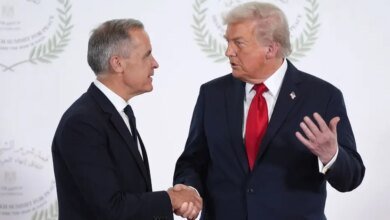
While president Donald Trump’s initial response was to announce additional 100% tariffs and software restrictions on China, which controls more than 90% of the world’s rare earth elements and magnets, he has previously hinted at tougher measures that could take effect.
“But the United States also has monopolistic positions, which are much stronger and far-reaching than China’s,” he warned in a post on Truth Social ahead of his tariff move. “I didn’t choose to use it, and there was no reason to do so – until now!”
Trump has since softened his tone and admitted that his planned tariffs are not sustainable, while Wall Street has dismissed his threats as an attempt to gain leverage in negotiations and another opportunity to trade “tacos.”
Meanwhile, the White House said that the scheduled meeting between Trump and Chinese President Xi Jinping will be held at the end of the month on the sidelines of a regional economic conference in South Korea.
However, China’s restrictions on rare earths have stunned some people, who say they could “prevent any country on Earth from participating in the modern economy”, given how important the minerals are to a wide range of technologies.
On closer examination, Capital Economics said Beijing’s policy is actually narrower than initially feared. But China is also looking to strengthen its negotiating position and may have been frustrated that the United States does not appear interested in reducing its tariffs further, Chinese economic chief Julian Evans-Pritchard and China economist Leah Fahey said in a note on Monday.
“Whatever the motive, China’s recent actions have been a gamble, and there is a risk that they may backfire,” they wrote.
They also listed ways in which the United States could intensify its retaliatory measures and cause further disruption to the Chinese economy.
For example, the United States could strengthen its control over much of the commercial aviation supply chain by blocking exports of critical components — or even entire aircraft.
In addition, about 90% of China’s laptops and PCs still use Windows, according to Capital Economics. Trump could force Microsoft to halt sales and updates in China, ultimately resulting in the vulnerabilities not being fixed.
“There are local alternatives, but Huawei’s experience suggests that such a shift would reduce the global appeal of Chinese-branded mobile devices,” Evans-Pritchard and Fahey said. “Perhaps the biggest concern for China is software used in advanced manufacturing – Western companies control more than 70% of the Chinese market for chip design software, for example.”
Meanwhile, Trump could deal another harsh blow to Chinese technology companies and manufacturers with expanded export controls. That’s because China still relies heavily on chips and chip-making tools made by the United States and its allies, even though more advanced technologies already fall under strict export restrictions.
Then there is US dominance of global finance and infrastructure. Evans-Pritchard and Fahey noted that Trump could impose sanctions on more Chinese companies by freezing their dollar-denominated assets and limiting access to the SWIFT payment system.
Washington could also force allies to hit China with their own trade restrictions, depriving exporters of the ability to offset declining shipments to the United States and further isolating China from advanced economies. In fact, Mexico has already proposed tariffs of up to 50% on certain products from China and several other Asian countries.
“Hawkward advisers on both sides of the Pacific will undoubtedly use the current dispute as an opportunity to try to secure a deeper decoupling between the United States and China,” Capital Economics said. “At best, we may return to the uneasy trade truce that has held so far. At worst, China may find itself even more isolated from Western markets and technology than it is today.”
Don’t miss more hot News like this! Click here to discover the latest in Business news!
2025-10-18 20:57:00