Ian Bremmer and Ravi Agrawal on Trump’s Jungle Law

On Tuesday, Jan. 20, Donald Trump will mark one year as the 47th president of the United States. Most observers agree that Trump 2.0 is markedly different than the first edition: He has had more time to plan, he feels less constrained by norms, and he has a more stable and loyal coterie of deputies. On the latest episode of FP Live, I turned to the geopolitical risk expert Ian Bremmer for a big-picture look at Trump’s foreign policy and how the world is adapting to it. Bremmer is the co-founder and president of GZERO Media and the Eurasia Group.
Subscribers can watch the full discussion on the video box atop this page or download the FP Live podcast. What follows here is a lightly edited and condensed transcript.
Ravi Agrawal: I half-expected the White House to order a strike on Iran this week amid the regime’s brutal crackdown on nationwide protests. It turns out that several Arab countries have advised restraint, and Trump seems to have listened to them, at least for now. What do you make of it?
Ian Bremmer: A U.S. attack looked less likely to me as soon as Trump started to repeat Iranian talking points that they were only shooting protesters that were shooting at them. Trump made it very explicit that the Iranian government should not execute the young protester, Erfan Soltani, but that is still very different from what he had said publicly just weeks ago: that the United States would come in and rescue the protesters.
They definitely were ready to engage militarily. They had picked targets. They were well on the way to taking action. Certainly, Trump’s initial inclination on the back of Venezuela was that they were going to go in hard.
There are a few things going on, most importantly that the Gulf states directly intervened and said American action would disrupt oil flow and trigger a more significant Iranian response. The Turks also conveyed that they were very skeptical and opposed.
But the demonstrations have also mostly petered out because the Iranian regime successfully used incredible brutality against them—a minimum of 2,000 people are dead. And the White House has good information that the actual level of violence was much worse. Contrary to German Chancellor [Friedrich] Merz’s comments that the regime only has a few days or weeks left, the U.S. assessment was that the demonstrations have been destroyed and aren’t likely to persist, at least for now. There doesn’t seem to be any fragmentation within the military leadership, the Basij, and the Islamic Revolutionary Guard Corps.
The final point is that the United States wasn’t well-positioned to manage a large Iranian retaliation. They certainly have the ability to strike Iran, but the United States doesn’t yet have an aircraft carrier in the region. They were planning on deploying more air and naval assets, but it was probably going to take another week. So the military was also telling them internally that it was not the best time to do this. So you’re right that the decision had basically been made and then facts intervened. The Iranian regime lives to fight another day.
Karim Sadjadpour, who I think is by far the most capable Iran analyst living in the West, said that most of what would keep the Iranian regime in place has gone away. He was more optimistic that they were going to collapse but still recognized their ability to repress. That’s still true. The economy is not going to get any better, and the supreme leader has no inclination to do a deal with the United States. Trump’s belief that he can hit Iran militarily and get away with it continues to be very strong, not just on the back of Venezuela, but on the back of the 12-day war last year and the assassination of Qassem Soleimani at the end of his first administration. So all of those things maintain very significant pressure on the Islamic Republic.
RA: You are taking us to a bigger-picture question here: how Trump thinks about interventions in general. How has his thinking changed after Venezuela? Because it was clear last year that he likes to fashion himself as a peacemaker, but it turns out he really does enjoy using sharp bursts of military might.
IB: I don’t like the fact that people that hate him are trying to equate short bursts of military might with forever wars. Trump has always said that he opposes boots on the ground, and that continues to be true. He has always been willing to negotiate with anyone. His willingness to give away the store to [Russian President Vladimir] Putin and put more pressure on Ukraine doesn’t feel any radically different to me than his willingness to give away the store to the Taliban at the end of his first administration, which Biden continued to follow through on.
It was never about regime change. It was never about an extended American confrontation that the United States would have to pay for, both financially and in blood. That continues to be true in Venezuela. He met with María Corina Machado on Thursday, and he’s had good conversations with Delcy Rodríguez over the past days. It appears that he has no problem with working with this regime. Karoline Leavitt, the White House press secretary, said they want to have elections in Venezuela one day. But we don’t know what day that is. There is no such plan today, and it is not the top priority for Trump.
So I accept that he’s leaning more into this now, given the success of Venezuela. Military might feels more focused as an option, more than tariffs, for instance. If the “Donroe Doctrine” is the scaffolding, then he has to put ornaments on it. So there are lots of things going on here, but this doesn’t strike me as a sea change. It’s not a sudden break in Trump policy, either from last year or from his first administration.
RA: What is the scaffolding you mention? What drives Trump’s foreign policy overall?
IB: It’s fairly straightforward: law of the jungle. [U.S. Homeland Secretary] Stephen Miller made the point that it’s always been about power. What he didn’t say is it’s also always been about how you decide to deploy that power. Previous administrations, including Trump’s first, have had different priorities than Trump does right now. But Trump’s view is that he has consolidated more power than any other president and so can act in a revolutionary way. He doesn’t want to be the architect of free trade. He wants to do industrial policy and increase manufacturing and more forced investment by other countries in the United States. He wants more equity stakes, more American control of companies, more kleptocracy so that he, his family, and his friends make more money. All of those things have ramped up significantly from the first term; the seeds were there, and they’ve now grown.
Of course, the United States being the most powerful country in the world does not mean that Trump is the most powerful leader. He is not. [Chinese President] Xi Jinping is the more powerful leader, because Xi doesn’t have midterms, an independent judiciary, a free media, or any of the other constraints that Trump has. And many of the things that Trump has tried to do, which have led to all these big headlines, have failed, whether it’s sending the National Guard into Chicago or launching investigations into [former FBI Director] James Comey and [New York Attorney General] Letitia James. Many things that would have never failed in China are failing in the United States.
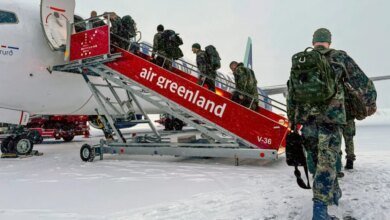
It’s overwhelmingly likely that Trump will not be the president after 2028, and the next president can undo a lot of this stuff. That means that in the long-term, the United States loses from a return to the law of the jungle, whereas the Chinese win. And that is the biggest problem here: The Americans are very capable of getting what they want out of countries that are much weaker, at least when they are vulnerable to the United States. There’s a lot of FAFO (fuck around and find out) happening across Latin America right now, like with [Venezuelan President Nicolás] Maduro’s capture. The Mexicans are certainly feeling that, doing anything possible so the Americans don’t engage in a unilateral breach of their sovereignty to hit the narco cartels. There are other countries, too; the Danes showed up to the White House this week with Greenland’s foreign minister.
But the other side of the spectrum is TACO (Trump Always Chickens Out). Why are the Ukrainians being hit so much harder than the Russians? Because the Ukrainians are FAFO—they’ll capitulate. The Russians are not, as Trump has found out. China—they’re TACO.
RA: So FAFO is reserved for smaller, weaker countries, and TACO is for bigger-ticket issues that are not so easy to dominate.
IB: No, Trump tries FAFO everywhere—he just fails a lot. He wasn’t trying FAFO with the Russians at the beginning. He said he was going to get to a deal in a day. He failed because Putin said no. And he has put some pressure on Putin, but not very much compared to the Ukrainians. He was convinced that full-on FAFO would work in China, such as when he tried the “Liberation Day” tariffs. But it turned out he was wrong, and he had to bend the knee. Miller didn’t talk about China in that quote because, ultimately, Trump’s policy on China failed. When he met with Xi in Busan, South Korea, he called it a G-2. He afforded them the ultimate non-FAFO status because they’re acting like a peer and showed they’re willing to and capable of hitting him in the face. India has a fair amount of TACO because they are not as directly vulnerable to the United States cutting off trade, and [Indian Prime Minister Narendra] Modi is very powerful domestically and will have 7 or 8 percent growth this year.
So, Miller’s right that power matters—it just doesn’t always work in America’s favor, particularly in Trump’s favor, which is why the law of the jungle is ultimately a bad way to deploy American power. The United States is better off long-term when it is seen as reliable by its allies. That means more commitment to the rule of law and doing some things a lot of Americans might not support in the short term, like deploying more foreign aid.
Read More
-
A photo collage illustration shows the back of President Donald Trump in front of three track hurdles. Behind the hurdles are a stack of shipping containers, soccer stadiums and a passport, and a voter in a U.S.-flagged voting booth. A photo collage illustration shows the back of President Donald Trump in front of three track hurdles. Behind the hurdles are a stack of shipping containers, soccer stadiums and a passport, and a voter in a U.S.-flagged voting booth. The Biggest Challenges Trump Faces in His Second Year
From Russia-Ukraine to the U.S. midterms, Trump faces a bumpier year at home and abroad.
-

An illustration of a large bald eagle perched atop small shipping containers with the flag of Venezuela draped over them, surrounded by oil barrels, soldiers, a fighter jet, a warship, and an oil rig. They are set against an icy landscape and a blue, cloudy sky. An illustration of a large bald eagle perched atop small shipping containers with the flag of Venezuela draped over them, surrounded by oil barrels, soldiers, a fighter jet, a warship, and an oil rig. They are set against an icy landscape and a blue, cloudy sky. The Grand Strategy Behind Trump’s Foreign Policy
Ignore the critics. The logic of consolidation that defines the new National Security Strategy is eminently sensible.
-

Donald Trump holds an umbrella. Donald Trump holds an umbrella. Trump’s Fantastical Geopolitics
The White House’s aggressive posture is already pushing other countries to seek strength in numbers.
RA: Into this world of jungle law comes the Donroe Doctrine, which was number three on your Top Risks for 2026 report. How seriously should we take this doctrine of a stable, cooperative, and well-governed Western hemisphere, whose policies are directed toward American success? Also, in my mind, a doctrine is something that’s followed quite faithfully. Will that be the case this year?
IB: Trump is certainly not someone who will allow doctrine to get in the way of political opportunity. Iran is not in the Western Hemisphere—there’s no Donroe Doctrine there—but he was prepared to take full-on action there. The Donroe Doctrine doesn’t describe the extent of Trump’s or America’s ambitions. It is a priority, but it’s not the extent.
Secondarily, the Chinese are the dominant economic power in Latin America. That’s not going to change—in fact, that’s only increasing, especially because the Chinese have a $1.2 trillion surplus from last year. While they’re trading less with the United States, they’re trading more with countries across the Western Hemisphere, including Canada.
The United States is utterly militarily dominant in the Western Hemisphere and can therefore take covert or overt action, provide security and intelligence as carrots. Yet on the economy, where the Chinese principally express their global influence, China not only has a lot more influence over bilateral policies with countries in their backyard but in South America, as well. For all of those reasons, the Donroe Doctrine, which will drive a lot of policy-making decisions and relationships in this part of the world—including with Denmark and Greenland—will also have some significant limitations.
RA: As we look at what Trump’s foreign policy has been like in the last year—jungle law, naked transactionalism, kleptocratic elements—how is the rest of the world responding to it? Other world leaders are smart, too; they know what they’re looking at and how to deal with it. What are the tools that countries are deploying to navigate a might-makes-right world—a Trumpian world?
IB: Most vulnerable countries are trying to defend first—not get into a fight and say all the right things to Trump—and hedge second. Mexico, for instance, doesn’t have a hedge and understands that no matter what they do, everything involves the United States. So they need to deploy the best possible priority bilateral relationship. They need to do more on fentanyl, the border, and meth labs across the board, because otherwise they are completely screwed. They might be screwed anyway, because a lot of the new U.S. industrial policies are ultimately going to be painful for Mexico, which is already experiencing about 1 percent growth this year.
Then you’ve got Canada. [Canadian Prime Minister Mark] Carney’s initial meetings with Trump were much more conciliatory and flattering, but Canada is also politically very supported by a more active hedge. You’ve seen that with efforts to integrate Canada’s defense establishment more with Europe, which will mean less purchasing from the U.S. military-industrial complex over time. You’re seeing more engagement with trade with China, which will mean a somewhat reduced exposure to the United States over time, but if you’re Canada, even a home run in five to 10 years might reduce your U.S. exposure by 5 or 10 percent. So how you navigate this depends on how vulnerable you are to the United States.
China hasn’t navigated anything—they basically said they wouldn’t return a phone call until Trump backed off. Trump was surprised, but ultimately, he backed off. They’re still trying to decouple as fast as they had been under [former U.S. President Joe] Biden, but they also recognize that they don’t need to fight with the United States right now.
So, it really depends on who you are. This is not a one-size-fits-all response mechanism. Where you stand depends overwhelmingly on where you sit in this situation.
RA: Size and strength matter, but another dimension to that is collective action, strength in numbers. Countries and regions that were once mired in bureaucracy for years are striking free trade agreements: European Union-Mercosur and EU-India. The G-20 went ahead without the United States present last year in South Africa. What’s your prognosis for how countries might join together to have fewer of the constraints you were just describing?
IB: I mentioned Canada-EU on defense, which is more surprising than EU-Mercosur, because EU-Mercosur should have already happened. It was a lack of political capital deployed by comparatively weak European leaders who only now see this as urgent. Another example is the Europeans now completely paying for Ukrainian defense. So, they have a seat at the table, and they can push Trump back on his efforts to force the Ukrainians to capitulate. The problem is that these are all belated efforts that can only move the needle so far. Trump is maximally taking advantage of an environment where people have been reliant on the United States. Suddenly, the Americans are unreliable, but other countries don’t have other plans in place. But in five years or 15 years, the United States won’t have this same level of control or power.
Other countries have not been that smart over the last 20 years. The Europeans have not planned for this at all, even though Trump was president the first time around. They didn’t plan for a G-Zero world. They thought they could just keep benefitting from U.S.-driven collective security, free trade, and rule of law. That’s why they do not have tech companies or competitiveness. Mario Draghi did his report on European competitiveness, but how fast have the Europeans moved to actually execute on that? The answer is not fast enough. Part of it is they’re not a state. Their own politics are vulnerable, and there are populist movements gaining in many of these countries that are promoting the same beggar-thy-neighbor policies that will lead to a race to the bottom. So, while some countries want to maintain these institutions and free trade, we have to recognize that the destruction is actually greater than the reaction function at this point.
RA: Let’s end on a domestic note. What guardrails might congress be able to put on the White House?
IB: Last year, Trump took a lot of actions that people didn’t expect. And there was less institutional pushback than people would have said a year before. So, we have to understand that in just 12 months of Trump’s second administration, there’s a lot more disruption happening to the U.S. political system. That’s why political revolution in the United States was Eurasia Group’s principal risk for this year. Even when Trump is frustrated in different efforts, he just doubles down in other areas. We’ve seen that, again, with the FBI raid of a Washington Post journalist’s house. We’ve seen it with talk of the Insurrection Act in Minnesota. We’ve seen it with the launch of an investigation into the Federal [Reserve] chair, Jerome Powell. He will be limited in those capabilities. But what ultimately makes Trump fail is not the resilience of the system. It’s his lack of discipline. Because while he’s doing all of that, he’s also doing Greenland and Venezuela and Iran and everything else. And Trump is just not a committed revolutionary.
He’s completely convinced that his political instincts are always right, no matter what he’s focused on, and he’s very energetic, so he doesn’t leave things to second-order people. He wants to be involved in a surprisingly robust number of decisions. So, I think, for all of those reasons—all of the distractions, the commitment that he’s right, and not authorizing those capable advisors who would like a revolution, like Russell Vougt or Stephen Miller—ultimately, his revolution fails.
Don’t miss more hot News like this! Click here to discover the latest in Politics news!
2026-01-16 17:21:00