India could surpass US, China to become world’s largest economy by century end
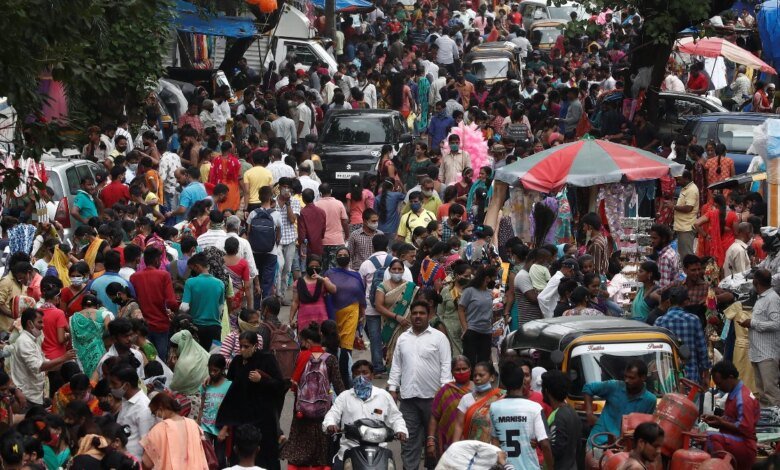
If the OECD’s long-term scenarios come true, India could overtake the United States and China to become the world’s largest economy by the end of this century. Taking the OECD forecast, Bert Hoffman, a senior associate fellow at the Merics Institute and director of the East Asia Institute at the National University of Singapore, said big changes are likely to occur in the second half of this century.
According to OECD estimates released last year in September, India is expected to overtake the United States by 2060 and will be almost twice the size of China by the end of the century. The United States will fall to third place in the 2040s, but will catch up with China again in 2070.
Influencing forces
The OECD’s long-term estimates are essentially a study of how the changing demographics of the economy will change. Hoffman explained in a blog post that according to projections of the United Nations Population Division released in 2024, China’s population will decline much faster than previously expected.
Here’s the kicker: Most of China’s population decline is expected to occur in the second half of this century.
This decline brings China’s population to about 650 million by 2100. Even with increased labor force participation, this population will still be less than 300 million – barely 40% of India’s population, and not much larger than that of the United States.
Hoffman said India will still have the world’s largest country in 2100, even with the decline starting in 2060. Labor force participation is also expected to rise rapidly, from 50 percent of the working-age population to 70 percent by 2100.
This applies not only to demographic metrics, but also to scenarios. Hoffman explained that the OECD uses the Cobb-Douglas function with constant returns to scale, which predicts the convergence of countries’ GDP, but the rate of convergence depends on “effective” labor and the initial capital/labor ratio. Another convergence is the dynamics of equity capital. In both scenarios, India appears to gain more space than China.
These factors explain why productivity growth in China is lower than in India.
In fact, China will stop catching up with the United States by mid-century, according to the Organization for Economic Cooperation and Development.
China’s way out
However, China can overcome the catch-up rule in labor efficiency by applying artificial intelligence and robotics faster than India, and faster than the United States, a border country. China may also grow faster if the labor share remains below the level imposed by the model.
China’s labor share will also rise over time, as evidenced by its current policy orientation to boost consumption.
It is not set in stone
The OECD scenarios are not destiny or something engraved in stone, but rather just scenarios. These are not forecasts, but rather illustrate the long-term challenges facing the global economy and how the landscape may evolve over time.
“However, demographics play a big role, and India’s projected margin over China in GDP size by the end of the century is very large, so it seems safe to say that India will be the largest economy by then,” Hoffman said in the post.
Not only the OECD…
It is not just the OECD but also the Center for Economic and Business Research (CEBR) which in its report titled “World Economic Association Table 2024” submitted that India will overtake the US and China by the end of the century.
She predicted a massive shift, with India’s GDP expected to be 90 percent larger than China’s GDP, and 30 percent larger than the United States’ GDP. It set a steady growth path for India, averaging 6.5 percent from 2024 to 2028.
Don’t miss more hot News like this! Click here to discover the latest in Business news!
2026-01-25 07:36:00