India EU FTA: Tariff cuts, textiles boost; What’s in the deal and what could still derail it
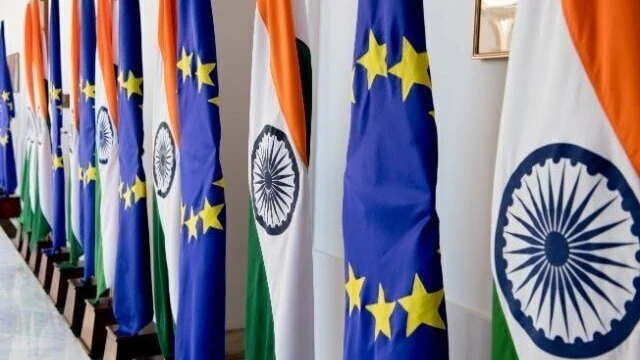
India and the European Union appear set to put a long set of negotiations in place, with the two sides expected to unveil a nearly finalized free trade agreement at the India-EU summit in New Delhi on Tuesday. The push comes at a time when trade barriers are rising globally, and both partners are seeking clearer market access and more predictable rules.
1) The first hurdle comes after the handshake
Even if leaders announce the agreement this week, it will not take effect immediately. The deal still needs to be approved by the European parliament, a step that could take a year or more and could become politically controversial. Recent moves in Brussels to legally challenge another major trade agreement underscore how easily parliamentary processes can slow timelines or complicate outcomes.
Notably, some larger pieces are being kept out of the base package for now. Investment protection and geographical indications are being negotiated separately, meaning that the main free trade agreement is more stringent in scope, focused on trade in goods and services and the rules that govern them.
2) Why are both sides pressing now?
For New Delhi, the trade agreement fits into a broader strategy: building alternative export routes and securing stable partners as protectionism spreads across major economies. If finalized, it will add to a growing list of trade agreements that India has pursued in recent years.
For the European Union, this logic is partly economic and partly strategic. The agreement with India supports supply chain diversification, helps reduce over-reliance on China, and deepens access to one of the world’s fastest-growing large economies, currently valued at $4.2 trillion.
3) What can India gain, and why is it important?
Europe is already near the top of India’s trade relations, along with the United States and China. In 2024/25, total trade in goods and services between India and the EU27 exceeded $190 billion. India’s exports to Europe included about $76 billion worth of goods and about $30 billion worth of services.
While the average levels of EU tariffs on Indian products are relatively modest, many job-rich sectors still face significant duties. For example, textiles and clothing are taxed at about 10%, according to the Global Trade Research Initiative, a Delhi-based think tank.
The deal could help Indian exporters regain competitiveness after the European Union began trimming benefits under the Generalized System of Preferences in 2023, a shift that has hit categories such as apparel, medicines and machinery. The timing has also become more urgent for Indian companies due to new cost pressures stemming from severe US tariffs that have affected certain products since late August, prompting companies to look more seriously at alternative markets.
India’s demand is not limited to merchandise exports. It is also pushing for smoother access to skilled professionals and improved opportunities for IT and services exports.
4) What does Europe want from India?
From an EU perspective, India remains a harder market to sell to than many other major economies, mainly due to high import duties. The value of EU goods exports to India in 2024/25 amounted to about $60.7 billion, and faced a weighted average customs tariff of about 9.3%.
European negotiators see the biggest upside in sectors where tariffs are high and demand is growing. This includes cars and their components, as well as chemicals and plastics. If tariffs fall significantly, EU companies could find greater opportunities in cars, machinery, aircraft and chemical products, along with improved access to services, government procurement and investment pathways.
5) Deal-breaking sectors are still sensitive sectors
In order to keep the negotiations workable, some politically sensitive items were completely excluded from the agreement, including agriculture and dairy products.
Another major point of friction is the blanket coverage of tariff elimination. The European Union has been seeking near-total liberalization of goods, while India has indicated a willingness to go to a lower extent, closer to nine-tenths rather than near-total elimination.
Beyond the headline numbers, some groups remain politically and economically sensitive in India. Cars and items such as wine and spirits continue to raise concerns about local industry exposure. India is considering gradual reductions, phased schedules, or capping the volume of imports instead of sharp cuts in customs duties, noting the risks to local manufacturing.
6) The biggest competition is about services and rules
This agreement is also a rules negotiation, not just a tariff exercise. India seeks recognition of “data security” under EU frameworks, facilitating the movement of professionals, and taking measures that reduce the burden of duplicate social security contributions.
For its part, the European Union is seeking deeper access to India’s financial and legal services markets, along with stronger commitments in areas such as labor, environmental standards and intellectual property. India has preferred to retain more room for policy flexibility in these chapters.
7) India’s two warning lights: carbon costs and hidden barriers
Even if tariff lines are lowered, India is concerned that the net advantage may be weakened by other EU measures. Two issues stand out: the EU’s carbon border tax, and a host of non-tariff barriers that raise compliance costs, including long regulatory timelines, stringent standards and expensive certification requirements.
(With inputs from Reuters)
Don’t miss more hot News like this! Click here to discover the latest in Business news!
2026-01-26 07:11:00