Israel and Hamas Agree to Swap Prisoners and Hostages
Welcome back to World Summary, where we take a look at the deal between us Israel And enthusiasm in GazaThe trip of a Taliban official to… Indiaand Hungarian The writer who won the Nobel Prize in Literature.
Steps towards peace
On Wednesday, Israel and Hamas agreed to stop fighting in Gaza to facilitate a hostage and prisoner exchange – the first stage in a Gaza peace plan proposed by US President Donald Trump. If the agreement holds, it would be a major breakthrough in ending the war, which has claimed more than 65,000 Palestinian lives since Hamas killed nearly 1,200 people and took 251 hostage in an attack on Israel on October 7, 2023.
Welcome back to World Summary, where we take a look at the deal between us Israel And enthusiasm in GazaThe trip of a Taliban official to… Indiaand Hungarian The writer who won the Nobel Prize in Literature.
Steps towards peace
On Wednesday, Israel and Hamas agreed to stop fighting in Gaza to facilitate a hostage and prisoner exchange – the first stage in a Gaza peace plan proposed by US President Donald Trump. If the agreement holds, it would be a major breakthrough in ending the war, which has claimed more than 65,000 Palestinian lives since Hamas killed nearly 1,200 people and took 251 hostage in an attack on Israel on October 7, 2023.
Under the current agreement, Hamas said it would release all remaining hostages, including about 20 people believed to be alive and the bodies of about 25 others. At the same time, Israel will release 1,700 Gazans it arrested during the war as well as 250 other Palestinians serving life sentences in Israel. Israel will also partially withdraw from Gaza and allow increased medical aid and food trucks into the Strip.
This is the third ceasefire reached in the war. Most recently, 25 Israeli hostages were exchanged for nearly 2,000 prisoners earlier this year before Israel ended the ceasefire in a surprise attack in March.
At a Cabinet meeting on Thursday, Trump announced his plans to travel to Egypt for the “official signing” of the deal in the near future. In a phone call with Trump on Thursday, Israeli Prime Minister Benjamin Netanyahu invited the US President to deliver a speech before the Knesset during the latter’s expected visit to Israel on Sunday.
But the complexities of the deal — and the acceptability of Trump’s plan — are unclear. Both sides are on track to concede their most ambitious demands: Hamas has long refused to release hostages unless permanent ceasefire arrangements are reached, while Israel has repeatedly rejected deals that do not include disarming Hamas. Other sticking points, such as the role of the Palestinian Authority in post-war Gaza and the possibility of a two-state solution, were vaguely detailed in the Trump plan and have not yet been agreed upon between the two parties.
“The current agreement is a major achievement and an important step forward for both Gaza and Israel, and it will be difficult to make it last,” Daniel Byman wrote in his article. Foreign policy. International pressure from Europe, the United States, and the Arab world, which imposed negotiations, is likely to continue. But Israel and Hamas may jeopardize a permanent ceasefire by refusing to abide by the terms of the deal, slowing down, or resuming fighting entirely.
The Israeli government is expected to meet on Thursday to vote on the agreement. If approved, the ceasefire will enter into force immediately. The hostage and prisoner exchange is scheduled to take place soon after, likely on Monday or Tuesday, according to Trump.
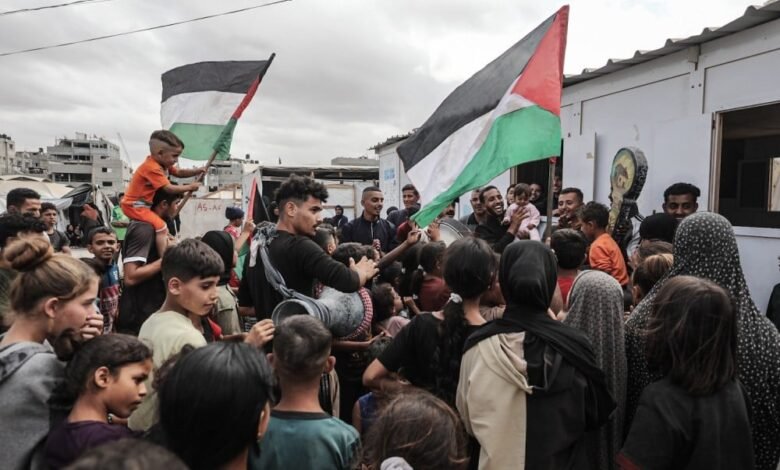
Although the agreement was preliminary, hundreds gathered in “Hostage Square” in Tel Aviv to celebrate the announcement. In Gaza, celebrations spread to the streets amid flattened buildings and rubble, commemorating tens of thousands of dead.
“We don’t know whether to feel happy or sad,” a woman displaced from Khan Yunis, a city in the southern Gaza Strip, told the Associated Press. “An entire generation has been lost. Two generations have been lost, not just one. May God compensate us.”
Most read today
What we follow
Two trips to India. India on Thursday hosted two key visitors: British Prime Minister Keir Starmer and Taliban Foreign Minister Amir Khan Mottaki.
At a meeting in Mumbai, Starmer and Indian Prime Minister Narendra Modi signed a $468 million contract to supply the Indian military with UK-manufactured air defense missiles, which are being built at a factory in Northern Ireland that also makes weapons for Ukraine. “The agreement paves the way for a broader complex arms partnership between the United Kingdom and India,” the British government said in a statement. Starmer and Modi have also made strides towards another major deal to collaborate on developing electric-powered engines for Indian naval vessels.
Meanwhile, Mottaki is seeking to make the most of the temporary postponement of the UN travel ban by undertaking a six-day tour of India, including a meeting with his Indian counterpart Foreign Minister S Jaishankar, and a visit to the Taj Mahal. The trip comes at a critical moment as India’s perennial rival Pakistan fights a Taliban insurgency, and is the first time a Taliban leader has visited India since the group took control of Afghanistan in 2021.
Mottaki’s tour in India follows a trip he made to Russia, the only country to recognize the Taliban government, earlier this week. Both Russia and India recently sided with the Taliban against Trump’s call for the United States to retake Bagram Airfield in Afghanistan.
Ministerial reshuffle in South Sudan. Late on Wednesday, South Sudanese President Salva Kiir dismissed General Daw Aturjong from his post as defense minister and reinstated Aturjong’s predecessor, Paul Ngang Majok, who was dismissed by Kiir just three months ago.
No official reason was given for either of these decisions, but they are part of a series of adjustments within the army and government in South Sudan. In September, Kiir’s government charged former rebel leader Riek Machar with murder, treason, and crimes against humanity over his alleged involvement in an attack that killed 28 people in March. Machar was also stripped of the vice-presidential position he took over in 2020 as part of a post-civil war power-sharing agreement.
Analysts say these changes may be an attempt by Kiir to consolidate his control ahead of long-postponed elections, which are now expected to be held in 2026. Kiir has led the transitional government since South Sudan’s independence from Sudan in 2011 and throughout the country’s nearly five-year civil war.
Apostolic guidance. Pope Leo issued his first major papal document titled “I Loved You” on Thursday, calling on Christians to love and prioritize the poor and suffering. This document, known as the Apostolic Exhortation, was begun by the late Pope Francis and finished by Leo, who assumed the papacy in May.
The exhortation praises the church’s tradition of welcoming strangers and gives special credit to women for their work providing health care to the poor. Liu, whose criticism of the Trump administration has escalated, also appeared to point to Trump’s immigration policies: “Where the world sees threats, they are… [the Catholic Church] Children see; Where walls are built, bridges are built.”
Liu criticized “political and economic systems that favor the strongest” for creating extreme wealth disparities and a culture that “carelessly tolerates millions of people dying from hunger or surviving in conditions unfit for humans.” He called for a global commitment to address the root causes of poverty while providing charity to those suffering in the meantime. “A Church that sets no limits to love, that knows no enemies to fight but only men and women to love, is the Church the world needs today,” Liu wrote.
Odds and Ends
The Nobel Prize in Literature was awarded to Hungarian novelist Laszlo Krasznahorkai “for persuasive and visionary works that reaffirm, in the midst of apocalyptic horror, the power of art,” as seen in works such as his 1999 novel. War and warabout an archivist who loses his mind and travels from provincial Hungary to New York City, and his short story “An Angel Passed Over Us,” which takes place in the mud of a ditch and contrasts the dazzling wonders and abject horrors of the modern world—and please excuse the indirect sentence: This World Digest writer is only paying homage to Krasnahorkai’s distinctive style.
Don’t miss more hot News like this! Click here to discover the latest in Politics news!
2025-10-09 21:29:00