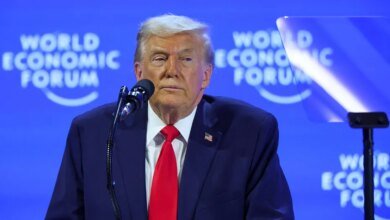
Just when Wall Street and Corporate America were looking forward to a year without trade fears, the ‘Tariff King’ strikes again
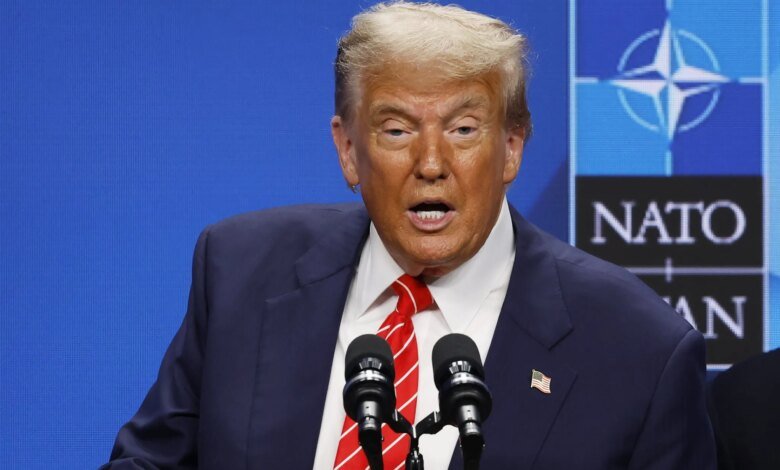
After a turbulent 2025 that shocked global trade and financial markets, 2026 was shaping up to be the time for the U.S. economy to move beyond President Donald Trump’s tariffs.
Not so fast.
Tariffs are back on the agenda a few weeks into the new year. Trump announced on Saturday that eight NATO members would be hit with 10% tariffs next month, rising to 25% by June until “an agreement is reached to fully and completely purchase Greenland.”
Although not all of the countries targeted are EU members, the new tariffs come despite a trade deal reached in July that imposed a 15% tariff on most EU products and obligated it to invest hundreds of billions of dollars in the United States.
On Monday, Trump said countries that do business with Iran would be hit with 25% tariffs on trade with the United States, threatening to blow up the fragile ceasefire with China, which is the largest importer of Iranian oil.
Now the United States faces the prospect of a new cycle of retaliation and escalation. On Saturday, French President Emmanuel Macron hinted at what comes next.
He said in a tweet on the
It wasn’t supposed to be like this. Wall Street, corporate America and consumers were looking forward to an economic boost from the tax cuts in Trump’s big, beautiful law as well as more calm on the trade front.
On Friday, analysts at Bank of America highlighted an exceptionally optimistic forecast for 2026 GDP growth, taking it to 2.8% – well above the consensus of 2.1%.
“The key drivers are accommodative fiscal and monetary policy, and our expectations for a more growth-friendly trade policy,” Bank of America said in a note.
Meanwhile, the Fed was also anticipating continued moderation in inflation this year, as policymakers assumed that tariffs would lead to a one-time jolt to prices rather than sustained upward pressure.
A new wave of import taxes could jeopardize this outlook and jeopardize future interest rate cuts if inflation remains stubbornly above the Fed’s 2% target.
The Fed’s latest survey of economic and trade conditions across the country was full of hope that concern over tariffs has finally subsided:
- “The outlook has improved overall, with more optimism and slightly less caution than in the last report, supported in part by lower uncertainty over tariffs.”
- “Retail and tourism sector contacts were cautiously optimistic heading into 2026, based on recent stabilization in consumer spending, increased clarity on tariffs, and the events of the 2026 FIFA World Cup in Boston.”
- “Companies reported reduced tariff uncertainty through a combination of stable tariff policy and their own adjustments, such as the completion of a new production facility by a frozen foods manufacturer.”
Trump’s new tariffs represent a sharp reversal from late last year, when the administration eliminated some duties on food imports and delayed raising furniture prices as voters demanded more affordability and relief from rising prices.
Trade-exposed sectors of the economy have already suffered huge losses due to tariffs. For example, manufacturers have shed 70,000 jobs since Trump revealed his duties on Emancipation Day in April 2025.
The Institute for Supply Management’s manufacturing index has been in negative territory for 10 straight months, meaning activity has contracted.
There may be some relief in the future. The Supreme Court is scheduled to issue a ruling soon on Trump’s ability to impose tariffs under the International Emergency Economic Powers Act.
It is possible that a decision against the administration could limit its powers to trade. But depending on how carefully the judge is, Trump could retain some leeway. He also pledged to use other laws to impose new tariffs if he loses in court.
This should come as no surprise, given that Trump based his re-election campaign on tariffs and has called himself the “Tariff King,” “Tariff Man,” and “Mr. Tariffs” over the years.
Given his instincts to quickly pull the trigger on tariffs across a wide range of situations, Wall Street may need a new playbook.
“Most economic models don’t quantify the geopolitical and relational damage caused by erratic tariffs on allies,” Erica York, vice president of tax policy at the Tax Foundation, said on X. “Trump’s tariff policies impose real costs that go far beyond higher taxes and slower GDP growth.”
This story originally appeared on Fortune.com
Don’t miss more hot News like this! Click here to discover the latest in Business news!
2026-01-17 21:00:00