Move over Harvard and MIT—this university might be winning the AI race, and you’ve probably never heard of it
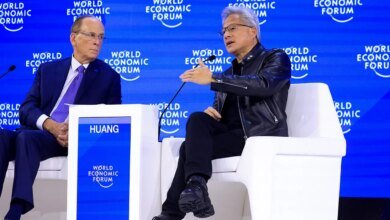
Nvidia CEO Jensen Huang sounded the alarm earlier this month, warning that China was rapidly closing in on the United States in the global race for AI dominance. DeepSeek’s sudden rise earlier this year showed how quickly the balance of power can shift.
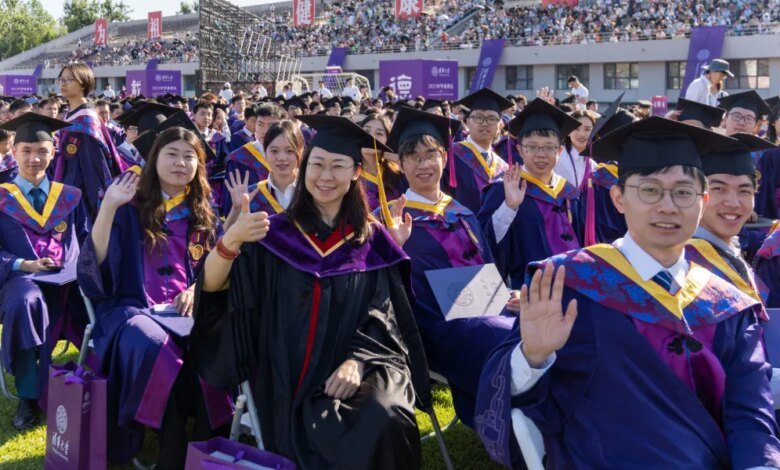
This competition is not limited only to Silicon Valley and Shenzhen, but also on university campuses. Beijing has been steadily building its own artificial intelligence force at Tsinghua University, challenging the high-tech dominance of the US Ivy League.
Tsinghua has produced more AI research papers in the world than any other school, and the university produces more AI-related patents each year than MIT, Stanford, Princeton, and Harvard. total. Between 2005 and the end of 2024, Tsinghua researchers filed 4,986 AI and machine learning patents — including more than 900 last year — according to data analyzed by LexisNexis. Bloomberg.
However, the United States still maintains its advantage. American institutions hold many of the most influential patents in the field of artificial intelligence, and according to the 2025 AI Index report by Stanford University, the United States has produced 40 “prominent models of artificial intelligence” compared to 15 in China. However, Chinese models quickly closed the quality gap.
“There is a lot of enthusiasm for artificial intelligence and machine learning within government, industry and academia,” said John Liu, a former Harvard professor who joined Tsinghua University this year to lead the school’s new statistics and data science department. Bloomberg. “Attracting AI talent is due to capital, and the Chinese government’s support for scientific research, including AI and related fields.”
China is building a huge pipeline of AI talent, and American companies are exploiting it
China’s technology strategy does not begin at the university level. The country has begun teaching the foundations of artificial intelligence to students as young as six years old. This fall, schools in Beijing introduced at least eight hours of AI instruction each academic year, covering topics such as how to use chatbots and other tools, general background on the technology, and AI ethics.
This early focus has helped China build a massive technology workforce. China graduated 3.57 million students in STEM fields in 2020 — compared to 820,000 students in the United States — according to the Center for Strategic and International Studies. State media have since reported that the number could exceed five million annually. (China’s population is more than four times that of the United States)
American technology companies took notice and rushed to attract Chinese talent. Over the summer, Meta announced a new superintelligence lab that aims to build a machine more powerful than the human brain.All 11 founding researchers were educated outside the United States, and seven of them were born in China, according to the researchers New York Times.
A 2020 study by the Paulson Institute found that Chinese AI researchers make up nearly a third of the world’s top 100 AI scientists, most of whom work at American universities and companies. Follow-up research by the Carnegie Endowment for International Peace found that despite rising geopolitical tensions, 87% of these scholars continued to work in the United States.
As Matt Sheehan, the analyst who worked on both studies, said: New York Times:
“The US AI industry is the biggest beneficiary of Chinese talent.”
2025-11-19 16:20:00