Norway’s Preparedness Friends Are Better Than Silicon Valley’s Disaster Fantasies
These days, we’re all concerned about various crises, from climate breakdown to the fear of Skynet. In the United States, tech billionaires have decided that building bunkers and saving themselves is the best solution. By contrast, in Norway, the government encourages people to make “preparedness friends.” Would you rather face war, climate disasters, intelligent robots in an underground castle, or have the support of your fellow human beings? Plan accordingly.
The United States has a long tradition of doomsday preppers, usually right-wingers who believe the end of the world is near and that only those with adequate supplies of weapons, gold, and canned food will survive. During the Cold War, the fear was of nuclear war. Today, many American billionaires have convinced themselves that artificial general intelligence (AGI) is just around the corner and that humanity may not be able to survive.
These days, we’re all concerned about various crises, from climate breakdown to the fear of Skynet. In the United States, tech billionaires have decided that building bunkers and saving themselves is the best solution. By contrast, in Norway, the government encourages people to make “preparedness friends.” Would you rather face war, climate disasters, intelligent robots in an underground castle, or have the support of your fellow human beings? Plan accordingly.
The United States has a long tradition of doomsday preppers, usually right-wingers who believe the end of the world is near and that only those with adequate supplies of weapons, gold, and canned food will survive. During the Cold War, the fear was of nuclear war. Today, many American billionaires have convinced themselves that artificial general intelligence (AGI) is just around the corner and that humanity may not be able to survive.
Other wealthy Americans focus on old fears, such as financial or societal collapse. In 2017, Reddit founder Steve Huffman told… The New Yorker He was preparing for “the temporary collapse of our government and our structures. I own two motorcycles. I have a collection of weapons and ammunition. And food. I believe, however, that I can hide out in my house for a while.”
Since then, the paranoia of the wealthy has increased, as has their desire to protect themselves. “We’re definitely going to build a cache before we launch AGI,” Ilya Sutskever, OpenAI’s co-founder and chief scientist, said some time ago. Meta CEO Mark Zuckerberg is building a 5,000-square-foot bunker on the Hawaiian island of Kauai. (He called it a “little storm shelter.”)
Other tech billionaires are buying land in New Zealand as the crisis eases. “Survival shelter provider Rising S Bunkers has revealed it has delivered about 10 private bunkers to New Zealand over the past few years,” Yahoo Finance reported. Today, the market offers hideaways with bowling alleys, swimming pools, gyms, saunas and all manner of entertainment.
All of this is based on the preparatory tradition of intense focus on only your family at most, as well as the belief that one of the primary considerations after a disaster is to fight other desperate survivors. Any locals seeking shelter in such facilities will face security cameras, high-tech doors and locks, and armed bodyguards. However, as Douglas Rushkoff pointed out in 2018, one of their main problems is how to prevent their guards from taking control of the facility.
These “disaster fantasies,” as technology expert Cory Doctorow calls them, are rooted in false beliefs about real disasters. But as author Rebecca Solnit has shown, most people fare well in disasters—perhaps better than they do in everyday life.
Norwegians prepare for disasters in a very different way than Americans: by focusing on realistic threats and teamwork.
At the end of October, Norway held its annual Self-Readiness Week, which had nothing to do with building personal forts in remote locations. Instead, the week focused, as always, on having necessary items in the home (think water, canned food, a walk-in radio), and on helping each other.
“The goal is to involve the whole community,” said Elisabeth Arsether, Director General of the Norwegian Civil Emergency Agency, which leads the annual campaign. “Often when we talk about society as a whole, we forget the biggest part: the individuals. If individuals took care of themselves, their families and others, and if everyone took a little responsibility, the amount would be much greater than what the government could achieve by spending money.”
For Self-Readiness Week last year, DSB introduced a new concept and a new word: Preparedness Friend. Helping others randomly is good, but if citizens cooperate, willingness rises to a new level. “It would have been very easy to introduce this word into Norway,” Arsether said. “People were used to taking care of themselves, and we were just asking them to do a little more. It was a word everyone could understand.”
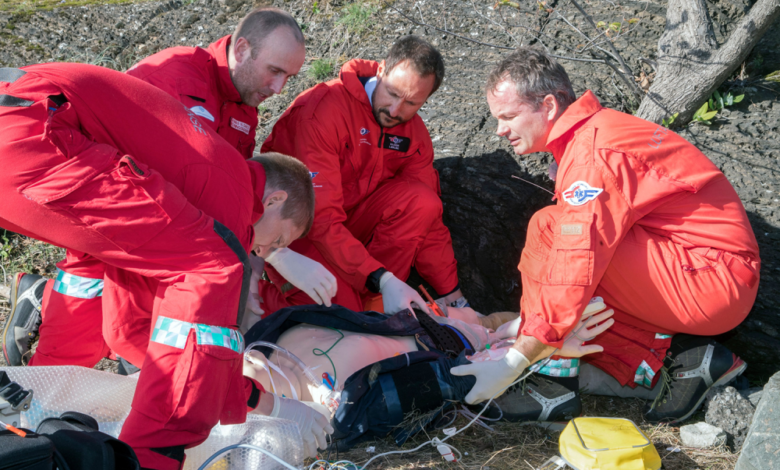
Doing more is not difficult, but it makes a huge difference in the community. The Dispute Resolution Office suggested that Preparedness Buddies can help with first aid, care, accommodation, translation, explaining information from authorities, practical assistance in using equipment and tools, purchasing and transporting food and other necessities, letting the other person borrow a phone, and cooking together. If people who can help themselves and others do so, authorities can focus on the elderly, sick people, and other vulnerable groups.
The phrase “readiness friend” didn’t exist in the Norwegian language until the DSB created it, but it was such a hit that the Norwegian Language Council immediately named it the New Word of the Year. (In Norwegian the word is beredskapsvenn.) “After that, it was very easy to talk more about it,” Arsether said. “People can have conversations like, ‘Would you like to be my willing friend?’ People want to help their families first, then their neighbors, but they are also happy to help others.
Because Norwegian preparedness focuses on realistic threats such as severe weather or Russian hybrid attacks, and not on doomsday scenarios, it is possible to prepare and help each other. You don’t need a bunker if your internet goes out for a few days, but you do need a plan.
In fact, what’s not to like about a preparedness friend, both word and concept? Imagine being able to face the next crisis knowing that you won’t be alone, that someone – or several people – will take care of you, and that you’ll be able to do the same for them. But after some time, DSB had a realization. “In the first months we said: ‘Get a preparedness buddy.’” But then we thought that this is difficult when loneliness is so widespread.
Then her agency began encouraging people to be willing friends themselves: to offer friendship rather than ask for it. The concept took off quickly. Norwegian Prime Minister Jonas Jar Sture spoke about it, as did King Harald. Other countries have even approached her to learn from the Norwegians.
Indeed, readiness friendships provide opportunities for fractured communities to bridge gaps, not to mention address the epidemic of loneliness sweeping the West. People may not be able to agree on policy, but the ability to survive a devastating cyberattack or climate disaster does not involve any ideology.
Another advantage to people who make standby friends, of course, is that it costs almost nothing. “You can easily fill in more water and buy another package of pasta,” Arsether noted.
In fact, having willing friends seems rather reassuring. US tech giants and other billionaires may have good bunkers and bunkers, but hunkering down in the best bunker money can buy is a lonely experience. Moreover, a simple crisis like severe weather, a power outage, or a Russian drone attack is much more likely than the apocalyptic events the billionaires are planning.
What if one wants something that no tool can provide, such as friendship during a crisis? The Norwegians are on to something. I will offer to become a prep friend to my neighbors.
Don’t miss more hot News like this! Click here to discover the latest in Politics news!
2025-12-04 20:39:00