OpenAI’s Sora App Becomes a Scammer Playground
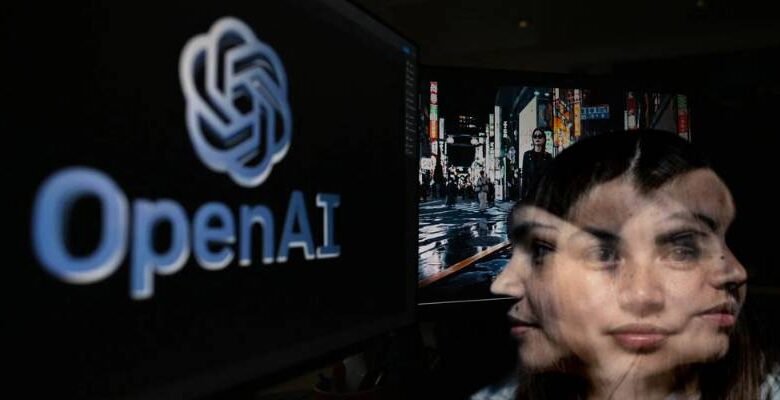
I was scrolling through my news feed the other night when I came across a short clip of a friend speaking fluent Japanese at an airport.
The only problem? My friend doesn’t know a single word of Japanese.
Then I realized that it wasn’t him at all, it was the AI. More specifically, it looked suspiciously like something it was made of Sorathe new video app that’s taking it by storm.
According to a recent report, Sora has already become the tool of scammers’ dreams. The app can create eerily realistic videos, and what’s even more disturbing is removing the watermark that typically identifies content as being created by AI.
Experts warn that this opens the door to deep fraud, misinformation and impersonation on a scale never seen before.
Frankly, when watching how quickly these tools are evolving, it’s hard not to feel a little uneasy.
What’s weird is how Sora’s “cameo” feature allows people to upload their faces to appear in AI videos.
It sounds like fun — until you realize that someone could technically use your photo in a fake news clip or compromising scene before you even find out.
Reports showed that users actually saw themselves doing or saying things they would never do, leaving them confused, angry, and, in some cases, publicly embarrassed.
While OpenAI insists it is adding new safeguards, such as allowing users to control how their digital copies appear, the so-called “guardrails” appear to be slipping.
Some have already spotted violent and racist images generated through the app, suggesting that the filters don’t capture everything they should.
Critics say it’s not about one company, but the larger issue of how quickly synthetic media is normalizing.
However, there are hints of progress. OpenAI is said to be testing more stringent settings, giving people better control over how their AI is used.
In some cases, users can also block political or explicit content from appearing, as was seen when Sora added new identity controls. It’s certainly a step forward, but whether that will be enough to stop abuse is anyone’s guess.
The bigger question here is what happens when the line between reality and fantasy blurs completely.
As one tech columnist said in an article about how Sora has made it nearly impossible to know what’s real anymore, this isn’t just a creative revolution — it’s a credibility crisis.
Imagine a future where every video can be discredited, every confession can be dismissed as “AI,” and every scam seems legitimate enough to trick your mother.
In my view, we are in the middle of a collapse in digital trust. The answer is not to ban these tools, but to outcompete them.
We need stronger detection technology, transparency laws that actually adhere, and a little bit of old-fashioned suspicion every time we play.
Because whether it’s Sora, or the next flashy AI app that comes after it, we’re going to need sharper eyes — and thicker skin — to know what’s real in a world that’s learning how to fake everything.
Don’t miss more hot News like this! Click here to discover the latest in AI news!
2025-10-08 11:25:00