‘No birds, no wildlife’: Nithin Kamath’s case for native trees in India’s rewilding efforts
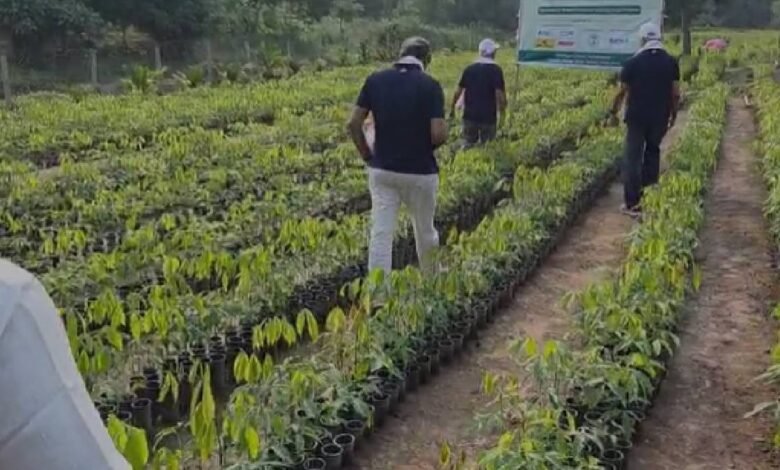
As rewilding and land reclamation gain momentum across India, conservationists are pointing to a critical but often overlooked factor: the choice of trees to plant. While large-scale plantation operations are often expected to be climate and biodiversity solutions, experts warn that planting the wrong species – especially non-native trees – can undermine environmental recovery.
Highlighting this concern, Zerodha Founder and CEO Nithin Kamath recently shared a personal reflection on X, underscoring why native trees are essential for meaningful rewilding.
“When we discuss rewilding and land reclamation, ensuring that native trees are used is equally important,” Kamath wrote, admitting that he has planted conocarpus, a non-native species, at his home for nearly a decade. “No birds or animals ever came to the tree,” he noted, noting the ecological disconnect caused by such species.
Kamath’s experience reflects a broader issue in afforestation efforts in India, where fast-growing non-native species such as eucalyptus, conocarpus and silver oak are often favored for convenience, beauty or quick green cover. However, ecologists argue that these trees often fail to support local biodiversity and, in some cases, actively harm ecosystems.
When green cover is not enough
Native trees have co-evolved with native birds, insects, mammals and microorganisms, forming complex food webs that sustain ecosystems. In contrast, non-native species often act as ecological dead-ends, providing little food, shelter, or nesting value to native animals.
Kamath notes that despite years of growth, his conocarpus trees have not attracted any wildlife. “I also realized much later that these trees are not good for humans either. They cause allergic reactions in many people,” he wrote, adding that the decision to remove them now seemed difficult because of the time invested, even if it was necessary.
Environmental researchers say this dilemma is common. Once planted on a large scale, it is difficult to remove non-native trees without social or emotional resistance, even when scientific evidence points to long-term damage.
Environmental and human costs
Besides losing biodiversity, non-native trees can deplete water resources, change soil chemistry, and increase health risks. For example, Eucalyptus is known for its high water consumption, while Conocarpus pollen has been linked to respiratory allergies in urban areas.
“Planting trees is not about restoring ecosystems,” says a conservation scientist familiar with restoration projects in the Western Ghats. “Rewilding is about restoring natural processes, not just green spaces.”
Kamath echoed this sentiment, urging people to intervene when they see non-native species being cultivated. “Next time you see someone planting eucalyptus, conocarpus, or similar non-native species, be sure to stop them,” he wrote.
Choose the appropriate tree
To bridge the knowledge gap, Kamath highlighted Plantwise-India, a digital tool developed by a group of organizations including the Nature Conservation Foundation (NCF) and ERA, a partner supported by Rainmatter. The platform allows users to enter their latitude and longitude to receive recommendations on native plant species suitable for their specific location.
Plantwise-India is currently working in the Western Ghats, one of the world’s top biodiversity hotspots, and aims to prevent well-intentioned but environmentally harmful farming options. Kamath expressed his hope that this tool would spread nationwide, enabling people across India to verify what is authentic before planting it.
Don’t miss more hot News like this! Click here to discover the latest in Business news!
2025-12-20 14:26:00