Procurement execs often don’t understand the value of good design, experts say
Behind every intricately designed hotel or restaurant is a symbiotic collaboration between designer and maker.
But in reality, companies want to build more with less – and although designers are the ones who create the visions, they don’t always get to see them come to fruition. Alternatively, intermediaries may be charged with responsibility for procurement and oversight of the financial costs of implementing designs.
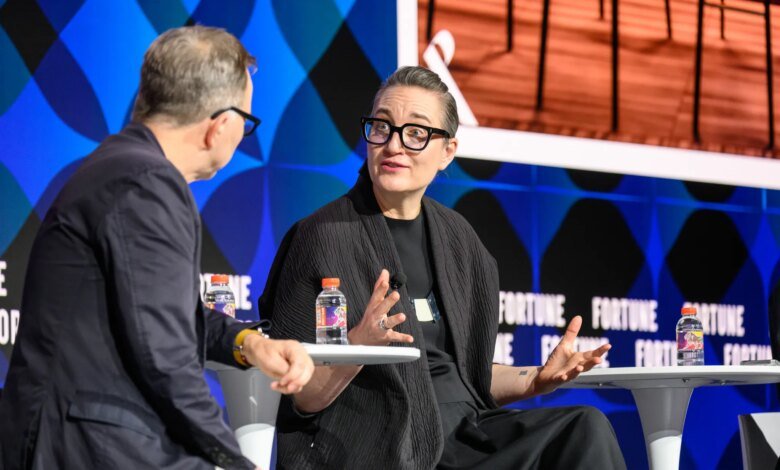
“The process is often not as linear as ours [designers] “We want it to be that way, and sometimes we get interrupted a little bit, and something comes out on the other side that wasn’t really what we expected,” Tina Norden, partner and principal at design firm Conran and Partners, said at the Fortune Brainstorm Design Forum in Macau on Dec. 2.
“To get a better quality product, there is a strong need for communication,” added Daisuke Hironaka, CEO of Stellar Works, a furniture company based in Shanghai.
However, procurers are often the “money people” who may not appreciate good design – and instead abandon it to cut costs. Norden said more education is needed about the business value of high-quality design.
When one builds something, there is a capital investment and a life cycle cost, she said. “If you spend more money on higher-quality furniture and flooring, whatever the type, they should last a lot longer and are therefore a much better value.”
Investing in well-designed products is also better for the environment, as they don’t have to be replaced as quickly, Norden added.
Hironaka said attempts to cut costs may backfire in the long run, as business owners may have to pay higher maintenance bills if products are of poor design and manufacturing.
Artificial intelligence in interior and furniture design
Although designers have been largely slow to embrace AI, some superstars like Daisuke are trying to integrate it into their team’s workflow.
Daisuke explained that artificial intelligence can help speed up the process of designing custom furniture, especially for large-scale projects such as hotels.
The designer said it could take the team between a month and 45 days to create drawings for 200 pieces of custom-made furniture, but artificial intelligence can speed up the process. “We have designed a lot in the past, and if AI can use these archives, study them [them] And help in doing engineering, making it more useful for designers.
However, designers can take comfort that AI will never be able to replace the human touch they bring, Norden says.
“There’s something about the human touch, understanding how we like to use our spaces, how we enjoy space, how we perceive spaces, that will always be there — but AI needs to be something that can help us.” [in] Get to that point faster.”
She added that creatives could instead look to AI as a tool for tasks that are time-consuming but “don’t require absolute creativity,” such as research and 3D designs.
“As designers, we like to procrastinate and think about things for too long until we get them right. [but] We can get some help doing things faster.
Don’t miss more hot News like this! Click here to discover the latest in Business news!
2025-12-08 08:36:00