Singapore-based startup founder Anand Roy thinks generative AI can help fix a broken music sector
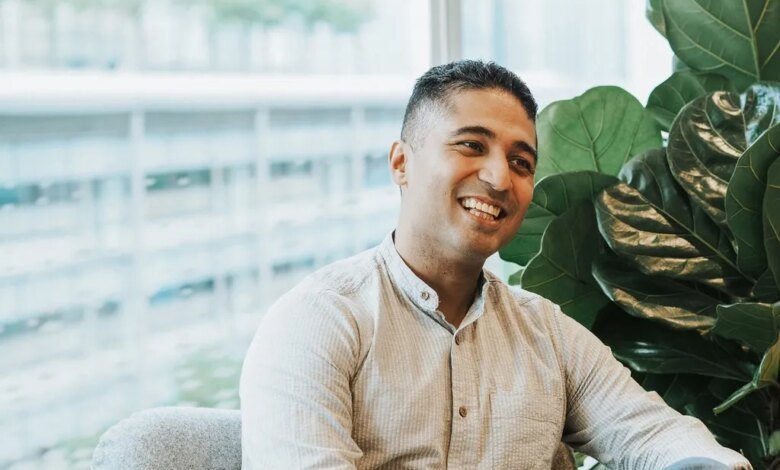
For Anand Roy, making music meant jamming with his Bangalore-based progressive rock band. Today, the metalhead makes music with the simple click of a button through his startup Wubble AI, which allows users to create, edit and customize royalty-free music in more than 60 different genres.
Roy started Wubble with his co-founder, Shaad Sufi, in 2024, from a small office in Singapore’s CBD. Since then, his platform has produced songs for global giants such as Microsoft, HP, L’Oreal and NBCUniversal. It’s even being used on the Taipei Metro, where AI-generated melodies soothe upset passengers.
Generative AI has been a controversial topic in the creative industry: artists, musicians, and other content creators worry that companies will train AI on copyrighted material and then eventually eliminate the need for human creators at all.
However, Roy believes Wubble is a way to fix the already broken music sector. Artists are given small payments on streaming sites like Spotify, which only work with the most popular artists.
Roy spent nearly two decades at Disney, overseeing operations at its networks and studios in major cities such as Tokyo, Mumbai and Los Angeles. He said his time leading Disney Music Group opened his eyes to the arduous process of licensing music.
“Many licensing deals don’t get done because of the amount of paperwork, the amount of red tape, and how expensive, complex and convoluted the whole process is,” he says. However, established music companies “don’t have much incentive to streamline operations.”
Wubble is trying something different, collaborating directly with musicians and paying them for the raw materials used to train Wubble’s AI. “If we were looking at Latin hip-hop, we would go to a recording studio in Buenos Aires or Rio de Janeiro and tell them we need ten hours of Latin music,” Roy says. Wubble then negotiates a deal and offers a one-time payment for their work, at prices Roy says are more competitive than other companies offering music streaming services.
He admits that a one-time payment isn’t an ideal solution, and adds that he’s currently exploring how technologies like blockchain could reveal new ways to compensate musicians for their help training Wubble’s AI models.
David Gunkel, who studies communication studies at Northern Illinois University in Chicago, believes that training AI from materials commissioned by artists is a smarter business move than simply searching the web for copyrighted content.
For example, production companies such as Disney, Universal, and Warner Bros. AI companies like Midjourney and Minimax have sued for copyright infringement, arguing that users can easily create images and videos of protected characters like star warsDarth Vader.
“If you curate your datasets, and compensate and give credit to the artists who are used to train your model, you won’t find yourself in a lawsuit,” he explains. “It’s a better business practice, just in terms of your ability to survive long-term as a business representative.”
Generate text-to-speech
Wubble currently only offers instrumental music and sound effects, but Roy believes audio is the next step. By the end of January, Roy says his platform will offer AI-generated voiceovers created from written texts, catering to customers who need narration-led audio tracks. “So, the entire audio content workflow of a company can be put on Wubble,” he concludes proudly.
AI music startups are springing up around the world, hoping to use the powerful new technology to make the process of creating melodies and songs easier. Some, like Suno, are interested in creating entire songs, while others, like Moises, offer tools for artists.
Also in Asia, Korean AI startup Supertone offers audio synthesis and reproduction, using samples to create new audio tracks. The startup, founded by Kyogo Lee, was acquired by HYBE, the entertainment company behind K-pop band Sensation BTS, and now operates as its subsidiary. Supertone even launched an all-virtual K-pop girl group, SYNDI8, in 2024.
At the Fortune Brainstorm AI Singapore expo last year, Lee said he sees musical artists as “co-creators,” not only in terms of licensing their sounds, but also asking for their help in improving the technology.
AI “will democratize the creative process, so every creator or artist can experience this new technology to explore and experiment with new ideas,” he told the audience.
Roy, from Wubl, also sees AI as a way to make it easier for more people to get involved in creating music.
“Creating music has always been a privilege. It has been the domain of those who have the time and resources to learn an instrument,” he says. “We believe that every human should be able to create, and AI now enables that.”
Don’t miss more hot News like this! Click here to discover the latest in Business news!
2026-01-09 02:00:00