South Asian States Seek Cooperation—Without India – Foreign Policy
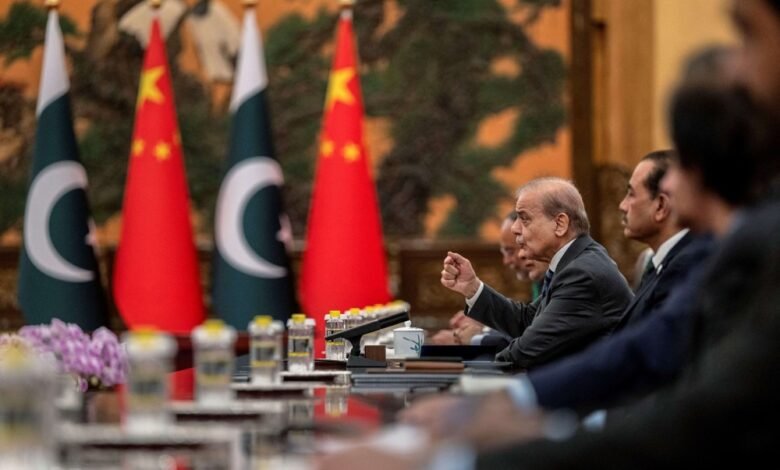
In a visit this month to Dhaka, Bangladesh, Pakistani Foreign Minister Ishaq Dar stressed his government’s interest in forming a new regional organization that includes Bangladesh, China, and Pakistan. The idea was first discussed during a trilateral meeting in Kunming, China, last June. If this is achieved, the proposed grouping will avoid the moribund South Asian Association for Regional Cooperation (SAARC).
The brainchild of former Bangladeshi President Ziaur Rahman, the South Asian Association for Regional Cooperation (SAARC) was established in Dhaka in 1985, with the aim of strengthening regional cooperation. The organization is partly modeled on the successful Association of Southeast Asian Nations. Its original members were Bangladesh, Bhutan, India, Maldives, Nepal, Pakistan, and Sri Lanka; Afghanistan joined in 2007.
In a visit this month to Dhaka, Bangladesh, Pakistani Foreign Minister Ishaq Dar stressed his government’s interest in forming a new regional organization that includes Bangladesh, China, and Pakistan. The idea was first discussed during a trilateral meeting in Kunming, China, last June. If this is achieved, the proposed grouping will avoid the moribund South Asian Association for Regional Cooperation (SAARC).
The brainchild of former Bangladeshi President Ziaur Rahman, the South Asian Association for Regional Cooperation (SAARC) was established in Dhaka in 1985, with the aim of strengthening regional cooperation. The organization is partly modeled on the successful Association of Southeast Asian Nations. Its original members were Bangladesh, Bhutan, India, Maldives, Nepal, Pakistan, and Sri Lanka; Afghanistan joined in 2007.
Although India joined SAARC, it was skeptical early on. The leadership in New Delhi feared that the smaller states would use the new institution to ally themselves against the major power in the region. India made sure that the organization’s charter emphasized that “bilateral and controversial issues” would remain outside its jurisdiction. However, over the years, policymakers from India and Pakistan have held informal meetings on the sidelines of SAARC summits, which has helped ease tensions.
Unfortunately, for most of the past decade, SAARC has not provided a place for such discussions, and has mostly become non-existent. The organization held its last summit in 2014 in Kathmandu, the headquarters of the SAARC Secretariat. The next meeting was scheduled to be held in 2016 in Islamabad, but was canceled after a terrorist attack in India led to the withdrawal of a small number of members.
Since then, the organization has stagnated, remaining mostly hostage to the continuing deterioration in India-Pakistan relations. In recent years, India’s relations with Bangladesh and China have also taken a turn for the worse, leaving it with troubling neighbors on three sides, further shifting regional dynamics.
This year, a series of terrorist attacks on Indian soil attributed to various organizations based in Pakistan, as well as a short but intense military conflict between the two countries in May, led to a virtual stalemate. Moreover, although India-China relations have resumed a semblance of normalcy, they remain fraught since the major border clash in the Galwan Valley in 2020.
Finally, India has found itself at odds with the interim government in Bangladesh since the ouster of Prime Minister Sheikh Hasina last year. The current leadership in Dhaka under Nobel laureate Muhammad Yunus has put aside the historical injustices that Bangladesh has endured with Pakistan. It not only restored normal diplomatic relations with Islamabad, but also moved closer to them, including by reviving military ties.
Therefore, the move towards the formation of a tripartite regional organization must be viewed against this political background. Formalizing a larger grouping that would enhance communication and economic cooperation ties does not seem realistic in the near future. It is also not at all certain that other South Asian countries will easily join this proposed entity even if they are disappointed by SAARC’s dysfunction. Its ties with India remain strong, after all.
However, India has good reasons to be concerned about efforts to create a new regional organization. China and Pakistan are its main rivals, and India’s relations with Bangladesh are now far from cordial. Based on the data released so far, there are initial indications that New Delhi may be excluded from the group. India cannot afford to see its other smaller neighbors moving towards the new entity.
Such a prospect does not bode well for the future of SAARC and India’s position in the region. Despite its current insignificance, the existing organization still has the potential to foster informal dialogue. Since 1992, it has enabled some individuals to travel without a visa, an important first step towards regional integration; She was also instrumental in establishing the South Asian University in New Delhi which allows students from the region to enjoy a shared educational experience.
These steps were not unusual, but they represented small moves toward promoting regional harmony and understanding. A more exclusive organization seeking to keep India at bay would amount to regressive development.
Beyond SAARC, if efforts to create a new regional organization succeed, India will find itself even more isolated than it already is. The relationship between Bangladesh, China and Pakistan could also have implications for Indian security. China and Pakistan have long enjoyed a strong security partnership, and have at times colluded against India, as during the May crisis. Ultimately, India’s options to confront this development are limited.
Given India’s asymmetric material resources compared to China, it will need to find ways to prevent the continued erosion of its influence in smaller South Asian countries. To this end, India must work to allay concerns among its neighbors that have undermined bilateral relations, such as New Delhi’s apparent insensitivity to trade liberalization.
India will also need to formulate a diplomatic strategy that addresses its neighbors’ concerns, real and imagined – and it will need to do so quickly. For some time, China has sought to expand its presence in South Asia at India’s expense, and to some extent it has succeeded. A new initiative with Bangladesh and Pakistan – and the potential inclusion of more countries – could enable Beijing to achieve its goal.
Don’t miss more hot News like this! Click here to discover the latest in Politics news!
2025-12-17 17:35:00