Starbucks sells 60% of China unit to Boyu at $4 billion value
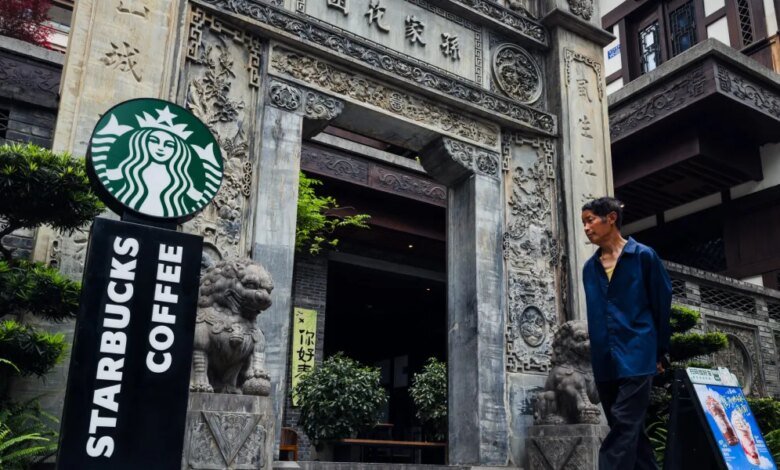
Starbucks has agreed to sell a majority stake in its China business to private equity firm Boyu Capital for an enterprise value of $4 billion in a bid to improve the coffee chain’s flagging fortunes in the country.
Boyu Capital will own up to 60% of Starbucks’ retail operations in China through a new joint venture with the coffee seller, the companies said in a statement. Starbucks will retain the remaining 40% and continue to license the brand and intellectual property to the joint venture.
The agreement marks the end of the search for a partner to help chart the next chapter for Starbucks in China, where it has about 8,000 stores after opening its first outlet in Beijing in 1999. However, Starbucks has struggled in recent years, along with other Western companies that have lost ground to local rivals amid rising nationalism and a reluctance to pay premiums for foreign brands.
Xiamen-based Luckin Coffee overtook Starbucks as China’s largest coffee chain two years ago by selling coffee at a third of its price. Although Starbucks’ store format is expensive to maintain, customers have become less willing to pay higher prices for its drinks since the coronavirus pandemic and the ongoing economic downturn.
“Starbucks’ store expansion has been restricted amid fierce competition from local rivals, and the deal is expected to accelerate growth with sufficient funds and Boyu’s retail experience,” said Jason Yu, managing director of Shanghai-based CTR Market Research. “Boyu needs to balance Starbucks’ brand positioning with its price competition, otherwise it will hurt its long-term profitability in China.”
Bloomberg previously reported that Boyu had emerged as the front-runner, and that others including internet companies could join as limited partners to help co-finance the deal.
The private equity firm is also in talks with banks for a loan worth about $1.4 billion equivalent to support its investments in Starbucks’ China business, according to people familiar with the matter.
Real estate experience
Starbucks is the latest foreign retailer to enlist a local partner to improve its faltering fortunes in China, where an ongoing real estate slump is sapping consumers’ appetite for everything from high-end luxury goods to ice cream. General Mills, which owns Häagen-Dazs, is also working on the potential sale of more than 250 of its stores in China. Restaurant Brands International Inc. is also said to be… It is considering selling a controlling stake in Burger King’s China business to local private equity firms.
McDonald’s Corporation and Yum! KFC, a subsidiary of Brands Inc., has been bringing in local investors for its business in China for years, which has helped the fast food chains successfully maintain their competitiveness over the years.
Boyu’s links in China are likely to be a winning factor from Starbucks’ perspective. Its experience in commercial real estate and property management – it recently bought a controlling stake in one of China’s top luxury mall operators SKP and also controls property management services provider Jinke Smart Services Group – could help the coffee chain improve and expand its store network.
“We see a path to grow from 8,000 Starbucks cafes today to more than 20,000 over time,” Starbucks CEO Brian Nicol said in a blog post.
China’s transformation
As part of its efforts to attract customers back to China, Starbucks earlier this year opened free “study rooms” in some of its stores there. Under new Chinese president Molly Liu, the chain has also expanded its beverage menu to include more sugar-free options and teas that cater to local tastes, lowered prices on a slew of drinks and increased its options for customizing orders. This is in contrast to recent moves in the United States, where the menu has been simplified to enhance operational efficiency.
These additional steps have helped the coffee chain halt a decline in sales in China since earlier this year, with comparable sales returning to growth in the past two quarters. Nicol expressed confidence in the brand’s long-term growth potential during an earnings call last month and predicted the company would enter next year “on stronger footing.”
Starbucks expects the total value of its retail business in China to exceed $13 billion, including the value of licenses, according to the statement.
Shares of the coffee retailer rose less than 1% at 6:17pm in after-hours trading in New York. The stock is down about 11% this year, lagging a roughly 17% advance by the S&P 500.
2025-11-04 09:50:00