The Geopolitics of Sovereign Wealth Funds
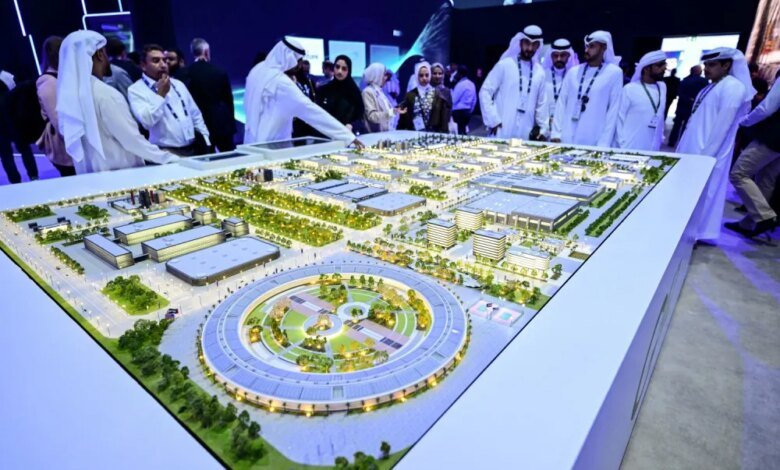
Earlier this year, U.S. President Donald Trump made his first foreign visit not to Europe or Asia, but to three countries in the Middle East: Qatar, Saudi Arabia, and the United Arab Emirates. Each of these Gulf monarchies has built up sovereign wealth funds that are, in addition to serving as investments, instruments of soft power and state objectives. Jared Cohen and George Lee, two co-heads of the Goldman Sachs Global Institute, described in Foreign Policy how these sovereign funds “are now among the most consequential asset owners and allocators of capital in the global economy.”
Cohen joined me for a taping of FP Live on the sidelines of the Doha Forum in Qatar last weekend. The episode is part of a partnership this year between FP and the Goldman Sachs Global Institute.
Ravi Agrawal: Let’s start with some basic definitions. What is a sovereign wealth fund? Why have they become increasingly important?
Jared Cohen: If we step back for a minute, the idea that the Middle East has a ton of wealth is not new. The existence of sovereign wealth funds is not new either. Kuwait had the world’s first sovereign wealth fund in 1953, and its origin story is fascinating. When Sheikh Abdullah [al-Salim al-Sabah], the ruler of the emirate of Kuwait, attended Queen Elizabeth’s coronation, he got a dressing down from British Prime Minister Winston Churchill. Churchill was worried that Kuwait was becoming too wealthy and that it was going to screw up the London Stock Exchange and the sterling. The sheikh ignored him, and yet, a week later, an all-British board and a British governor was running the first sovereign wealth fund in the world.
Fast-forward to today, we’re talking about this because you have $14 trillion of sovereign wealth worldwide. Some of that sovereign wealth comes from commodities and some of it comes from trade surpluses and other revenues. Of that more than $14 trillion, $5.6 trillion is concentrated in four countries in the Middle East: Saudi Arabia, Qatar, the UAE, and Kuwait. To put that in perspective, there was only $2.3 trillion concentrated in those four countries in 2015. By 2030, it’s going to be $8.8 trillion concentrated in those four countries.
From 1953 until the 2010s, sovereign wealth funds weren’t that interesting of a story. It was mostly passive investments, nothing particularly strategic, none of the flashy things that you see today. But when a new group of leaders came to power in Saudi Arabia, Qatar, and, to some extent, the UAE in the mid-2010s, they just brought a different set of ambitions. They wanted to diversify their economies. They wanted to move from following in science and technology to leading. And they wanted to align the deployment of their capital to their geopolitical goals. The problem was the region was stuck in a global war on terror framework. Geopolitics were driving economic interests, even though they wanted it to be the other way around. They couldn’t realize those ambitions in a way that the world would embrace. And so, they spent their time figuring out how to build the capabilities, sophistication, and become world-class investors.
Then COVID-19 happens. The geopolitical center of gravity shifts from the Middle East to Washington and Beijing. The world gets thrown into this new paradigm of U.S.-China competition. All of a sudden, we find ourselves in the era of what we call “instrumental capital.” These four sovereign countries benefit disproportionately from sustained tensions between the United States and China. Instrumental capital is state-directed capital deployed with the dual mandate of generating both outsized financial returns and also projecting state power that’s accretive to what they’re trying to do domestically and internationally.
RA: I want to linger a little bit on why this specific moment is so important. The idea of sovereign funds is not new, going back to the Dutch and British East India companies. But also, the number of sovereign wealth funds is way larger than these four. There are 170 of them. What is it about this moment and these particular ones that strike you as so different, important, and influential in the world?
JC: A big part of it is that these countries have become some of the most important and biggest owners of some of the shiniest assets in the entire world. They’re not just capital allocators. Let’s take AI as an example. If AI is the most important technology since the internet, it’s impossible to imagine any significant deal happening in the AI space without having a sovereign in the middle of it. This isn’t all AI deals, certainly, but if you look at the Middle Eastern sovereign wealth funds, they accounted for $56.3 billion of global deal flow in just the first nine months of 2025. That’s 40 percent of all global deals. That’s why they matter. They don’t matter because they have 1.4 billion people. They don’t matter because they have the world’s largest military. They don’t matter because they’re the world’s largest countries. While this wealth is fueled initially by commodities, these sovereign wealth funds have grown because they’ve also been on a diversification journey.
The other reason it matters is because of geopolitics. In a world where the United States and China are locked in a competition with each other but are still each other’s third-largest trading partner, they can’t gain the upper hand without relying on other countries. Saudi Arabia, Qatar, the UAE, and Kuwait are four geopolitical swing states. They’re able to assert themselves economically. They’re able to choose which side they work with on which issue. That gives them an enormous amount of leverage. What’s different today is that they have the kind of capital—no pun intended—to capitalize on that. The companies that they choose to invest in or not invest in sends a signal to the market about which companies are undervalued and which companies might be overvalued. In addition to being owners of assets and investors, they can also shape the perception of the market.
RA: It’s like the Warren Buffett effect. The point you made about geopolitical swing states aligning with capital is key because, as you alluded to, India has 1.4 billion people, and it doesn’t have that ability to use its swingy nature to affect how other countries do business.
JC: That’s a great analogy. It’s hard not to look at India and say they’re the ultimate geopolitical swing state. But exactly as you mentioned, Ravi—without a massive sovereign wealth fund and the ability to deploy capital very quickly at scale and at will, in a way that carries significant consequences, they can only be so swingy. They’re able to be geopolitically swingy in terms of how they align and who they court. But the four countries in the Gulf can be very active and very proactive in what they’re trying to do geopolitically. They have the ability in the global south, for instance, to basically decide who gets a data center and therefore who gets to play in the AI space. They recognize that every country in the world has the same number of votes in multilateral bodies, and the deployment of capital in a small island country has the same number as Brazil, Mexico, or Canada.
RA: But the flip side of this is that when India makes a mistake, there are checks and balances, and the mistake doesn’t tend to be as bad. The Gulf countries we’re talking about right now don’t have that. How much does it matter that some of these big bets could also be bad bets?
JC: This ties to demographics. Let’s take Saudi Arabia, which is unique in that it has 35 million people, far more than the other three countries. It views so much of its deployment of sovereign wealth through the lens of leveling up human capital. Historically, Saudi Arabia has a tradition of merchant families. They’re trying to shift toward a tradition of thought leadership, entrepreneurship, and building a real capital market and startup ecosystem. That’s not going to happen naturally, so they’re trying to use sovereign wealth to accelerate the process. But part of doing that means keeping people in the country. People think that a lot of these giga projects—the cities of the future and so forth that make the headlines—are trying to attract people from Europe to come and make it the new French Riviera. Instead, it’s much more of a Saudi-for-Saudi thesis.
There’s two things that Saudi Arabia is doing to try to ensure that a brain drain doesn’t get in the way of building a knowledge economy. The first is improving the infrastructure and making Saudi Arabia the type of country that people are excited to grow up in and stay in, so they don’t lose their top talent. The second is social reforms that are designed to improve livelihood.
The challenge is that when oil is hovering in the $50s, low $60s, or high $40s per barrel, it’s a very different situation. This is the difference between instrumental capital and just regular active investment. It’s long term, it’s patient, and it’s designed to weather economic turbulence. Because it has a strategic premium attached to it, you’re much more likely to see recalibrations than pivots. So Saudi Arabia is not backing away from these big projects, even when the fiscal situation domestically is proving challenging, and the debt-to-GDP ratio is higher than they’d like it to be. They are delaying and slowing down, but they’re still making room for new projects. They have the World Cup coming up, they have the Expo coming up. But when oil is below $60 a barrel, the answer can’t be to keep adding projects and prioritizing them at equal scale.
RA: So that’s Saudi Arabia, which has 35 million people. Both the UAE and Qatar are much smaller, with tens of millions fewer people. How does that impact how they think about growth?
JC: Continuing the story of demographics, if you look at Qatar, there are 300,000 Qatari citizens. You had more seats in World Cup stadiums during the World Cup than you had Qatari nationals. I’ve been coming to Qatar since 2006, and none of this was here. They basically built all of this infrastructure in the lead-up to the World Cup. The World Cup was the IPO for the modern state of Qatar—its reintroduction into the world. Now the country has some of the best infrastructure out there, but they need to find a way to attract another two and a half million people to fill out all that infrastructure. They don’t just want random people coming. What they want is highly skilled human capital that can help them get to the next step in their journey as a sovereign nation.
One thing we haven’t talked about, which is also part of the state-led financial revolution, is the national champions. Some of Qatar’s best brands are its national champions. Qatar Airways, a state-owned enterprise, employs 50,000 people. If you’re a really smart person and you want to work for an airline, you could move your family to Doha to get a job at Qatar Airways. Same for Qatar National Bank, the largest Arab bank in the world. It has 20 million customers across 28 different countries. These customers are companies that can pay top dollar, brand-name, blue-chip companies. Qatar Energy has $43 billion of revenue every single year. Al Jazeera has an audience of 430 million worldwide. The list goes on. National champions has been the most successful thesis at attracting human capital to Qatar. The problem is they don’t have enough national champions. Qatar’s approach is basically looking at areas where they have some differentiated value add and doubling the number of national champions over the next five to 10 years.
RA: What about the UAE, which seems to have relied on a different D: diversification.
JC: Yes. The UAE is interesting as we continue our demographic narrative. It had the first mover advantage. Dubai came first as a mega city, then Abu Dhabi shifted from being not just a political capital to but a business capital. Everyone set up their regional headquarters there. It became the place that people want to live. That’s a very powerful first mover advantage.
The UAE is the only one of the big four countries with massive sovereign wealth funds that doesn’t really have a challenge attracting new people. But they don’t want to lose that advantage, so you see them continuing to invest. It’s a story of resilience. They want to be resilient to what they’ve built. A lot of how the UAE is deploying its sovereign wealth, in addition to resilience at home, is about emerging as the world’s greatest sovereign investor. ADIA [the Abu Dhabi Investment Authority] is a world-class alternatives asset manager platform. Same with Lunate. ADQ is a world-class investment platform in the domestic industrial base. Mubadala was the most active sovereign wealth fund in the world this past year. Of that $56.3 billion that I mentioned earlier that was deployed from the sovereigns, I think $17.4 billion of that was Mubatala. They have lots of spin-offs. UAE is the only one of these countries that has an ecosystem of sovereign wealth funds. Some of that is reflective of the fact that the country is a federation of different emirates, so that architecture spills over into how they organize their sovereign wealth funds. But they are really set up to be a sovereign in terms of how they invest. They’ve had a lot of success on this. Now 70 percent of their output is non-oil related. It’s been a successful story of diversification.
RA: I want to highlight the difference between these sovereign wealth funds we’ve been discussing in the Middle East and say, for example, Singapore or Norway. Why are they so different?
JC: You have 170 sovereign wealth funds around the world. Beyond the fact that more than 40 percent of that wealth is concentrated in four countries in the Middle East, there’s two other kinds of meta-categories of sovereign wealth funds. There are sovereign wealth funds that were built or funded through revenues from commodities, and there are sovereign wealth funds that were built on revenues from trade surpluses and other sources. Singapore falls in that [second] category. China falls in that category.
Norway, which has a ton of oil, is an interesting one because it represents another example. Their sovereign wealth fund is the largest in the world by assets under management. It’s $2-plus trillion. It’s governed by parliament, and it’s all public investments. I’m oversimplifying but think of it like an index: They have a position in the vast majority of stocks around the world. What’s also interesting about Norway, where you see a strategic element of it, is that as a country, one of its biggest priorities is climate change and renewables. They attach what they’re doing from an investment perspective to companies and their adherence to green energy.
RA: So, with this rise of instrumental capital, you could have a world that is winner-take-all. People or countries that are left out would then react in different ways, causing resentment and regional instability. Are the leaders of these countries taking these risks seriously?
JC: You can look at it on a couple different levels. One is the region itself. Another is a particular vertical, like the AI space. And a third is the rest of the global south or developing world. Let’s take each of those one by one.
The Middle East today is a tale of two kinds of countries. You have countries whose economic futures are completely divorced from what happens geopolitically in the region (Qatar, Saudi Arabia, Kuwait, UAE) and countries whose economic futures are deeply intertwined in the geopolitical messiness of the present and the past. Those are countries that don’t have a lot of economic resources, they’re besieged by proxy groups and extremists, or they’re in sort of a rough neighborhood with porous borders. Israel is kind of a hybrid of the two. When there’s an immediate crisis, like there was after October 7, all the countries in the region will engage. But now we’ve shifted back to a set of problems we’ve been grappling with for multiple generations. You’re left with a situation where the countries that have the capacity don’t really have the will, and the countries that have the will don’t really have the capacity. If you look at Saudi Arabia, Qatar, and the UAE in particular, all they’ve ever wanted is their economic interest to drive the geopolitics and not the other way around. Now that’s the case, it’s not that they don’t care about these sets of issues, but their priorities as a country have transformed since the end of the War on Terror. That’s the regional view.
With the global south, in order to agree with what I’m saying, you’d have to buy into a thesis that I have: I don’t think either the United States or China wins the AI race. I think both are going to collectively win. Why? Because this isn’t about chips. This is about a completely integrated supply chain that powers data centers. The United States and China think they’re competing against each other—and they are—but in trying to compete with each other, they’re reinforcing the linkages in the supply chains that are fueling the AI revolution. The good news about that is it’s creating space for countries like the ones in the Gulf to step in and reap the benefits of the spillover from that competition. You’re seeing countries like the UAE invest in data centers in Kenya, Ghana, different parts of sub-Saharan Africa, Indonesia, parts of the Association for Southeast Asian Nations, Latin America. There’s a hierarchy that’s developing in the global south. Those states that are geopolitical swing states in part because of their sovereign wealth are stepping up and offering a hedge or a diversification from the United States and China.
RA: We haven’t talked about the possibility of the United States having its own sovereign wealth fund, but in a sense, industrial policy is part of all of this anyway. That’s something the United States and many other countries have been doing.
JC: I think the discussion about a U.S. sovereign wealth fund is a bit of a distraction. The debate is exactly what you’re talking about: What should U.S. industrial policy look like? Should the U.S. government be doing massive subsidies through things like the Chips and Science Act? Should they be taking stakes in public companies? That is the debate that matters. The sovereign wealth fund thing is just kind of a front end.
The reality of sovereign wealth funds is that they’ve proliferated because the United States is the only country with deep capital markets. Part of the reason China has been so reliant on sovereign wealth is that it’s been a way to compensate for lack of deep capital markets. Same with the Gulf countries. If you look at their ability to participate in global capital markets, it’s because of their sovereign wealth funds. I look at a sovereign wealth fund in the United States as a solution in search of a problem. But the debate about industrial policy is real.
Don’t miss more hot News like this! Click here to discover the latest in Politics news!
2025-12-11 17:24:00