The office needs to be designed like an ‘experience,’ says Gensler’s Ray Yuen
The corporate world is returning to the office in full swing. Employees at global companies such as Amazon, JPMorgan and Goldman Sachs have been called back to their offices five days a week. In early December, Instagram became the latest company to announce a return-to-the-office mandate, with CEO Adam Mosseri justifying the move to boost employee “collaboration” and “creativity.”
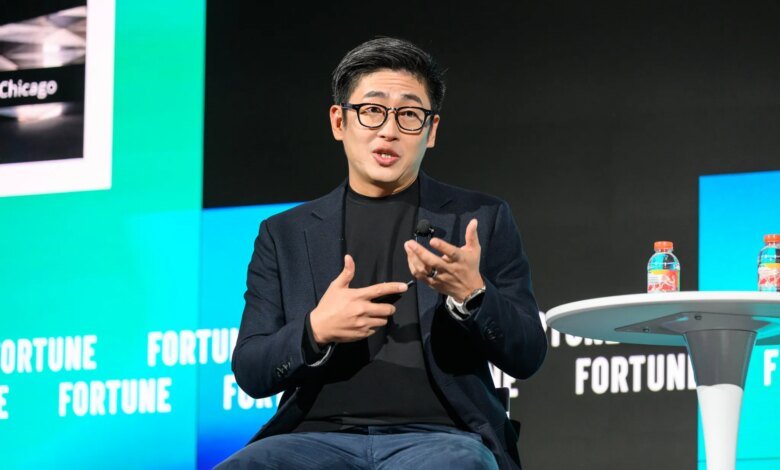
However, many workers are wary of returning to physical offices, seeing hybrid work as allowing flexibility without loss of productivity. This presents a new post-pandemic challenge for workplace designers, who must now build attractive spaces to attract employees to the office, said Ray Yuen, managing director of office at architecture firm Gensler.
“We’re not just designing workplaces anymore, we’re actually designing experiences,” Yuen said, at the Fortune Brainstorm Design Forum in Macau on December 2. “You really have to make the campus or workplace more than just work, and that’s the fun part of it.”
Citing the results of a 2025 survey his company conducted, Yuen said that when asked what makes a good workplace, employees increasingly cited factors such as food and wellness.
He added: “They didn’t even mention anything about work, everyone just chose the things we really want as humans.”
As such, workplace designers like Yuen need to think about how to reimagine modern offices. He pointed to a project Gensler worked on in Tokyo, Japan, for a company that had 50% of its employees working from home.
“We designed it [their office] With 15 different food offerings, including trying to bring the Blue Bottle. And we ended up doing it [also] Secret design [vinyl] “The tape,” Yuen said.
Companies are also seeking to provide more convertible workspaces, Yuen added, and interior designers have responded by replacing built-in spaces with modular, removable furniture. “[This way,] You can transform the space when you need to, from a place to food and drinks [space] for employees, or into an event space or happy hour space for your customers.
User needs for spaces are also becoming more complex, Yuen said. Airports, for example, are no longer meager transit hubs, but are also places where travelers can work or rest.
Now, airports have more outdoor and indoor spaces [and] Natural light, past the actual check-in area. airport [experiences] “It was just a matter of checking in and sitting there waiting,” the designer said. “It’s a destination, it’s no longer just a place [place of] crossing.”
As with other fields, AI is also rewriting the rules of the game for designers.
Yuen recounted how some clients pulled visuals onto AI-powered image generators like Google’s Nano Banana Pro, before asking: “If they can do it in one second, why can’t design companies do it faster?”
Many designers consider time and craftsmanship to be fundamental principles of design, but artificial intelligence is pushing them to change the way they work, Yuen said. Customers now want “instant response and instant gratification,” he continued.
“With AI, we are now almost like creators [of] “All these pieces of art, and we try to pick what’s right — that’s the only way we can meet customer needs with speed and time,” Yuen said.
Don’t miss more hot News like this! Click here to discover the latest in Business news!
2025-12-05 08:09:00