The World Is Starting to Recognize Genocide
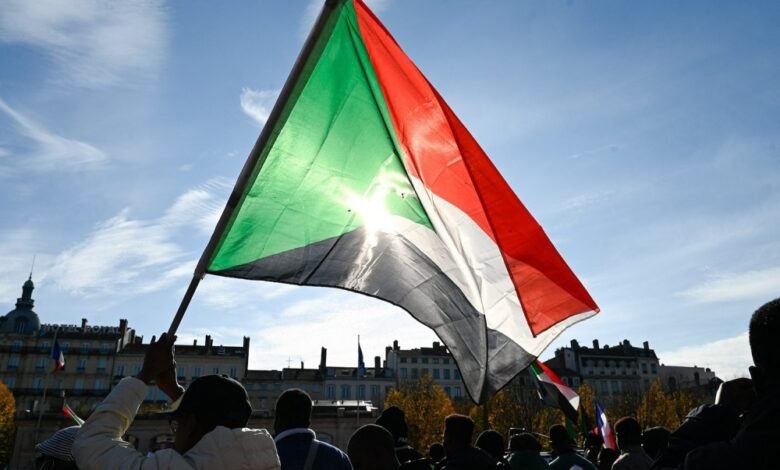
In 2025, as Sudan’s civil war enters its third year, the international community begins to sound the alarm about crimes against humanity in what is widely considered the world’s worst humanitarian crisis. The numbers are staggering: the conflict has killed an estimated 150,000 people, displaced nearly 13 million, and left more than 21 million facing extreme hunger. Pools of blood and mass graves can reportedly be seen from space.
As they vie for control of the country, regional and international actors have accused both the Sudanese army and the paramilitary Rapid Support Forces of committing atrocities. But the RSF in particular faces accusations of genocide, including by the United States, against non-Arab communities. The fall of the city of El Fasher in Darfur to the Rapid Support Forces in October led to the continued massacre of thousands of civilians.
In 2025, as Sudan’s civil war enters its third year, the international community begins to sound the alarm about crimes against humanity in what is widely considered the world’s worst humanitarian crisis. The numbers are staggering: the conflict has killed an estimated 150,000 people, displaced nearly 13 million, and left more than 21 million facing extreme hunger. Pools of blood and mass graves can reportedly be seen from space.
As they vie for control of the country, regional and international actors have accused both the Sudanese army and the paramilitary Rapid Support Forces of committing atrocities. But the RSF in particular faces accusations of genocide, including by the United States, against non-Arab communities. The fall of the city of El Fasher in Darfur to the Rapid Support Forces in October led to the continued massacre of thousands of civilians.
However, recognition does not mean action. The conflict is still referred to as the “Forgotten War”. As Martin Griffiths, former UN Under-Secretary-General for Humanitarian Affairs and Emergency Relief Coordinator, told Foreign policy reporter Ravi Agrawal in May, “The difference between Sudan and Gaza is that the international community in Sudan is indifferent.” In November, US President Donald Trump pledged to “get started on Sudan,” but US engagement has yet to yield any progress.
this year, Foreign policy Published articles by journalists, analysts, and researchers that sought to understand the conflict, extract its geopolitical dimensions, and examine measures the world could take to work to end the war in Sudan.
1. How to stop genocide in Sudan
By Moatasem Ali and Yona Diamond, November 5
Shortly after the RSF took control of El Fasher, legal experts Moatasem Ali and Yona Diamond presented a powerful case detailing the steps the international community, from the International Criminal Court to the United States, should take to stop the mass killing in Sudan.
“All options must be on the table for protection [civilians] “And to keep the ‘Never Again’ promise,” Ali and Diamond wrote. “States must target and sanction the RSF leadership and its supply line — as well as powerful elements aiding the group abroad.”
2. Why do Sudanese democratic activists now support the army?
By Yasser Zidan, February 3
While the Sudanese Armed Forces made significant progress at the beginning of the year, Yasser Zeidan, a former lecturer at Sudan National University, examines an unexpected development in the war: “the mobilization of young Sudanese democratic activists who had previously been vocal critics of the military.” Zidane wrote that some of these activists “took up arms against the Rapid Support Forces, considering that the militia represents the greatest threat to Sudan’s sovereignty and future.”
Zidane’s article sparked controversy Foreign policy: A few weeks after the article was published, Sudanese doctor Mohamed Bahari wrote a response saying that activists who join the ranks of the SAF do so only out of desperation — and that the belief that the SAF will support democracy is a “dangerous illusion.”
3. Washington must confront Abu Dhabi over Sudan
By Soha Moussa, November 13
The United States has shared a fraught history with Sudan since its independence in 1956, marked by the severing of diplomatic relations, punitive sanctions, and restrictions on aid.
However, “despite Washington’s troubled history with Sudan and the reasonable concerns of many Sudanese and international observers about its involvement, the United States may be the only player capable of successfully pressuring Sudan.” [United Arab Emirates] “Withdrawing its support for the RSF,” wrote Soha Musa, a Sudanese-American journalist and analyst.
In a recent article, Musa addressed how Trump could become a peacemaker for the country, and why it might be in the United States’ interest to do so.
4. The urgent need for international pressure to end the war in Sudan
By John Haltiwanger, November 20
A Sudanese refugee leaves a shelter in the registration area of Oure Kasoni camp in Chad on November 13.Joris Bolomi/AFP via Getty Images
Last month, Foreign Policy’s John Haltiwanger spoke with Charlotte Slente, Secretary-General of the Danish Refugee Council, about the extent of the humanitarian catastrophe in Sudan, the need for sustained pressure to end the war, and the impact of the culture of impunity on international humanitarian standards.
“The international community has supported Sudan with economic and humanitarian aid, but not to the extent required at all,” Silenti told Haltwanger. “Let’s remember that humanitarian aid only deals with the consequences of conflict and does not address the root causes. The fact that we have only taken action to manage the consequences and not prevent them has actually made this crisis much worse.”
5. Documenting war crimes in Sudan begins now
By Janine Di Giovanni, November 21
What can the international community do in Sudan other than pressure the parties to the conflict? In a recent article, Janine Di Giovanni examines how technological advances—particularly open source intelligence—have transformed the tools for investigating war crimes.
“It is tragically too late to prevent what the US State Department has already called genocide,” Di Giovanni writes. “But now is the time to move to documentation and potential prosecution. Stopping the ongoing violence is urgent – but so is gathering evidence.”
Don’t miss more hot News like this! Click here to discover the latest in Politics news!
2025-12-26 11:00:00