TikTok sets up US unit under Trump deal but leaves core business with ByteDance
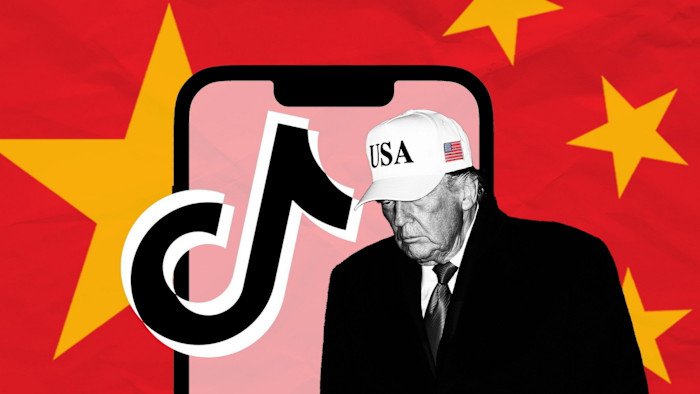
TikTok has created a new US data security arm to trigger a deal brokered by Donald Trump that will end a years-long geopolitical saga over the fate of the video app while leaving its core US business in the hands of its Chinese parent company.
The new US-controlled joint venture, which TikTok unveiled on Thursday, would “protect the US content ecosystem and will have decision-making authority regarding trust, safety, and content moderation policies,” the company said.
TikTok said it appointed a new seven-person board of directors for the joint venture, which included Egon Durban, co-CEO of private equity firm Silver Lake, Susquehanna International Group managing director Mark Dooley, and Oracle CEO Kenneth Glick.
All of their companies are part of a consortium of American investors who will own 80 percent of the joint venture.
“The majority American-owned joint venture will operate under specific safeguards that protect national security through comprehensive data protection, algorithm security, content moderation, and software safeguards for American users,” TikTok added.
But the terms of the agreement give Beijing-based ByteDance direct control over the app’s main lines of business in the United States, including e-commerce, advertising and marketing.
Many of TikTok’s U.S. employees will still work at units affiliated with ByteDance, two people familiar with the matter said.
“[The deal] “It saves the US market for TikTok and leaves ByteDance with most of the economic benefits,” said one of the Chinese company’s early investors.
ByteDance’s valuation in private market transactions has risen to about $500 billion in recent weeks, two people familiar with the matter said.
Its shares traded at a valuation of less than $300 billion after a law went into effect requiring TikTok’s parent company to sell its stake in the app or be banned in the United States.
Critics argue that the eventual structure of Trump’s deal, while offering easy returns for American investors and offering some new data protections for American users, appears to fail to fully address national security concerns.
“There remains a disconnect between the agreement and the spirit of what the statue requires,” said Brett Friedman, who served as chief of staff of the Justice Department’s national security division during the Biden administration.
He added: “There are bigger issues at play. We have an administration that wants to make a ‘big deal’ with the People’s Republic of China.” [People’s Republic of China] This somewhat colors what they might agree on.
Just over a year ago, TikTok briefly disappeared from its 170 million American users after a ban or divestment law took effect.
The legislation passed under Joe Biden stemmed from concerns that the app could allow Beijing to manipulate the content users watch for propaganda purposes, or access data for espionage purposes.
Trump, newly elected and enamored by his popularity among young voters on the platform, quickly brought the app back online, after promising to “save” it.
Over the past 12 months, the president has issued a number of executive orders that extended the deadline for reaching an agreement.
Vice President J.D. Vance was tasked with crafting a deal that would please the president while getting approval from Beijing.
The acquisition of TikTok’s US business has attracted interest from major private equity and venture capital investors such as Andreessen Horowitz, Coatue and KKR, as well as technology groups such as Amazon and Perplexity.
The final compromise is a joint venture majority-owned by US investors Oracle, Silver Lake and UAE investment vehicle MGX, each owning 15 per cent.
Other investors in the consortium include Dell CEO Michael Dell and the family office of French businessman Xavier Niel — as well as Jeff Yass’s General Atlantic and Susquehanna subsidiaries, both previous investors.
TikTok confirmed on Thursday that ByteDance will acquire 19.9 percent of the new company, the stake allowed under US law.
One ByteDance investor said they had difficulty understanding how the deal was priced, suggesting it was cheap for new US investors and also allowed Trump to continue to benefit from his growing audience on the platform.
The deal values the TikTok joint venture at $14 billion, Vance said. ByteDance expects 2025 earnings before interest, taxes, depreciation and amortization to reach $66 billion, on revenue of $192 billion, according to a person familiar with the matter.
The value of the new US group could be a result of ByteDance’s continued control over TikTok’s key business lines.
Relations between the US data security arm and ByteDance will be governed by complex contracts that will see the Chinese group share a portion of US profits with the joint venture, two people familiar with the matter said.

A crucial point of contention was whether Beijing would be able to retain control of TikTok’s sophisticated recommendation algorithm.
TikTok said Thursday that the joint venture will license the algorithm from ByteDance, but will then “retrain, test and update the content recommendation algorithm on US user data.” “The content recommendation algorithm will be secured in the US Oracle cloud environment,” she added.
Oracle, led by Trump ally Larry Ellison, will also ensure the security of US user data. TikTok’s US employees in teams such as data security and content moderation will move to this new unit.
TikTok’s chief operating officer, Adam Presser, will be CEO of the joint venture, TikTok said. Presser, who is fluent in Mandarin, has been a longtime associate of TikTok CEO Shou Zi Chew. Chew will also be on the board.
TikTok said the guarantees provided by the joint venture will also cover its other US apps, including editing tool CapCut and social media app Lemon8.
The rest of the TikTok US team – in e-commerce, advertising and marketing – will remain under ByteDance. In early January, Chiu created a limited liability company in Delaware called TT Commerce & Global Services LLC, and registered it at TikTok’s US headquarters address.
James Lewis, a distinguished fellow at the Center for European Policy Analysis, said the US company was created because ByteDance prioritized maintaining control of TikTok’s fast-growing e-commerce business.
“The law says very clearly that the divestiture process cannot have any cooperation with respect to the algorithm,” said Adam Conner, vice president of technology policy at American Progress, a nonpartisan policy group.
But the legislation also gave the US president the power to decide whether the proposed deal complied with its provisions.
Trump has approved the new structure and helped win the support of Chinese President Xi Jinping, who also needs to sign off on the deal. While Beijing has not yet publicly approved the final structure, China has given the green light to the broad outlines of the deal.
China’s critics “were hoping to put TikTok out of business, and some other social companies were encouraging them with those beliefs,” Lewis said. “China hawks have been steadily losing ground because people would rather engage with China than cut it off.”
“There are a lot of questions about who was chosen [to participate in the deal in the US]. “We know there are other offers willing to pay more money,” Conner said. “The Trump administration ignored a law on the books, claimed it had sweeping executive authority to do so, and co-opted donors and Trump allies to buy it at a discount.”
“This is ripe for oversight if the new congress has an interest in investigating.”
Additional reporting by George Hammond in San Francisco and Eli Olcott in Beijing
2026-01-23 01:31:00