Trump sues Jamie Dimon, JPMorgan for $5 billion over claims that his politics got him debanked in 2021
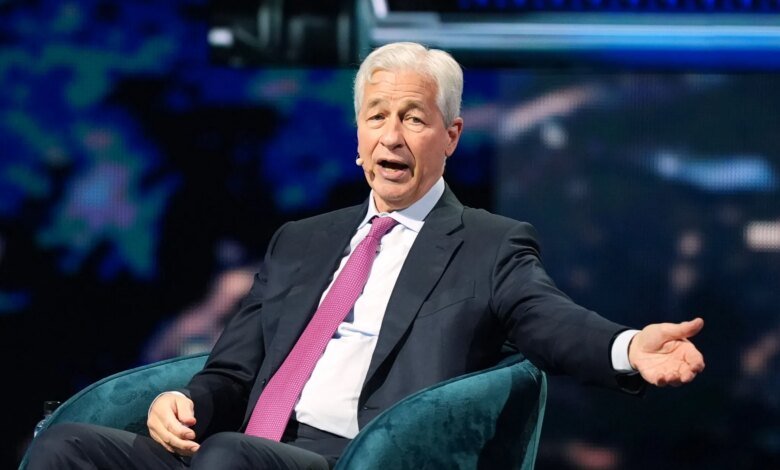
President Donald Trump sued banking giant JPMorgan Chase and its CEO Jamie Dimon on Thursday for $5 billion over allegations that JPMorgan stopped providing banking services to him and his companies for political reasons after he left office in January 2021.
The lawsuit, filed in Florida’s Miami-Dade County Circuit Court, alleges that JPMorgan abruptly closed multiple accounts in February 2021 with only 60 days’ notice and no explanation. In doing so, Trump claims that JPMorgan and Dimon cut off millions of dollars from the president and his companies, disrupted their operations and forced Trump and the companies to urgently open bank accounts elsewhere.
“JPMC broke up (Trump and his companies) because it believed the political tide of the moment favored doing so,” the lawsuit alleges.
In the lawsuit, Trump claims that he tried to raise the issue personally with Dimon after the bank began closing his accounts, and that Dimon assured Trump that he would find out what was happening. The lawsuit alleges that Dimon failed to follow up with Trump. Furthermore, Trump’s lawyers allege that JPMorgan placed the president and his companies on a reputational “blacklist” that both JPMorgan and other banks use to prevent clients from opening accounts with them in the future.
JPMorgan said in a statement that it believes the lawsuit has no merit.
Trump threatened to sue JPMorgan Chase last week at a time when tensions are rising between the White House and Wall Street. The president said he wants to cap credit card interest rates at 10% to help lower costs for consumers. Chase is one of the nation’s largest credit card issuers, and a bank official told reporters that it would fight any effort by the White House or congress to implement an interest rate cap on credit cards. Banking executives also expressed anger at Trump’s attacks on the Federal Reserve’s independence.
Debanking occurs when a bank closes a customer’s accounts or refuses to deal with the customer in the form of loans or other services. Once relatively obscure in the world of finance, the issue of bank breakups has become a politically charged issue in recent years, with conservative politicians claiming that banks discriminated against them and their interests.
Bank breakups first became a national issue when conservatives accused the Obama administration of pressuring banks to stop providing services to gun stores and payday lenders under “Operation Choke Point.”
Trump and other conservative figures claimed that banks turned them away from their accounts under the term “reputational risk” after the January 6, 2021, attack on the US Capitol. Since Trump returned to office, the president’s banking regulators have moved to bar any banks from using “reputational risk” as a reason to deny service to customers.
“JPMC’s conduct…is a prime indicator of a systematic and disruptive industry practice designed to force the public to change and realign their political views,” Trump’s lawyers wrote in the lawsuit.
Trump accuses the bank of trade defamation and Dimon himself of violating Florida’s Unfair and Deceptive Trade Practices Act.
JPMorgan said in its statement that it “regrets” that Trump filed a lawsuit against the bank but insisted that he did not close the accounts for political reasons.
A bank spokesman said: “JPMC does not close accounts for political or religious reasons.” “We close accounts because they create legal or regulatory risks for the company.”
This is not the first lawsuit filed by Trump against a major bank, alleging that it has gone bankrupt. The Trump Organization filed a lawsuit against credit card giant Capital One in March 2025 for similar reasons and allegations. That lawsuit is still making its way through the court system,
Don’t miss more hot News like this! Click here to discover the latest in Business news!
2026-01-22 22:40:00