Uncertainty over federal food aid deepens as the shutdown fight reaches a crisis point
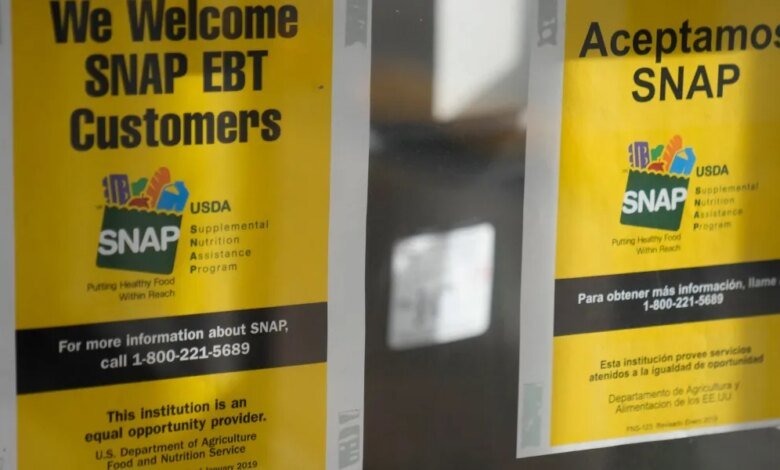
The impacts on basic needs — food and medical care — have highlighted how the predicament is reaching homes across the United States. Federal judges blocked the Trump administration’s plans to freeze payments for the Supplemental Nutrition Assistance Program on Saturday, but a delay in payments will likely leave millions of people short on their grocery bills.
All of this has increased pressure on the country, with a month of unpaid salaries for federal employees and mounting delays in air travel. The shutdown is already the second-longest in history, entering its second month on Saturday, yet there has been little urgency in Washington to end it, with lawmakers staying away from Capitol Hill and both parties sticking to their guns.
The House of Representatives has not met for legislative business in more than six weeks, while Senate Majority Leader John Thune closed his chamber over the weekend after bipartisan talks failed to make significant progress.
Thune said he hopes “the pressure will start to build, and the consequences of keeping the government closed will become more real for everyone who will voice them, and hopefully there will be a new interest in trying to find a way forward.”
The stalemate appears increasingly unsustainable as Republican President Donald Trump demands action and Democratic leaders warn that the uproar over rising health insurance costs will force congress to act.
“This weekend, Americans face a health care crisis unprecedented in modern times,” Senate Democratic Leader Chuck Schumer of New York said this week.
Delays and uncertainty regarding SNAP
The Agriculture Department planned to withhold payments to the food program on Saturday until two federal judges ordered the administration to pay them. Trump said he would provide the money but wanted more legal guidance from the court, which would not happen until Monday.
The program serves about 1 in 8 Americans and costs about $8 billion per month. The regents agreed that the USDA needs to tap at least an emergency fund of about $5 billion to continue operating the program. But that left some uncertainty about whether the department would use additional funds or provide only partial benefits for the month.
Benefits will actually be delayed because SNAP cards take a week or more to load in many states.
“The Trump administration needs to follow the law and resolve this problem immediately by working closely with states to get food assistance to the millions who depend on it as soon as possible,” House Democratic Leader Hakeem Jeffries of New York said in a statement following the ruling.
Republicans, responding to Democrats’ demands for funding for SNAP, say the program is in a terrible state because Democrats have repeatedly voted against a short-term government funding bill.
“We have now reached a breaking point thanks to Democrats voting ‘no’ on government funding, now 14 different times,” House Speaker Mike Johnson, R-Los Angeles, said in a news conference on Friday.
Trump inserted himself into the debate late Thursday by suggesting that Republican senators, who hold the majority, end the shutdown by doing away with filibuster rules that prevent most legislation from advancing unless it has the support of at least 60 senators. Democrats used the filibuster to block the funding bill in the Senate for weeks.
Republican leaders quickly rejected Trump’s idea, but the debate showed how desperate the battle had become.
Health care subsidies end
The annual enrollment period for health insurance under the Affordable Care Act also begins Saturday, and there are sharp increases in what people pay for coverage. Enhanced tax credits that help most enrollees pay for health plans are set to expire next year.
Democrats have rallied around a campaign to extend those appropriations and have refused to vote on government funding legislation until Congress acts.
Sen. Patty Murray, D-Wash., spoke on the Senate floor this week about constituents who she said face insurance premium increases of up to $2,000 a month if the credits expire.
“I’m hearing from families in my state today who are terrified,” she said. “It’s time to get to work.”
If Congress does not extend the appropriations, subsidized enrollees would face cost increases of about 114%, or more than $1,000 per year, on average, the health care research nonprofit KFF found.
In the days before open enrollment began, Democratic politicians across the country warned that cost increases would hit their voters hard.
In Wisconsin, for example, families in an ACA silver plan can see premium increases ranging from $12,500 to $24,500 per year depending on their location. Couples over the age of sixty may face increases ranging from approximately $19,900 to $33,150 per year.
“No matter what the percentage is, it’s a hell of a lot,” Wisconsin Gov. Tony Evers said.
Some Republicans in Congress have been open to the idea of extending the subsidy, but they also want to make major changes to health reform passed when Democrat Barack Obama was president.
Thune offered Democrats a vote on extending benefits, but she did not guarantee the outcome.
Flight delays and missed salaries
Federal workers have now gone a month without receiving a full paycheck, and the erosion of the workforce is showing.
Major unions representing federal employees have called for an end to the shutdown, increasing pressure on Democrats to back down on their health care demands. The head of the union that represents air traffic controllers was the latest to urge Congress to pass legislation reopening the government so federal workers can get paid, after which lawmakers can participate in bipartisan negotiations on health care.
In a statement Friday, Nick Daniels, president of the National Association of Air Traffic Controllers, said financial and mental stress is mounting on the workforce, “making them less safe with each passing day of the shutdown.”
2025-11-01 14:41:00