
Why Americans are losing interest in electric vehicles
Former Energy Secretary Dan Brouillette joins Varney & Co. To discuss president Donald Trump’s repeal of fuel standards under Biden, electricity costs and his outlook on gas prices.
Analysts say interest in electric vehicles is waning among American consumers after the end of federal tax incentives and amid continuing concerns about cost, repairs and charging capability.
Demand for EVs fell after the Sept. 30 termination of federal EV tax credits — a $7,500 new-vehicle tax credit and a $4,000 used-car tax credit — that were repealed under President Trump’s “big, beautiful bill,” which was signed into law in July.
The deadline led to an increase in the number of buyers, but sales have declined since then, Evan Drury, Edmunds’ director of insights, told FOX Business.
“If you look at the recent months — October and November — you will see that it has not stopped, it has decreased significantly,” Drury said.
Trump unveils a “historic reset” of Biden’s fuel rules, achieving $109 billion in savings
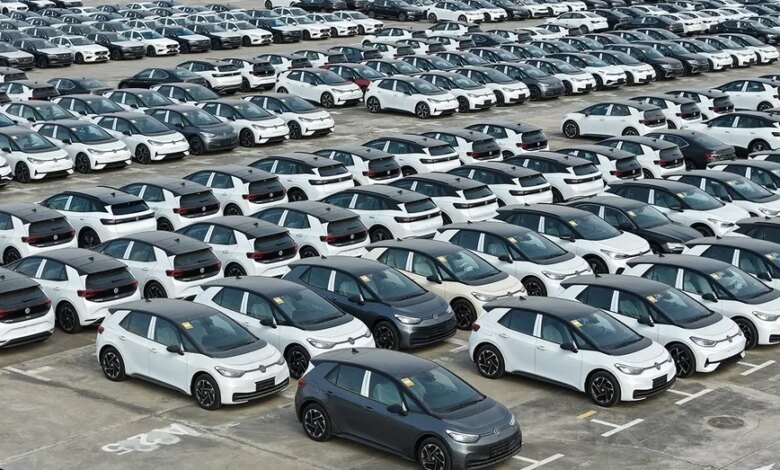
Volkswagen pure electric vehicles are arranged in an orderly manner waiting to be shipped abroad in the Longtan Port Area, Nanjing, Jiangsu Province, China. (CoastPhoto/NorPhoto via Getty Images/Getty Images)
With those incentives gone, the coming months will reflect what organic consumer interest in electric vehicles looks like, Stephanie Valdez Streety, director of industry insights at Cox Automotive, told FOX Business.
“I think in the next six months, we’ll probably see the market get to that place of normal demand without that carrot of stimulus,” Valdez Street said.
But the cooling trend began long before the credits expired. According to a AAA poll released in June, just 16% of American adults said they were “very likely” or “likely” to buy an all-electric vehicle as their next car, down two percentage points from last year and down nine percentage points from 2022.
GM takes a $1.6 billion financial hit as the electric vehicle tax credit changes to force overhaul

Electric cars parked at a Tesla charging station in Sausalito, California. (Justin Sullivan/Getty Images/Getty Images)
AAA found that high battery repair costs and purchase prices remain a major barrier for consumers. Electric vehicles cost about $10,000 more on average than gas-powered vehicles, Valdez Streete said.
“Affordability is a big issue when it comes to electric vehicle adoption,” she said, adding that many consumers don’t realize that EVS typically have an eight- to 10-year battery warranty.
“Infrastructure is another barrier,” Valdez Streete said. “…I think consumers are thinking well, what happens when I have to go on a long trip or when I take a vacation? I want to be able to have infrastructure that is accessible, reliable and easy to use.’”
California electric vehicle drivers are about to lose a major advantage after 25 years

EVgo fast charging stations in South San Francisco, CA. (David Paul Morris/Bloomberg via Getty Images/Getty Images)
Former Energy Secretary Dan Brouillette recently said he believes electric vehicles will remain part of the auto market but “we have to understand where they fit.”
Get FOX Business on the go by clicking here
“It’s a niche market right now, and it’s probably going to stay that way for some time,” Brouillette told FOX Business Network’s “Varney & Co.” Thursday. “And I think the rules that the president is eliminating…he’s absolutely right about that.”
Trump on Wednesday announced a reset of federal fuel standards that were strengthened under the Biden administration, which the White House said would save “a total of $109 billion” for American families.
FOX Business’ Emma Colton contributed to this report.
Don’t miss more hot News like this! Click here to discover the latest in Business news!
2025-12-07 02:06:00